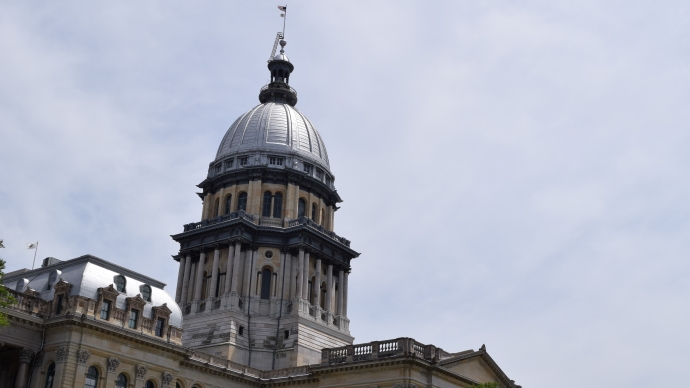
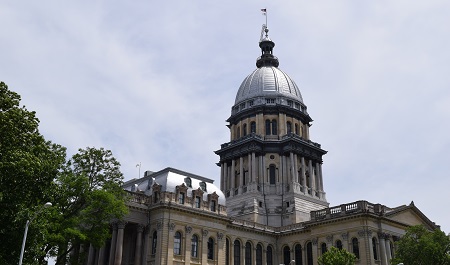
IL state capitol

1/12/2021 UPDATE: The bill has now passed both chambers and will head to the Governor for his signature! Amendment 3 made a few additional changes before it passed, most notably removing the changes to the Invest in Kids Act altogether, launching a feasibility study to consider the appropriate agency home for the Workforce Investment Act program (rather than moving it to IDES), and adding a literacy focus and some parameters to the Freedom Schools section.

1/9/2021 UPDATE: Amendment 2 has been filed. The major difference is that some components have been removed: the Equity in Early Childhood Education Act, the anti-racism grants within the Evidence-Based Funding Formula (which the Professional Review Panel will now consider, instead), the provisions to lengthen the school year for learning recovery, and the driver’s license stuff (which I’m guessing found a more appropriate home in a criminal justice bill). These were all good things; they will live to fight another day. We get it that it’s a careful balancing act when deciding what all goes into a huge package like this and, at the end of the day, it doesn’t matter what’s in there if it can’t get 60 votes in the House and 30 in the Senate.

There are some additions of other good stuff, most notably an Inclusive American History Commission and some fleshing out about periods of Black History that have to be taught. It adds prioritization for National Board Certified Teachers stipends to rural and diverse candidate cohort facilitators, and shift administration of the Workforce Investment Act from the Department of Commerce and Economic Opportunity to the Department of Employment Security.

***

For months, education champion and rockstar negotiator Sen. Kimberly A. Lightford has brought together education and racial justice advocates to craft a nearly 500-page amendment to advance racial equity in Illinois schools, from birth through college. This week, she filed the legislation, compiling dozens of policy changes with the goal of reversing centuries of systemic racism in education and significantly bolstering opportunities for Black students.

This bill is jam-packed with good policy ideas, many of which Stand for Children supported as individual concepts and which we are now pleased to support as an overall package. The summary below walks through everything that is in there as of today, starting with a few of my favorites and eventually getting to everything. (If things change substantially, I’ll pop back over here with some updates over the next few days as well.)

ACADEMIC ACCELERATION

Based on a Washington state law that tripled the percentage of Black high school students in advanced courses, this policy requires schools to automatically enroll students who meet or exceed standards into the next most rigorous course. Students who are automatically enrolled can choose to opt out if a different course better fits their goals. It does not remove any of the existing pathways for enrollment into advanced courses, but it removes any element of implicit bias and opens doors for more students to eventually access courses that earn them early college credit. (pages 62 – 67. See our factsheet here.)

EQUITABLE COURSEWORK FOR COLLEGE ACCESS

No matter where they go to high school, all students should have access to the recommended courses needed for admission into any public university in Illinois. This provision requires the Illinois Board of Higher Education (IBHE) to report college admission coursework recommendations. Students must have access to these recommended courses. Schools can fulfill the requirement to provide it by offering it in house or partnering with a neighboring district, community college, or other course provider. The bill also adds a requirement that the science courses required for graduation be laboratory sciences, and, with a long implementation period to allow teacher pipeline reforms to work, adds two years of foreign language to the graduation requirements. (pages 42 – 49. See our factsheet here.)

EQUITY IN EARLY EDUCATION ACT

Deleted. But stay tuned for this spring… We’ll be working on this! See our factsheet here.

COMPUTER SCIENCE AND LITERACY

The bill defines computer science and directs ISBE to create computer science standards. It requires high schools to offer computer science to student who want it. The graduation requirements are modified to require one course to include a focus in computer literacy. Schools must provide students with opportunities for developmentally appropriate computer literacy skills beginning in elementary school. (pages 49 – 62)

EVIDENCE-BASED FUNDING

The monumental 2017 overhaul of the school funding formula also included a provision creating a Professional Review Panel (PRP) to monitor the formula throughout implementation. HB 2170 would charge the PRP with reviewing the adult-to-student ratios specified in the cost factors to determine whether it accurately reflects staffing needed to support students in poverty, changes in cost factors to promote racial equity, the impact of investing $350 million each year, an overview of alternative funding structures, and potential efficiencies within the system, appropriate funding levels for re-enrolling students who previously dropped out, and evidence-based practices that reduce academic achievement gaps for Black students. (pages 149 – 151)

LEARNING RECOVERY

HB 2170 charges the P-20 Council with considering long-term and short-term learning recovery strategies, including a plan to address the digital divide; evaluate the impact of school closures and remote learning on student outcomes; establish a system for the collection of data; and ensure more time for students’ academic, social emotional, and mental health needs. (pages 67 – 77)

SOCIAL-EMOTIONAL HEALTH

The Whole Child Task Force is created to establish equitable, inclusive, safe, and supported environment in all schools, taking steps to ensure every child has access to educators and social workers trained in evidence-based interventions and restorative practices. (pages 26 – 34) The Freedom Schools fund would provide grants, subject to appropriation, for enriching programs that affirm Black identity. (pages 77 – 81)

DIVERSE EDUCATOR PIPELINE

Four components address the shortage of teachers generally and Black teachers specifically (pages 179 – 208):

  • It removes the 3.0 GPA requirement to get into alternative licensure programs.
  • The Minority Teacher Initiative scholarship program is amended to increase priority funds for Black males, change the prioritization from first come/first serve to those who received scholarships the previous year and have demonstrated financial need, and create a set-aside for bilingual teachers as the appropriation for the program grows.
  • AIM HIGH is amended to reduce universities’ match requirement from 100%, with institutions with more low-income students kicking in 20% and those with fewer low-income students contributing 60%.
  • Finally, the Transitions in Education Act encourages ISBE, IBE, and ICCB to establish a task force for a Major Panel in Education, which would identify courses that would be accepted upon transfer.
  • The National Board Certified Teacher program would prioritize in awarding stipends to NBCT Candidate Cohort Trainers who work with rural and diverse candidates. (pages 252 – 258)

HIGHER EDUCATION ACCESS

Nearly half of full-time community college students are placed in developmental education courses, which do not earn college credit, upon starting college. For Black students, the number is even higher: 71% are funneled into developmental courses. Only 8% of Black students who are placed in developmental education courses will go on to graduate. The Developmental Education Reform Act creates a multiple measures approach to placement in credit-bearing college courses. Students who successfully complete a high school transitional course, earn a specific GPA, or meet certain thresholds on placement exams or standardized tests would be able to bypass developmental courses. Institutions must publicly post their placement policies, and ICCB and IBHE would consolidate the information into reports disaggregated by demographic data and by developmental course model. (pages 155 – 164)

The Equity in Higher Education Act outlines the General Assembly’s support for the IBHE strategic plan to close equity gaps, increase post-secondary degree attainment, and improve affordability. It encourages IBHE to prepare an array of policy changes needed for implementation of the plan by May 1, 2021. (pages 151 – 155)

EARLY CHILDHOOD

Many components of the bill deal with expansion of early childhood, increasing compensation for early childhood teachers, and improving the quality and equity of programs, including provisions to:

  • Codify the requirement for an annual valid, reliable, and developmentally appropriate kindergarten readiness assessment. ISBE currently uses the Kindergarten Individual Development Survey (KIDS) for this. (pages 1 – 11)
  • Allow children to continue receiving early intervention services after their third birthday until the school year starts and they have access to preschool. (pages 11 – 16)
  • Support the goals of the Commission on Equitable Early Childhood Education and Care Funding, which is working to create a more equitable and efficient system, consolidate programs into a single adequately staffed agency, ensure equitable and adequate funding, redesign payment mechanisms, and consider data collection needs. It would also encourage a timetable for the work with a designated body to implement recommendations. (pages 16 – 20)
  • Amend the Infant/Early Childhood Mental Health Consultation Act to encourage increasing availability of consultations, developing materials for providers and parents about the value of mental health consultations, and increasing funding for training and support. It also remedies a problem with diagnostic coding to remove barriers to developmentally appropriate assessments. (pages 34 – 39)
  • Create the Early Childhood Workforce Act to increase the early childhood teacher pipeline and its diversity. Under the Act, DHS, ISBE, and IBHE would each have a role in providing outreach and access to financial supports to increase the diversity of the pipeline, analysis on scholarship recipients, and barriers for early childhood teachers to complete coursework to earn credentials. (pages 40 – 42)
  • Encourage DHS to re-examine the definition of “at-risk” and the diagnosed medical conditions that typically result in a delay, charge the Early Intervention Training Program to create a plan for outreach, develop a plan for the State to launch early intervention specialized teams, and work in a public-private partnership to establish at least two demonstration sites with hospital neo-natal intensive care units. (pages 216 – 220)

INVEST IN KIDS

The Invest in Kids tax-credit scholarship program currently provides donors tax credits for donating to program, which provides private school scholarships to students in families below 300% of the federal poverty level. HB 2170 would add the ability for scholarships to be used at technical academies for Career and Technical Education programs. (pages 164 – 179)

DATA COLLECTION TO SUPPORT RACIAL JUSTICE

data collection provision, which requires the Governor’s Office and the Department of Innovation and Technology to jointly administer a governance to catalog data supporting major programs, identify similar fields in datasets, improve data quality, collect racial and ethnicity data, develop common process and legal approaches for data sharing, establishing common codes across datasets, and generally catalyzing the process to better interagency data analysis. (pages 20 – 26)

INCLUSIVE HISTORY CURRICULUM

The bill requires ISBE to adopt social science learning standards that are inclusive of all individuals in the country. An Inclusive American History Commission is created to review available resources for use in schools that reflect the diversity of the State, provide guidance on each learning standard on how to ensure instruction and curriculum are not bias to value specific cultures or experiences over others, and provide guidance on professional learning on how to utilize and locate non-dominant cultural narratives and sources. It also amends the Black History study requirement to add the pre-enslavement period and the American civil rights renaissance, and a study of the reasons why Black people came to be enslaved. (pages 208 – 214)

WORKFORCE INVESTMENT ACT ADMINISTRATION

The responsibilities and funding connected to the Workforce Investment Act are transferred from the Department of Commerce and Economic Opportunity to the Department of Employment Security. (pages 214 – 252)

The fight for educational equity doesn’t start or stop at the schoolhouse.

The shackles of inequity extend far beyond, including to our “justice” system and the way in which courts incarcerate individuals before they go to trial — simply because they cannot afford to post bond.

That’s why we are standing with Illinois Senator Robert Peters in his fight to end money bond and to pass the Pretrial Fairness Act. This is your chance to support this Education Champion, one of the brightest up and coming leaders in our State. I first got to know the Senator when we worked together on a campaign over a decade ago, and it’s been inspiring to see his ascent.

You have three opportunities to meet Senator Peters and learn how you can support a critically important way to dismantle systemic racism. The Senator will be joined by other members of the General Assembly in a series of virtual town halls.

  • Tuesday, October 20th at 7pm: Hosted by Senator Robert Peters (13th District) & Rep. Kelly Cassidy (14th District)
  • Thursday, October 22nd at 6pm: Hosted by Rep. Barbara Hernandez (83rd District)
  • Tuesday, October 27th at 7pm: Hosted by Rep. Robyn Gabel (18th District)

The townhalls are hosted by the Coalition to End Money Bond and the Illinois Network for Pretrial Justice. Register to attend a virtual town hall event at bit.ly/PretrialTownHall.

Illinois State Capitol

High property taxes drive school funding inequity. But for every 2 districts that over-tax, there is at least 1 under-taxing district out there.

The Evidence-Based Funding Formula identifies a target property tax rate for every district. The model calculates how much each district needs to be funded adequately. It then specifies a local capacity percentage (LCP) based on how much property wealth each district has. A district with lots of property wealth will have an LCP of up to 90%. That means if a district’s per pupil adequacy target is $12,000 and its LCP is 75%, the formula expects the district to raise $9,000 per pupil locally. From there, we can back into an “implied” tax rate for each district.

Most districts tax themselves higher than their implied tax rate. (Those are all the orange dots above the blue line in the chart below.) But 310 districts (the orange dots below the blue line) actually tax themselves lower than that rate. A rate freeze would impact these districts across the board. Freezing undertaxed districts would guarantee that those schools will never reach adequate funding. (And inflationary increases compound quickly, so lots of the 543 districts that are “over-taxing” now would fall under the blue line after a few years of increased adequacy costs and frozen levies.)

Addressing property taxes in the formula was a sticking point during the school funding negotiations. Should the formula recognize districts’ whole property tax levy? If they are over-taxing themselves, that could push the districts into a higher tier and further solidify their reliance on property taxes. If they are under-taxing themselves, that could knock them down a tier and put them in line for more state funding than other deserving districts that have put forth more local effort.

On the other hand, should the formula ignore actual rates and just use the implied rates? That would completely disconnect the question of how districts tax locally with how much state funding they get for their schools. There would be no incentive to under-tax, but no disincentive to over-tax.

The Evidence-Based Formula decided to use the best of both worlds: for districts that were under-taxing (the orange dots below the blue line), the model assumes they are taxing at their implied rate (the blue line itself). For districts that are over-taxing themselves (orange dots above the blue line), the model recognizes a portion of their overage in order to encourage them to reduce their rates. How much depends on how much property wealth a district has. The overage is multiplied by the district’s LCP, thus wealthier districts will be penalized more for overtaxing and therefore, incentivized further to lower their levies.

Let’s look at a few examples:

  • An under-funded district trying to compensate locally. North Chicago SD 187, a property-poor district that is expected to raise just 10% of its funds locally. That gives the district a $5.5 million target levy. However, North Chicago is so underfunded, it taxes itself almost twice that much, $5.1 million more. Because the district’s LCP is 10%, just 10% of that over-levy will “count” against the district in the formula.
  • An above-adequacy over-taxer. The property-wealthy Bannockburn SD 106 is expected to raise $1.8 million, which is 90% of its adequacy target. But the district brings in $5.5 million, $4.7 million more than the model expects. The formula will recognize 90% of Bannockburn’s $4.7 million overage.
  • An almost-adequate under-taxer. Rockdale SD 84 in Will County is expected to raise 60% of its adequacy target from property taxes. But it only brings in 24% of that total. Its implied tax rate is 3.2%, but its actual rate is just about 1.2%. The formula assumes that Rockdale raises its full Local Capacity Target. It would hardly be fair to the rest of the districts to reward Rockdale’s under-taxing with more state money. But it would be equally unfair to Rockdale to freeze its levy where it is, so far from its expected rate with a formula that assumes it has access to those resources.

In the statewide aggregate, there are over $3 billion in property taxes levied by school districts above what the formula expects them to bring in. About $2 billion of those are for school districts funded below adequacy. There are about $1 billion in property tax over-levies in over-adequacy districts. Finally, there are $670 million in uncaptured property tax receipts, almost all in districts that are funded below adequacy.

Finding the right balance between providing property tax relief and moving toward adequate school funding is a challenge. If it was easy, someone would have done it. But it’s worth it to wade into this complex territory because this is such a critical issue. Let’s just make sure we acknowledge that it is complicated and will require more than a one-size-fits-all solution.

student working on a laptop

We’ve been saying for a while now that elected officials need to stop our state’s atrocious Brain Drain problem, and last week, we got a wakeup call that puts the crisis into stark relief.

New data from the Illinois Board of Higher Education show that in 2017, nearly 50% of Illinois public high school graduates enrolled in four-year universities attended out-of-state schools. 50 percent!

I’ve asked you before to stand up and help Stop Illinois Brain Drain, and I’m asking you again today.

There’s legislation currently in the Illinois Senate that would help address an aspect of this problem, and now we need legislators to act. Tell your state Senator to support SB1212, a bill that would expand equitable access to advanced courses for students in every region of the state.

We need leadership to reverse the exodus of students before it gets worse.

Illinois students should have opportunities for success after high school, right here in the Prairie State.

Let’s fight to give them those opportunities.

We’ve told you about the many problems facing Illinois high school students that have led to our state’s chronic brain drain. Today is the day for action, because now we have actual legislation to support that will help solve many of the problems facing our students.

Are you with us? Tell Springfield: it’s time to stop Illinois Brain Drain.

We need to fight to tap the potential of all students. The legislation introduced today works to do just that.

Strengthening our high schools is critical not only for those who go onto college, but also for those who pursue career training or careers after they graduate from high school.

We need policymakers to show their support for Illinois high school students by co-sponsoring these bills. Tell your legislators: it’s time to step up for Illinois students.

We have a perfect moment in time to fix these issues that contributed to the brain drain problem.

These bills are a solid start to helping Illinois students. Springfield needs to support them.

As a former teacher who recently left the classroom, I know I will never leave behind the education issues I care about. So when I began to explore my role as an advocate outside of the classroom, one program that jumped out at me was Stand’s Policy Fellowship. The detailed policy discussions, the conversations with advocates from across the state, and the chance to advocate and influence policy discussions all piqued my interest. The Fellowship has expanded my understanding of civic and political advocacy.

The 2017-2018 Fellowship focused on student college and career readiness in Illinois. While the majority of my previous work centered around elementary education, this experience allowed me to explore the opposite end of the education system.

Stand’s policy team provided regular informational workshops surrounding the impacts of the Post-Secondary Workforce Readiness (PWR) Act and the Every Student Succeeds Act (ESSA). Additionally, we engaged with community members, elected officials, and experts in the field who deepened our understanding of the postsecondary landscape in Illinois – and where advocates like us could make a difference.

One conversation that I particularly enjoyed was with Katharine Gricevich of the Illinois Student Assistance Commission. Her discussion on higher education access and affordability resonated with my interest in advancing opportunities and outcomes for students from underserved areas.

I also had the opportunity to visit the Illinois Capitol with other Stand Fellows. While in Springfield we spoke with legislators about student college and career readiness. During these conversations, I was excited to learn that legislators were interested in hearing my perspective as a former educator. These discussions further encouraged my passion for advancing teacher voice and influence within political discourse.

As I reflect on these impactful conversations and experiences as a Stand Fellow, I am excited and motivated to continue my advocacy efforts.

Before participating in the Stand Fellowship, I was unsure of how to scale my advocacy impact. Now I am eager to continue my civic and political engagement efforts in support of educational excellence and equity.

I also hope to stay connected with Stand’s work in Illinois and the Fellows across the state. Their passion for education has deeply impacted my own work and approach to advocacy. I know that my advocacy will continue and that I will remain engaged with these issues in the future.

Illinois state capitol

The Governor signed the budget today (yay!) and we’re all praising the legislature for adding another $350 million towards the evidence-based funding formula enacted last year.

Let’s break down that $350 million a bit more.

$300 million of that figure will be equitably distributed first to the school districts that are the most under-funded (i.e., furthest away from adequacy) and just like last year, no district will lose money.

The remaining $50 million will be “swapped” for property tax relief, with those funds rebated to homeowners in the form of grants.

If Springfield had allocated more than $350 million, the remaining amounts would be handled in the same manner as the $300 million.

This is the first time in history that these property tax relief grants have been funded. It’s uncharted territory, but here’s how it works:

  • School districts with the highest property tax rates can apply for a grant.
  • By August 1 of each year, the Illinois State Board of Education (ISBE) will estimate what tax rate school districts must have in order to be eligible. It all depends on how much money is put into the fund, since more funding means the state can afford more grants.
  • School districts can apply until October 1 for grants worth up to 1% of the “equalized assessed value” of property in the district.
  • By December 1, ISBE will publish a list of districts that qualify, based on the total number of applicants and the threshold tax rate for relief.
  • Qualifying districts will receive their grant payments by January 15.
  • School districts, in turn, rebate the amount of the grant to their property taxpayers.

One of the facts that became abundantly clear during the examination and re-write of the formula is that school funding isn’t just inequitable for students. It’s also inequitable for property taxpayers. Those who live in the poorest areas pay the highest property tax rates. For example, at the lower wealth end of the spectrum, one elementary district in the south suburbs has a tax rate of 9.8%, but it is still only 59% funded. At the other side, one of the wealthier elementary districts – which is funded at 288% – has a rate of just 1.5%.

So in August, you might take a peek at the ISBE website to see what tax rates might qualify. If your school district has a higher rate, ping your school board about going for a grant. It’s a new program and it’ll take some work to get it going, but what a great opportunity to reduce the reliance on property taxes without costing our schools those needed resources!

Advocates march at the Stand for Children rally in Washington, DC on June 1, 1996.

In our office are photos taken over the last couple of years of Stand members holding rally signs with messages like “Our Students Our Future” and “Illinois Kids Need Fair Funding.”

Nearby are pictures taken 22 years ago today of Stand for Children Day, the largest rally in support of children’s rights in the history of the United States and the event that started this organization.

The juxtaposition of these images reminds me that great things can happen when everyday people stand together.

Thanks to advocates like you who stepped up over the years and let Springfield know how important fair funding is for our schools, Illinois just took another important step in the direction of equity.

Yesterday, the General Assembly approved a budget package for the upcoming fiscal year that includes another $350 million for the school funding formula enacted last year. By adding more funds to the formula, the school districts that are the most under-funded receive new money first and no district loses money. That’s good news for students in every corner of the state.

What could Illinois do with that new $350 million in school funding? That decision is up to the school districts, but the possibilities are exciting to think about. $350 million could hire about 4,000 more teachers; that’s at least one for every school. It could go a long way in providing high school students with more guidance counselors – Illinois has the second-worst guidance counselor-to-student ratio in the country, and this needs to be addressed.

Illinois still has work to do to get every district to funding adequacy, but these new resources are an important boost to districts across Illinois.

We at Stand will remain focused on amplifying the voices of students, parents, and families who are fighting for equal and high quality public education, just as we have for 22 years.

Please help us celebrate 22 years of impact and consider a gift to ensure we can continue for at least another 22.

Give $22 today in honor of Stand’s 22nd Anniversary!

I’m proud to be standing with you as we continue that journey.

Last month, Stand for Children Policy Fellows Cymone Card, Abby Schultz, Dovie Shelby, and Kayla Valenti joined Stand staff on a visit to the state capital. This was a prime opportunity for the Fellows to meet up and make a difference together at the Capitol and also attend an insightful event that evening. While in Springfield, the group toured the Capitol building and had a chance to meet with several legislators to discuss education policy. That evening, the group attended a forum on school improvement hosted by Advance Illinois in partnership with other organizations, including Stand. At the forum, Rockford Public Schools, having received national recognition for developing community-aligned career academies, joined a panel discussion to share lessons from their own success.

Three of the Fellows, Abby, Kayla, and Cymone, shared their stories from the day. We hope you enjoy them and learn more about their advocacy and commitment to improving education in Illinois.

The atmosphere of Springfield was abuzz with the adrenaline and the anticipation of state government. We Fellows entered the stoic Capitol building with one eye on the décor and the other on the policy makers. Aimee and Jessica [ed note: Stand’s Policy & Government Affairs Manager and Government Affairs Director, respectively] guided us through the building, trying to connect us to our representatives and answering our many questions. With their help, I had the absolute pleasure in meeting State Senator Biss, whose down-to-earth approach to an (admittedly) giddy citizen (i.e. me) only increased my admiration of him. Meeting him, along with other elected officials, put a human side to politics. After all, the names behind policies are people, like me and like you. State government can be so accessible to Illinoisans if we know where to look–and if we take the time to reach out.

After touring the Capitol and meeting some inspirational people, the legislator forum on cradle to career education only added to this wonderful experience. Rockford has felt the effects of urbanization in its community, especially with Chicago so nearby. What their school board has done is quite innovative: investing in time, money, and community-centered opportunities in their high school students. By investing in their younger citizens, Rockford is giving students the incentive to stay in the area and use their talents to build their community as they delve into their post-secondary education and career. I hope to see other communities all around the U.S. do the same. By investing in education, by giving youth opportunities to start their post-secondary lives through accessible and affordable means, communities will thrive. Let’s hope Rockford is only the beginning of the ripple in connecting students to community.

–Abby Schultz

As a former fifth-grade teacher, I often wondered about how decisions regarding education were made. There were many political decisions and initiatives that had a direct impact on my classroom, however, I felt unsure of how to navigate conversations surrounding the complexities of the policy-making process. My experience as a Stand Policy Fellow has allowed me to develop the confidence to participate in an area that once felt overwhelming and intimidating. Traveling to Springfield and meeting with legislators at the Capital has motivated me to be a more active citizen and voice my opinions and concerns regarding education. I look forward to continuing my engagement in political discourse and advocacy-work that supports policies that best serve students. Whether that means setting up an appointment to meet with a representative, or further developing my own understanding of specific policies, I feel more confident to advocate for high-quality education in Illinois.

–Kayla Valenti

My time in Springfield was eye opening. I have been losing hope about the progress our country is making around education. However, my time in Springfield left me energized and excited. I was able to listen to wonderful speakers discuss how they collaborate to better the outcomes for children. Rockford is using an impressive model that brings different parts of the community together. One thing I have learned is that there is not a one size fits all solution for education. For example, what might work in New York City or Chicago may not work for Rockford or East St. Louis. Members of a community should learn from other communities that are successful. From there, a community can have a real conversation on what will work for their specific community. Collective impact can regenerate a community, and have very real and lasting impacts for children.

–Cymone Card

IL state capitol

Recently, the Governor issued an amendatory veto of the school funding trailer bill, which begs the question: what happens next so schools can finally start getting their new funding? But before we answer that, we’ll walk through a few other questions for background:

  • What was the funding bill?
  • What does “trailer bill” mean?
  • What is the amendatory veto (AV)?

What was the funding bill?  SB1947 was a long overdue overhaul of Illinois’s worst-in-the-nation school funding formula, supported on a broad bipartisan basis and signed into law by Governor Rauner. There were basically four steps in the new formula:

  1. First, every district would get the same amount of state funding it received last year. That’s called its Base Funding Minimum.
  2. Then, a Local Capacity Target is calculated to show how much local revenue a school district can collect through property taxes. When we add the Base Funding Minimum and the Local Capacity Target, we can see how much funding the district already has available to spend.
  3. Next, a unique Adequacy Target is determined, based on the actual costs of providing best practices to educate the student population in that district.
  4. Finally, as the state allocates new funds to education, it distributes the new funds in tiers, with the school districts whose Local Capacity Targets are furthest from their Adequacy Targets getting the most. This year, Springfield allocated $350 million in new dollars to education, a significant amount but not nearly enough to get all districts to Adequacy.

SB1947 also included the Invest in Kids Act, a program that would give tax breaks to donors who contributed to a scholarship fund for low-income students attending state-recognized, private schools.

Check out our blog post all about the funding formula here and read more about the tax-credit scholarships here. Even though the Governor has been touting this bill as the top accomplishment of his tenure and a key reason to re-elect him, last week he issued an AV that would delay the neediest schools getting the increased investment they so desperately need. Confused on why he thought doing so was a good idea? Me too.

What does “trailer bill” mean?

Almost any time the legislature passes a huge bill, there are some technical odds and ends that need to be tied up. A “trailer bill” comes after the major substantive legislation. SB1947 was one of the biggest changes in years, and as the State Board of Education (ISBE) began their gargantuan task of implementing the new formula, the agency found a couple of critical changes that had to be tweaked before releasing the new money. ISBE asked the legislature for a trailer bill to make those changes, and SB444 passed on a bipartisan basis, giving ISBE the changes it requested. The House unanimously voted for the trailer bill, and the Senate voted 42-11 for it.

Specifically, the technical changes in SB444 fixed two drafting errors, both of which assumed that districts had access to more property wealth than they actually have. (This is important during that second step: calculating the Local Capacity Target.) Some of those districts couldn’t access the local revenue for a variety of reasons, but regardless, the result is that 178 school districts would unfairly appear to be more adequately funded than they actually are.

There are likely dozens of other technical changes to discuss and clean-up in another trailer bill in the longer term. But these fixes in SB444 are the most critical two to ensure that the funds go where they were intended.

What is the amendatory veto?

Instead of signing the bill into law, the Governor issued an amendatory veto adding another change that has to do with the difference between being a state-recognized school, or merely a state-registered school. Right now, only state-recognized, private schools can participate in the Invest in Kids program Some might say that before tax dollars go to private schools, the schools should at least cross a minimum threshold. Recognition requires site visits, curriculum reviews, staff background checks, anti-discrimination policies, and other ISBE oversight. After all, public school performance is transparent because of the state’s school report cards; there is no private-school equivalent.

The amendatory veto would expand participation in the tax credit scholarship program to schools that are state-registered by February 2018; effectively 250 private schools that are “registered,” but not “recognized,” would automatically be eligible.

Some private schools say they have never pursued recognition because there was no reason to, but now they are scrambling to go through the recognition process so they can accept scholarships.

What happens next before schools can get their funding?

ISBE has a challenge ahead of it to implement the new funding model for the first time, and the language confusion adds to an already-tough job. The Senate comes back to session on January 30, so that is the soonest SB444 could see legislative action. At that point, there are three options, and it is generally up to the chief sponsor to decide which one to pursue (with one big caveat*):

  1. They can override the AV, which requires a three-fifths majority vote. Then the language of SB444 before the AV would take effect, and tax-credit scholarships would only go to state-recognized private schools.
  2. They can accept the AV, which requires a simple majority vote. Then the language of SB444 would take effect, including the Governor’s recommended change expanding participating private schools.
  3. Or, they can do nothing, which would leave 178 school districts with inaccurate local wealth assumptions and cause even more confusion about implementation.

When reasonable people have a desire to compromise and meet each other halfway, they can sometimes negotiate an agreement to address the issues in an AV through another bill. The question is whether leaders in Springfield are feeling amenable to compromise these days. The school year is almost halfway over. We’ve all celebrated passage of this historic bill, which indeed deserves celebration – but our students still haven’t seen a penny of new money through the formula. It is time to stop the administrative delays, give ISBE what it needs to do its job, and get our schools the new investment we promised.

*About that caveat, it is up to the Rules Committee or Assignments Committee to assign the chief sponsor’s motion. (Literally, the chief sponsor will sign a piece of paper that says they move to accept the Governor’s changes or override them. That “motion” is filed and comes before these procedural committees that assign legislation to their next destination, like a substantive committee or to the floor.) If an amendatory veto is deemed “non-compliant,” the Rules Committee won’t move forward a motion to accept the changes. Amendatory vetoes that exceed the scope of the original bill are deemed “non-compliant.”