
Yesterday was the historic bill signing for SB1947, which fixes the worst school funding system in the nation and puts all Illinois schools on the path to adequate and equitable funding. Its predecessor, SB1, had been called the most thoroughly vetted bill in recent Illinois history, given the sheer number of public task forces, working groups, commissions, committees, analyses, hearings, and models surrounding it over four and a half years. That’s left a lot of people wondering…what’s the difference between SB1 and SB1947?

In short, SB1947 keeps SB1 mostly intact and adds some additional items. The major exception to SB1’s intact-ness: it moves the Chicago teacher pension cost provisions from the School Code to the Pension Code (a change that I consider mostly cosmetic, but one that was important because it fixed one of the most heavily criticized pieces of SB1). SB 1947 relaxes state mandates for school districts around P.E. and drivers education, streamlines the existing mandate waiver process, creates a small tax credit scholarship pilot program, allows Chicago to raise its own levy, creates a TIF task force, and builds in a process for taxpayers in school districts that are funded over adequacy to put a referendum on the ballot to decrease property taxes.

We’ll walk through these things point by point, but if you’re just sticking with this shorthand summary, suffice it to say that SB1947 is a huge win for our kids, our state, and our future. The path to get to this point was long and complicated, but it is truly a grassroots victory for every mom, dad, student, teacher, administrator, and taxpayer who spoke up and demanded change from their state government. We wouldn’t have gotten here without it.

The New Funding Formula

The evidence-based model in SB1947 works just like SB1’s. Read more about it here. Here it is in a nutshell. Every district gets:

  1. A “Base Funding Minimum,” which is equal to the amount of state aid it got last year. No one loses a penny state funds from the previous year.
  2. Its own “Adequacy Target” calculation, which looks at their unique population of students and calculates the cost of providing evidence-based practices proven to boost outcomes for those kids. Every district will have its own, unique “Adequacy Target.”
  3. A “Local Capacity Target,” which analyzes a district’s local ability to pay. When we add the Local Capacity Target to the Base Funding Minimum, we can measure how close each district is to its individual Adequacy Target.
  4. Funding from the new formula. New dollars are most heavily invested in the most underfunded districts. This year’s budget provides $350 million in increased funds for the formula.

Mandate Relief

Current law includes a process for districts to request waivers from almost any mandate in the School Code. SB1947 streamlines that process and makes it easier for districts to get relief from state mandates. Rather than requests going to the state legislature, SB1947 would require three of the four legislative leaders to specifically flag a waiver for further consideration in order for it to come before the General Assembly. Otherwise, the State Board would have the authority to approve the waiver.

A provision of state law that limited the number of waivers a district could submit related to the daily P.E. mandate was eliminated in SB1947. The law also changes Illinois’s daily P.E. mandate to a requirement that students have P.E. at least three times per week. Schools can also exempt middle school and high school student athletes from P.E. classes.

Finally, SB1947 removes restrictions around contracting with commercial driving schools to provide drivers education instruction.

Tax Credit Scholarships

SB1947 created a pilot program that would incentivize individual and corporate donations to private school scholarships by providing a 75% tax credit on those donations. The total state cost is capped at $75 million per year and the program will sunset after five years. Students who qualify for free or reduced-price lunch are eligible for a full tuition scholarship to a non-public school and receive priority. Students with household incomes between 185% – 250% of the poverty line qualify for 75% of tuition and those between 250% and 300% of the poverty line qualify for a 50% scholarship. The maximum scholarship is equal to the average statewide operating expense per pupil, with additional weights for special needs students and those learning English.

Each year, students accepting the scholarship would take the state assessment. The State Board of Education (ISBE) must hire an independent researcher to complete a report, which would then be integrated in a report to the legislature.

Chicago’s Tax Levy

Chicago, like most districts, is subject to property tax caps that limit the total dollar amount that can be raised from property taxes. That limit is generally based on last year’s levy amount, increased for inflation. CPS’s property tax rate is one of the lowest among unit school districts in the state. A perennial complaint from some SB1 opponents has been that if the state steps up to help CPS, CPS needs to also step up locally. SB1947 authorizes an additional 0.567% levy to pay its debt for Chicago teacher pensions.

Tax Increment Finance Reform Task Force

Tax Increment Finance (TIF) districts, created by municipal governments, are theoretically an economic development tool to help municipalities develop blighted areas. In reality, TIFs remain controversial. Schools, libraries, and other taxing bodies do not collect increased property tax revenue from new developments in TIFs, and that property value is excluded from the state’s calculation of local wealth in the state aid formula. A task force will examine the costs and benefits of TIFs, especially as it relates to the school funding law, and report by April 2018

Property Tax Relief

The bill provides property tax relief directed at two different problems: (1) the property tax system is regressive and hits lower-income homeowners with higher tax rates, and (2) other areas of the state with high local wealth pay a higher dollar amount in property taxes, sometimes for schools that are funded well above their adequacy target.

To address the first issue, a Property Tax Relief Pool Grant program is created. The legislature would have to appropriate funds for the program to take effect, and districts with the highest tax rates would qualify for grants of up to 1% of their districts’ Equalized Assessed Valuation. The grant would be rebated to property taxpayers. Though this was included in SSB1, SB1947 made the additional change of allowing $50 million in property tax relief grants to count toward each year’s minimum funding increase, which further integrates property tax relief into the new system.

To address the second, voters in district that are funded at or above 110% of adequacy would have the ability to petition to get a referendum on the ballot to reduce the property tax levy by up to 10%. 
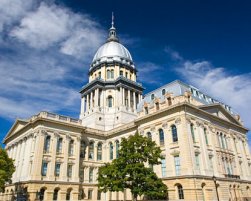
Illinois state capitol

Yesterday, the State Board of Education released its model of how school districts fare in the first year of the school funding structure in the Governor’s veto of Senate Bill 1. (Recall that Senate Bill 1 is the funding reform bill that fixes our broken school funding system for the first time in two decades, which passed both chambers of the legislature only to be vetoed by the Governor.)

We call on legislators to override the veto. These numbers tell a few interesting stories that show a long term plan to decrease state education funding and push costs of educating kids further onto property tax payers. This overreliance on property taxes is one of the main reasons Illinois has earned the distinction of having the most unfair funding system in the country. Why would we double down on that failed structure?

Here are some initial thoughts:

  1. The definition of adequate funding decreases by over $1 billion. That means even if the evidence-based model were fully funded, schools would still have $1 billion less than they need.
  2. The expected local investment increases by over $700 million. That means local property taxpayers would be expected to pick up more of the cost of education than under the version of SB1 the legislature passed.
  3. Here’s the bigger deal: going forward, the veto ignores inflation and actual cost of living differences. Adequacy is a moving target. If we reach 2017 adequacy levels in 20 years, we can’t pretend that’s the current cost of educating our students.
  4. Districts will soon begin picking up pension costs for their newly-hired teachers. When SB1 passed the legislature, it included those increased costs in the calculation of adequacy. But that was stripped out in the veto so that districts would still have to pay pension costs, but the model would pretend they had that funding available to invest in the classrooms.
  5. In 2020, the model will shift to a per-pupil hold harmless. That means districts that have lost student enrollment, even if they are still not adequately funded, will lose money from their hold harmless.

It would still be hard not to be. After a press conference two weeks ago and major confusion in the air (to say nothing of last week’s amendatory veto issued by Governor Rauner, which highlighted pensions), there are two big misconceptions that we’ve been hearing quite a bit and we’ll address them both here. But first…

A Crash Course on Pensions in Illinois

First, who pays? For our discussion, there are two key pensions systems: the Teachers’ Retirement System (TRS), which is paid for by the state and serves all teachers in Illinois, except for Chicago Public School (CPS) teachers, and the Chicago Teachers Pension Fund (CTPF), which is paid for by CPS.

Next, what’s a pension payment? Pension payments are best thought of as having two parts: the first is the normal cost payment, which is the cost of keeping up with pensions for the year, and the second is the unfunded liability payment which is essentially a debt payment to the fund to make up for years of smaller payments.

MYTH #1: Chicago asked to pay its own pensions in 1995 as a condition of getting block grants.

THE TRUTH: Chicago has paid its employer costs of its pension fund since the fund began. The State pays the employer cost for teacher pensions outside of Chicago for all other school districts. The State used to include some funding for CPS to use to make its pension payment. In fact, in 1997, a goal was added to state law declaring its intention to provide the Chicago Teachers’ Pension Fund “between 20% and 30%” of the amount it provides to the Teachers’ Retirement System (which covers all teachers’ pensions except Chicago’s). But last year, while TRS got $4 billion in state funds, CTPF got $0.

A 1995 law made major changes to how CPS operated, but it didn’t change who paid teacher pensions. The Chicago Block Grant was enacted as a way to maximize flexibility for CPS. Rather than reporting claims and getting reimbursed like other districts, the block grants were designed to reduce the paperwork. Now, most of us realize they are outdated and we should phase them out going forward, as SB1 does. But there was never any connection or deal between getting a block grant and paying for pensions.

MYTH #2: CPS’s ballooning pension unfunded liability will eat up everyone else’s school formula funds in the future.

THE TRUTH: The portion of CTPF unfunded liability payments that would be incorporated into the Base Funding Minimum is less than 1% of total. It’s also less than 1% of the total TRS payment the state will make this year. CTPF payments from now until 2059 will grow proportional to the cost of education overall; there is no upcoming cliff that would cause payments to jump disproportionally to the cost of payroll.

For more on how SB1 handles teacher pensions, Mike Jacoby from the Illinois Association of School Business Officials discusses it here.

With school starting in just a few weeks, Governor Rauner shut the door on progress by issuing an amendatory veto (AV) of Senate Bill 1 (SB1), the education funding reform bill that provides more money to local schools without any school district losing a penny of state or local funding.

The most concerning components of the AV are as follows:

  • The AV removes the Minimum Funding Level, an important factor for encouraging the legislature to continue making investments in school funding so that all districts are adequately funded. SB1 sets a goal of a 1% increase of the total state adequacy level each year. If the goal isn’t met, SB1 shields the most underfunded districts. The AV erases this incentive to provide reasonable school funding increases in the future.
  • In removing adjustments for property tax caps and TIF districts, the AV is ignoring the realities that districts face. Property tax laws limit the amount of funding school districts can take in each year. TIFs also divert property tax funds from school districts. Even though districts do not have access to these funds, the AV changes state law to pretend that they do. There is widespread agreement that the way Illinois approaches PTELL and TIF needs modernization, but this approach fails to address that core issue; instead it takes the problem out on school districts and children, who would now be twice denied that funding.
  • The AV punishes districts statewide by capping regional costs, which will impact each of the 313 school districts in Cook, DeKalb, DuPage, Grundy, Kane, Kendall, Lake, McHenry, and Will Counties. It also ignores inflation.
  • One component of this year’s budget package shifted pension costs for new teachers from the state to school districts. Districts must pay those costs in order to be adequately funded, but the Governor’s AV eliminates them from the adequacy calculation.
  • Regarding Chicago, the AV turns its back on the fact that Chicago is the only school district in Illinois that pays its own pension costs. While the statement issued from the Governor’s office talks about the state finally beginning to treat Chicago like all other districts, it approaches this in a manner many experts believe is unconstitutional. The AV also removes the cost of Chicago’s block grant from the district’s base funding minimum, an unnecessary shot at the largest school district in the state and the 85% of its students who live in poverty because the block grant will go away in the future under SB1.
  • To avoid a system of winning and losing schools, SB1 has a “hold harmless” that gives each district at least the same amount of state funds as last year. The AV evaporates the hold harmless in only three short years, at which time, as populations continue to move from rural to urban areas, our rural schools will feel the impact of lost resources. Last year, 222 districts lost enrollment.

We urge the legislature to override the veto.

IL state capitol

It all goes hand in hand: you can’t spend money you don’t have through a formula that doesn’t exist. That’s why in order to fix our worst-in-the-nation funding formula, ensure schools open this fall, and put our education system on a path of renewed stability, we need to enact three bills:

1. Senate Bill 1, to fix our broken school funding system.

2. Senate Bill 6, to appropriate the money to pay for schools (among other things).

3. Senate Bill 9, to support the revenue needed to pay for the budget.

About SB1: The Funding Formula

SB1 is the school funding formula overhaul that passed the House and Senate on May 31. You can read the details here, but the upshot is that school leaders and advocates from across the state support the Evidence-Based Funding Model created in the bill as a once-in-a-generation chance to fix Illinois’s outdated and inequitable school funding system. The Governor has said he will veto the bill, even though all schools win and the framework aligns with recommendations of his own commission.

SB1 is the only funding formula that has passed the state legislature in 20 years. Multitudes of others have been filed but failed, including a recent one that would require at least six committee and floor super-majority votes to get as far as SB1. As a practical matter and as a lead publication has said, that last-minute attempt “appears DOA.”

About SB6: The Budget

SB6, which was enacted into law with the General Assembly’s override of the Governor’s veto, authorizes state spending for the fiscal year that just started. It includes increases in the education budget, but overall, the budget spends about $2.5 billion less than current spending levels. The education budget is consistent with the school funding structure in SB1. Almost all of the state’s appropriation to schools would flow through the new, integrated Evidence-Based Funding Model. That’s $6.7 billion. Without an Evidence-Based Funding Model in place to fund the budget, schools would be out that $6.7 billion.

The reality is that last year, the legislature essentially froze the General State Aid formula in place and sent new school funds through a temporary “equity grant.” Our main funding formula has been put on hold for over a year now. Last year’s budget took a small step toward improving school funding equity, but also created the situation we’re in this year where there is no active, functioning school funding formula. Both the Republican-drafted budget in SB2214 and the Democrat-drafted budget in SB6 appropriated school funding through a new evidence-based model. It is critical that SB1 be enacted so that schools get the funding they need to open their doors this fall.

SB9: The Revenue Bill

SB9 restores most of the income tax increase that lapsed two and a half years ago. This bill is the hardest part of the package, but one that 72 courageous and compassionate representatives voted to pass this week (71 representatives voted to override the Governor’s veto and enact it into law). No one likes tax increases, but the prevalent kick-the-can-down-the-road attitude in Illinois has led to years of spending without having money in the bank to pay for it. Many who voted for SB9 are fiscal conservatives who understand that the interest on the debt that’s growing every day will necessitate bigger tax hikes the longer we wait.

With $15 billion in unpaid bills and almost three years without a full budget, this is the critical piece of the package that will finally provide the stability that our schools need for long-term planning. Categorical payments are months delayed. General State Aid payments had been made on time, but a recent court ruling put in serious jeopardy the state’s ability to even continue making those payments in a timely fashion. And only 144 of over 850 school districts have 90-days cash on hand.

Without the revenue bill, there is no doubt in my mind that some schools would be unable to keep their doors open this year. The schools most impacted by this delayed payment cycle are the neediest districts.

The Conclusion

The budget only works if we have the evidence-based model in place. The evidence-based model only works if we have a budget to fund it. Schools can’t count on state payments for the evidence-based model or anything else unless we have revenue in place to pay for it. These three bills are all interconnected.

If your state senator or representative voted for SB9, say thanks! They stepped up and put kids ahead of politics. But while you’re at it, remind them that the job isn’t done until SB1 also becomes law. You can visit our action center to help get SB1 over the finish line here.

elementary schoolers siting on a rug in a classroom

Good news from the Capitol! Four long years into the conversation about fixing the worst school funding system in the nation, both the Illinois House and the Senate passed a strong school funding reform bill last night. It’s the closest we’ve seen to getting a solution!

The full name of the bill is the Evidence-Based Model for Student Success Act (otherwise known as SB1). Simply put, this bill pulls together relevant research and evidence on how schools should be funded to ensure students’ academic success.

What does this mean for my child’s school?

Two key concepts help answer this important question.

First, remember that school funding is calculated on a per-pupil basis. Second, “adequate funding” or “adequacy” refers to what it costs for a school district to provide the evidence-based practices that drive student achievement.

Under SB1, no district loses money. In fact, every district gets an increase in funding from the state. The districts that are furthest from “adequate funding” get the biggest increases, because of the particular needs in their district (such as high poverty). The range of additional funding goes from $900 per pupil for Waukegan, to $193 per pupil for Chicago, to $1 per pupil for Lake Forest.

Of Illinois’ 860 school districts, about 100 of them would receive more than $400 per pupil. Two-thirds of those are located downstate and one-third are suburban. Another 140 districts, which are already funded at over 100% of adequacy, would see just $1 per pupil.

Check out the Illinois State Board of Education’s estimate of how much each district would receive. (Follow the link and click “House Amendment 1 to Senate Bill 1 (Manar/Davis).” Click the link in the dropdown menu to open the spreadsheet.)

How does this bill work?

Think of it in four major components:

1. First, each district get its “Base Funding Minimum,” which means whatever each district gets from the state this year, it will continue to receive in perpetuity. No district loses funding.

2. Then, an “Adequacy Target” is calculated for each district based on what it costs for a district to provide the evidence-based practices that drive student achievement.

For example, research shows that an average-sized school building needs a principal, librarian, and nurse and that low-income kindergarteners benefit from a full day of instruction with a 1:15 class size ratio. Teachers need high-quality professional development and instructional coaches. Students with special needs need extra support, as do English learners and low-income students.

3. Next, a “Local Capacity Target” is calculated for each district based on how much property wealth each district has available to contribute. When we add the “Base Funding Minimum” to this number, we see how much the district has available to spend, and from there, we can identify how close a district is to being adequately funded.

4. Finally, new dollars flow through the new model, funding districts that are furthest from adequacy. Districts are divided into four tiers, from the least adequately funded in Tier 1, to those funded over adequacy in Tier 4. The first half of new funds will be invested in the Tier 1 districts, followed by the next 49 percent invested in the Tier 1 and 2 districts.

The bill also creates a property tax relief pool available to districts with low property wealth but high property tax rates. This incentivizes these type of districts to reduce their rates on property tax payers.

What about the budget?

We also need a K-12 education budget so that dollars can be distributed as set forth in SB1. The only budget that passed in the last two years was the K-12 budget; that needs to happen again for the fiscal year that begins July 1. The legislature will continue meeting throughout June to work toward an agreed budget compromise.

What will Chicago Public Schools get?

Chicago is caught in the middle: on the one hand, it’s the economic hub of the state and home to nearly 400,000 of two million Illinois schoolchildren. On the other, it’s the big city that some of the rest of Illinois loves to hate. Chicago Public Schools, which is 269th on the list for SB1, would receive $193 per pupil in new funding.

So why are some calling this bill a Chicago bailout?

We urge you to look at the facts. Don’t get played. Earlier attempts at funding reform could have created winners and losers and pitted Chicago against the rest of the state…but not this time and not this bill.

Remember these facts:

  • No district loses money. Every district gets at least what it received from the state last year.
  • Money is directed to the districts that need it the most because they are the farthest away from adequacy.
  • Chicago is by far the largest school district in the state and has 86 percent of its kids living in poverty. On a per pupil basis, there are 268 districts that get more than they do. If $350 million is invested, an amount a lot of legislators have been talking about, Chicago would receive $70 million of it.

Then, there’s the teacher pension funding issue…

The state pays almost all of the employer costs for teacher pensions outside of Chicago, and almost none for Chicago teacher pensions. The amount the state pays for pensions outside of Chicago was more than the whole allocation to the school funding formula last year. In fact, while the state gave the non-Chicago Teachers Retirement System $4 billion last year, Chicago’s Teacher Pension Fund got nothing. That $4 billion increases next year to $4.6 billion.

SB1 would provide Chicago with $215 million for its pension. That covers the “normal cost” of Chicago teacher pensions only – not any of the legacy costs for pension debt. The remaining $500 million in pension debt costs would be recognized when the formula considers how much local capacity CPS has to fund its schools, but the benefits for that adjustment are already accounted for in the $70 million figure expressed above. The district cannot spend the same dollar twice, so subtracting this from local capacity is entirely reasonable.

What happens next?

We’re as close as we’ve ever been to fixing our broken system, but we’re not at the finish line. When the Senate sends the bill to the Governor’s desk (that could happen any day now), he has 60 days to sign it into law or veto it.

So we need to turn up the pressure and let Governor Rauner know that school funding reform matters across Illinois. (Contact the Governor here.)

If Gov. Rauner vetoes the bill, the legislature will have the chance to override the veto with a three-fifths majority vote in both the House and Senate. That means the bill needs more yes votes than when it passed last night by simple majority. Because this bill has tremendous benefits for districts up and down the state (even for some who voted no for it last night), we need show our support for SB1.

Illinois’ plan under the Every Student Succeeds Act (ESSA) was submitted to the federal government for review. The plan, which was adopted by the Illinois State Board of Education (ISBE) a few weeks ago, includes plans to close opportunity and achievement gaps.

Importantly, it ensures the state’s accountability plan will be inclusive, transparent, and informative to parents. Some of the changes included:

  • Weighting growth more than proficiency so we can reward schools for how much students are learning, not what they knew before starting.
  • Counting students from historically underserved subgroups, demonstrating our state’s commitment to educating all students.
  • New school ratings that are simple and easy to understand for parents so they know how their children’s schools are doing.

The U.S. Department of Education now has 120 days to review the state’s ESSA plan for approval or to provide feedback.

TRS Surcharge Continues Taking Federal Funds from Districts to Cover Pension Debt 

Today, Stand for Children Illinois released an update to its 2015 report that details how Illinois siphons federal funds earmarked for needy students away from school districts to pay pension debt. The practice of tapping federal funds through this TRS federal funds surcharge to cover pension costs hurts the poorest schools the most.

After the October 2015 report was released, SB 436 (Stadelman/Gordon-Booth) passed the Illinois Senate with overwhelming support. The House never assigned the bill to a substantive committee, so it died earlier this month when the new General Assembly was seated. Sen. Stadelman has filed SB 195, which advocates hope to advance this year.

Meanwhile, the problem has gotten even worse. The TRS surcharge is the special rate school districts outside of Chicago must pay when using federal funds to pay teachers. Those federal funds are meant to support underserved students, but when a district spends those funds to hire certified teachers, the State takes 39% of those funds to pay off the pension debt of the Teachers Retirement System (TRS). Next fiscal year, that percentage will climb to an eye-popping 45%.

Illinois, which already has the most regressive school funding system of any state, is the only state in the country to have adopted this practice. Federal funds are a lifeline for needier students and schools that are under-resourced. But the state has instead chosen to treat them like a piggy bank to raid to cover its massive pension debt.

Federal funds are supposed to be targeted to serve poor and special needs students, but Illinois law rips off our neediest students. When school districts in Illinois hire teachers using state or local funds, they pay only 0.58% of salaries to TRS. But when districts pay teachers using federal funds, they pay over 65 times that amount to TRS. As a result of this policy, the high TRS payment for federally funded positions hits the state’s poorest school districts hardest. School districts face two terrible choices: relinquish to the pension fund 39 cents of every dollar (soon to be 45 cents) of every federal dollar they receive, or spend federal funds on materials, which may not make the most impact on student learning. This is a travesty.

Read our report, An Education Funding No-Brainer: Stop the Teacher Pension “Surcharge” that Hits the Poorest Schools Hardest.

There are about 860 school districts in Illinois and just one of them is responsible for paying the employer costs of their teachers’ pensions: Chicago Public Schools. The State covers the cost for the rest. Neither the State nor CPS has been a model financial steward for this responsibility—both the State and CPS now have to pay every year to cover the current costs (which we call “normal cost”) and debt from past years of skipping payments.

The “normal cost” for Chicago teachers’ pensions is $215 million this year. This has become especially relevant at this moment because the General Assembly passed (on a bipartisan vote) an appropriation bill to cover that full amount this year, which the Governor agreed to sign only if there was significant pension reform enacted first. Keep in mind the $215 million doesn’t even touch the pension debt that has also amassed; CPS will need to kick in a total of $721 million. The Governor vetoed that bill last week and the Senate overrode the veto. The House has 15 days from then to also override the veto if it is to become law, but assembling the super-majority vote needed to override would be exceedingly difficult and the House is not scheduled to be back in session until January 9.

But let’s compare: this year, the State of Illinois will spend about $4 billion for teacher pensions outside of Chicago. By far, most of that is debt. It’s about $250 million more than the State of Illinois paid for teacher pensions last year. It is subject to a “continuing appropriation,” which means that it gets paid no matter what. No budget? That $4 billion contribution to TRS still gets paid. Here’s how state payments to teacher pension systems have gone over the years:

That FY17 $215 million is about 5% of the amount the state will contribute this year to teacher pensions outside of Chicago. It is also the bill that has been termed a “Chicago bailout.” But when you consider the normal cost payment in context, it seems pretty clear that this is just one step closer to pension funding parity.

Last December, Congress replaced No Child Left Behind (NCLB) with the Every Student Succeeds Act (ESSA). The shift gives states significantly more flexibility about how to identify schools that are succeeding and support for schools that are struggling.

Remember how NCLB labelled virtually every school as failing? That’s right, in the last few years, schools had to have 100% of students meeting or exceeding standards, regardless of where students started or how much they learned in that school. The flexibility to design a more meaningful and achievable system could be a great thing for Illinois schools…. But it also means that it is up to parents and community members to be vigilant and speak up for a fair system that provides clear and transparent information to families, appropriate attention to closing achievement gaps, and individualized supports for struggling schools.

The Illinois State Board of Education has been engaging communities about ESSA early and often. They came out with their draft plan and are making revisions in response to stakeholder feedback. (Our feedback letter is here.) Next month, we anticipate a new version coming out with more concrete details, followed by another listening tour.