Colorado’s 2023 Legislative Session is in Full Swing 

At Stand for Children Colorado, we advocate for policy solutions in the areas of early literacy, high school success, diversifying and supporting the teacher workforce and safe and supportive schools and communities. This session we are proud to be championing and supporting key bills to support Colorado’s students, educators, and families.    

This session, we are prioritizing policies to: 

  • Expand funding for the Ninth Grade On-Track and Expelled and At-Risk Student Services (EARSS) grant programs. 
  • Expand and diversify the educator workforce. 
  • Fight for equitable school funding. 
  • Create protections for juveniles through interrogation and detention reforms
  • Update probation and parole supervision to include remote check-in options and early release for education credits earned. 
  • Create access to free phone calls from prison or jail. 

Centering Parent, Educator and Community Voice at the Capitol 

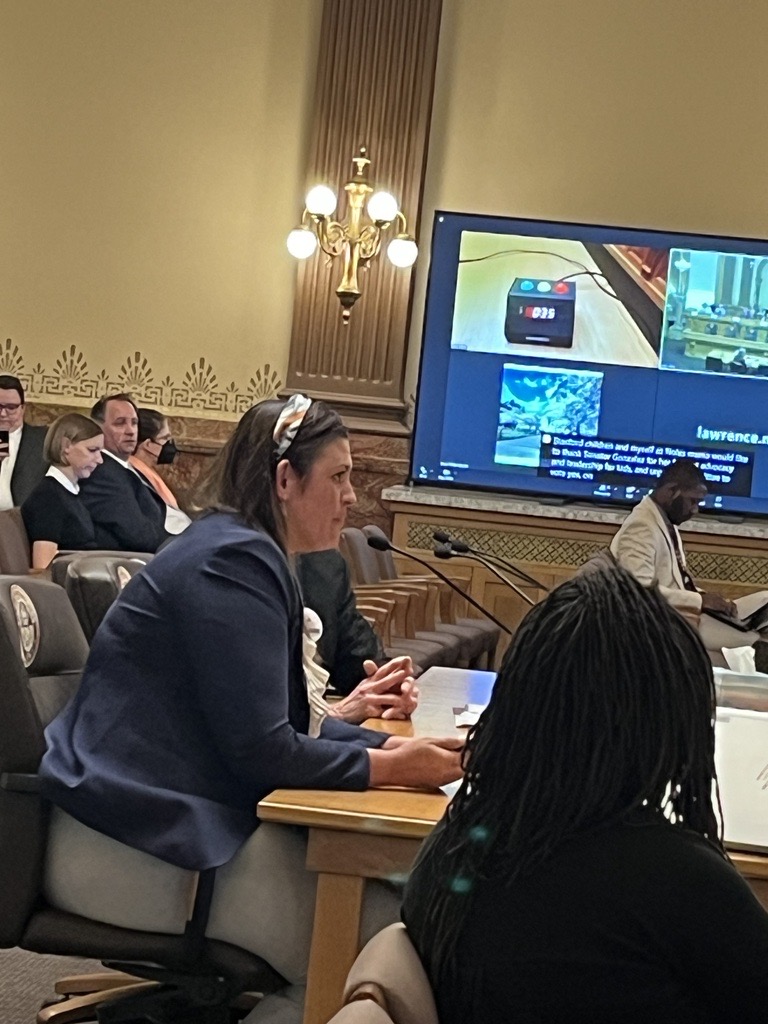
At Stand Colorado, we deeply believe that policy making is most effective when the voices of those impacted are at the center of decision making. That’s why we support parent, educator, and community advocates to share their testimonies with lawmakers during Senate and House committee meetings. We’re sharing a few of those testimonies here:  

Let’s provide mental health assessments for students | parent and Stand Community Organizer, Natalie Perez, testifies in support of HB23-1003, School Mental Health Assessment.  

Young people are especially vulnerable to falsely confessing under the pressure of deception | community leader, Lindsay Saunders-Velez, testifies in support of HB23- 1042, Admissibility Standards For Juvenile Statements.   We cannot afford not to invest in our education workforce | Colorado educator, Anthony Abel-Pype testifies in support of HB23-1001, Expanding Assistance For Educator Programs. 


Expanding and Diversifying Colorado’s Educator Workforce 

Stand Colorado has championed efforts to develop and pass, and now continue to advocate for, innovative policy solutions to address financial and other barriers to educators entering the workforce to ensure an expanded and more diverse educator workforce, which is critical for all of Colorado’s students to experience just and supportive schools.  

In 2023, we are support three key bills to remove barriers and expand and diversify the teacher pipeline in Colorado – HB23-1001 Expanding Assistance For Educator Programs, SB23-087 Teacher Degree Apprenticeship Program, and HB23-1064 Interstate Teacher Mobility Compact.  Learn more here


The 9th Grade Approach: A CHSS Showcase 

This January, we hosted a virtual event, The 9th Grade Approach: A CHSS Showcase in partnership with Colorado’s Center for High School Success (CHSS), a project of Stand for Children. Educators, lawmakers, and community members joined us to learn about the research driving the 9th Grade Success model, coaching and support CHSS provides in Colorado’s schools, and demonstrated student outcomes in the 2021-22 school year.


Yaeel Duarte, Stand Advocacy Fellow, testifies in support of HB23-1042 

“I cannot imagine the powerlessness parents might feel to know that their children could be in a position where an adult in power could be using dishonest tactics to drive them into confessing something false. Nobody, including adults, can think clearly about future consequences under such pressure.”   

Learn More


Anthony Abel-Pype, Colorado Educator, testifies in support of HB23-1001 

“Bills that can offer incentives, financial and otherwise, for people in general, and people of color in particular, to choose a career path in education, and to stick with it, will go a long way to improving student outcomes in the state of Colorado.”  

 Learn More


Stand up for Language Justice 

We are working to expand the practice of Language Justice in Colorado and we want to hear from you! Please take a few minutes to tell us about your experience with language justice in your school district. We will be sharing what we heard with district leadership. Complete our survey here

Thank you for Standing

High School Students With Teacher In Class Using Laptops Smiling

Today the House Education Committee heard HB23-1109, School Policies And Student Conduct.  This is a bill that promotes restorative practices, ensures reduced legal system involvement, fosters fairness in a system that otherwise considers students guilty until proven innocent, and creates accountability for unregulated and untrained expulsion hearing officers. Lauren Kinney, school counselor and Stand Advocacy Fellow prepared testimony in support of HB23-1109 that was read during the hearing by government affairs director, Bri Buentello. Below are those remarks.

“My name is Lauren Kinney and I am asking you to support HB23-1109. As a high school counselor, I am forced to witness and triage the fallout of failed exclusionary discipline on practically a daily basis. The amount of time I spend responding to frustrated teachers, admin hell-bent on maintaining the status quo of zero-tolerance policies, exhausted parents, and students that are starved for connection and struggling to cope with the trauma of a pandemic.  

Students need services, kindness, respect, and to be taught the Colorado Essential Skills (Empowered Individual, Communicator, Problem Solver, and Community Member). We have local and national data warning us for decades about the unintended consequences of even a single failed class or suspension on graduation rates and the likelihood of entering the criminal justice system. 

  • We know that one suspension in ninth grade doubles the risk of failing classes and increases the risk of dropping out by 20% (Mallett, 2016). 
  • Students that fail one or more classes during their freshman year only have a 14% likelihood of graduating on time with their peers (ASCA, 2019). 

If you explore the Education Department’s Civil Rights Data Collection website, you will see that regardless of the county in Colorado, our marginalized students are disproportionately impacted by these antiquated systems.  

Our best, most obvious solution is to focus on Restorative Justice Practices focused on addressing the harm done to individual and community stakeholders while focusing heavily on the rehabilitation of the perpetrator. There is  significant evidence that RJP can improve student misbehavior, minimize exclusionary discipline, reduce discipline gaps related to race and disabilities, and have a positive impact on the students’ and teachers’ perceptions of the safety and pro-social climate of the schools.  

Because you all have the advantage of using your fully-formed adult brains, I urge you to consider the long-term unintended consequences of our children’s behaviors that their underdeveloped brains cannot.”  

Today the House Education Committee heard HB23-1109, School Policies And Student Conduct.  This is a bill that promotes restorative practices, ensures reduced legal system involvement, fosters fairness in a system that otherwise considers students guilty until proven innocent, and creates accountability for unregulated and untrained expulsion hearing officers. Jesse Rula, educator, parent, and Stand Advocacy Fellow prepared testimony in support of HB23-1109 that was read during the hearing by state organizing director, Ivana Bejaran Rib. Below are those remarks.

“My name is Jesse Rula and I am asking for your support of HB23-1109. Reducing the number of expulsions happening to Colorado youth is something I feel very strongly about due to my own personal experience.  

I was a struggling teenager and was expelled from 2 different schools. I had a lot of personal things going on and it spilled into my school life. I was never expelled for anything related to drugs or violence but overall disruptive behavior. What I wish my teachers and school staff would have known was that my behavior was a cry for help.  

Being expelled didn’t help. It only left me with more time in the same unhealthy environment I was in. What I needed was for the school to see that my behavior was a symptom of something bigger but instead I was allowed to slip through the cracks. Eventually, I just quit school altogether. Being expelled and struggling to find a school that would look at me as more than the reputation that preceded me became too hard and I gave up. I ended up pregnant at 16 and a high school dropout.  

Despite all that, I am a success story. I did get my life together and I managed to go to college and eventually get my master’s degree. I ended up working for the same school system that failed me because I never wanted it to happen to another student. Despite what some of our students look like now, we have no idea what potential they have in the future. Just because a student is struggling, or making bad choices now, doesn’t mean they can’t accomplish great things with the right support.  

Expelling students, especially for smaller infractions, is only a temporary fix for a much larger problem. It often leads to kids just quitting all together. In the end, these young people will someday become adults and if we continue to treat them like marginalized members of society, we may pay a higher price in the end.  

If someone had taken the time to see me as more than a problem to get rid of, I might have had an easier road to get to where I am now. Please, don’t allow schools to be so quick to turn our students out. Give them a chance to thrive and succeed, thank you. “

Today the House Education Committee heard HB23-1109, School Policies And Student Conduct.  This is a bill that promotes restorative practices, ensures reduced legal system involvement, fosters fairness in a system that otherwise considers students guilty until proven innocent, and creates accountability for unregulated and untrained expulsion hearing officers. Tina Carroll, educator, parent, and Stand Advocacy Fellow prepared testimony in support of HB23-1109 that was read during the hearing by parent organizer, Natalie Perez. Below are those remarks.

“Hello, my name is Tina Carroll and I have a third-grade student that attends school in Jefferson County. I am an educator who also serves as a conduct and community standards officer. As a parent, educator, and servant leader in the community, I believe HB23-1109 closely aligns and has the potential to be the change we need to see in our schools and communities. The biggest component of this bill that resonates with me is the responsibility and pertinent role of the hearing officer. It is truly unimageable that we have individuals deciding our children’s future who are not trained in trauma, conflict resolution, cultural competency and familiar with milestones in children development. Although this is not an exhaustive list, it is clear that we are allowing our students to enter into an education system at a disadvantage. If we don’t make the change now to have skillful and well-versed advocates making informed decisions for our students and their families than we are accepting a system that funnels students out of the classroom and into the juvenile and criminal legal system.   

It is no secret that racial and ethnic minorities and children with disabilities are disproportionately represented in our legal system and in our classrooms. And to continue operating in a system where hearing officers are permitted to take a more punitive approach, instead of a responsive one is disheartening and a casualty in our education system.   

Members of the house, today I ask that you vote yes on this bill and take a stand for all children in the state of Colorado and mandate that we use best practices, by making sure that all hearing officers are subject matter experts, have ongoing trainings, and adequate resources for effective life changing outcomes and behavior modifications that will keep our children in the classrooms where they belong. ”

Hundreds of Colorado students are expelled from schools every year for low-level nonviolent conduct or based on mere allegations. This disproportionately impacts children of color and students with disabilities.

The House Education Committee will soon consider HB23-1109, School Policies And Student Conduct.  This is a bill that promotes restorative practices, ensures reduced legal system involvement, fosters fairness in a system that otherwise considers students guilty until proven innocent, and creates accountability for unregulated and untrained expulsion hearing officers. 

Expelling students exposes them to a greater likelihood of delinquency or criminal system involvement and is therefore more expensive and less effective than keeping students in school.

We need you to weigh in please! Will you email Members of the House Education Committee today and ask them to support HB23-1109? 

Capitol Week in Review brings you news of bills we are tracking around our priorities of advancing educational equity and racial justice in Colorado and making our schools and communities safer and more supportive.

Legislative Update

HB23-1001, Expanding Assistance For Educator Programs, which supports student teachers toward the goal of diversifying the teacher workforce passed the House and will be heard by the Senate Education Committee next. 

HB23-1003, School Mental Health Assessment, which creates the sixth through twelfth grade mental health assessment program passed in the House Public and Behavior Health and Human Services Committee on a 7-4 vote and was referred to the Committee on Appropriations.  

HB23-1064, Interstate Teacher Mobility Compact, which makes it easier for active-duty military spouses to transfer their teaching licenses without further testing, thereby allowing them to teach in Colorado classrooms faster, passed 46 – 16 in the House.  

HB23-1089, Special Education Services For Students In Foster Care, which designates students in out-of-home placements as residents of the school district of their school of origin to increase stability and learning success, is scheduled to be heard in the House Education Committee on February 16.  

HB23-1100, Restrict Government Involvement in Immigration Detention passed in the House Judiciary Committee on a vote of 7 – 6. For years, Colorado taxpayers have been picking up the bill of the federal government by allowing the state to contract a private company to house or detain individuals for federal civil immigration purposes. This bill would prevent any such further contracts and begins a review process of these contracts over the next two years. 

HB 23-1112, Earned Income and Child Tax Credits, which will give more money to more working-class families by expanding eligibility of the Earned Income Tax Credit, is scheduled to be heard in the House Finance Committee on February 13.  

HB23-1145, Hearing Timelines Juveniles In Adult Facilities, passed unanimously in Committee and was referred to the Committee of the Whole. The bill aligns the timelines for hearings in Colorado law for a juvenile already ordered to be held in an adult facility while awaiting trial with the timelines in the federal “Juvenile Justice and Delinquency Prevention Act”. 

HB23-1187, Alternatives In Criminal Justice System And Pregnant Persons, which requires the court to consider alternatives, such as probation, to pregnant or postpartum defendants if the risk of incarceration outweighs risk to the public, was introduced in the House. 

SB23-004, Employment Of School Mental Health Professionals, which authorizes a school district to employ health professions, such as psychologists, who are not licensed by the Colorado Department of Education but hold a Colorado license for their profession, passed unanimously in the Senate Committee of Health and Human Services. 

SB23-039, Reduce Child and Incarcerated Parent Separation, which requires the Department of Human Services to prioritize the facilitate communication and family time between children and their parents who are incarcerated will be heard February 13.

SB23-070, Mandatory School Resource Officer Training, which requires a law enforcement officer to complete a school resource officer training curriculum before working as a school resource officer, will be heard in the Senate Education Committee on February 13.  

SB23-071, Education Accountability Act, which allows a school district to seek judicial review or file a civil action for declaratory relief against rules, regulations, or final orders of the Colorado state board of education, will be heard in the Senate Education Committee on February 13.  

SB23-075, Deletion Of Child’s Name From Criminal Justice Records, which concerns children’s data privacy by ensuring that children’s names are not included in public criminal justice records, most notably by requiring the notation “child witness” on a criminal record involving a child witness, will be heard in the Senate Judiciary Committee on February 13.  

SB23-082, Colorado Fostering Success Voucher Program, which establishes a program to provide housing vouchers and case management services to eligible foster youth, passed unanimously in the Senate Committee of Health and Human Services.  

SB23-087, Teacher Degree Apprenticeship Program, which creates a teacher degree apprenticeship program as an alternative route to teacher licensure and helps to alleviate the educator shortage, passed unanimously in the Senate Education Committee. 

SB23-099, Special Education Funding, which increases special education funding by an additional $40M passed unanimously out of the Senate Education Committee.   

SB23-115, Department of Education Supplemental, which moves state dollars towards the dept. of education for programs administered by the state, passed unanimously in the Senate. SB23-136, Adjustments To School Funding Fiscal Year 2022-23, which concerns the adjustment of state dollars to local school districts, was introduced in the Senate.   

Our Take

Two of our teammates weighed in on policies designed to make schools and communities safer and more supportive.  

Stand organizer, Natalie Perez, testified in support of HB23-1003, School Mental Health Assessment, saying, “I believe our schools should be a safe place for our kids, and having a program where every child is assessed would go a long way. Having a qualified provider at every school in these times where our children are going through pain and large amounts of stress would not only create safer communities, but it would also help students understand what they are feeling.” 

Stand organizer, Vallerie Bustamante, testified in support of HB23-1100, Restrict Government Involvement in Immigration Detention, saying, “Growing up with the fear that my parents or any extended family member would end up detained and sent off to a facility where living conditions are evidently inhumane, was probably the first thought that crossed my mind as I woke up, as I overachieved in school, as I was thinking of what college to attend, as I applied to my first job at 15 to help with bills because my mom was laid off due to a warning about ICE coming to her factory, as I watched the news with anticipation whenever the highlight said ‘immigration reform’. Although an end all be all immigration reform has not been passed, legislation like the one presented today is certainly a step forward towards that direction.” 

What We’re Reading

Bill restricting government involvement in immigrant detention advances  

Proposal advances to add $40 million to Colorado’s special education funding  

Teacher apprenticeships among solutions lawmakers consider for educator shortages  

Incarcerated Coloradans could get released early by going to college  

Chalkbeat’s Education Bill Tracker 

The House Public and Behavior Health and Human Services Committee heard HB23-1003, School Mental Health Assessment, which creates the sixth through twelfth grade mental health assessment program. Below is the testimony of Natalie Perez in support of the legislation.

My name is Natalie Perez , I am a parent of a 6th grade boy, and an organizer with Stand for Children.  

I am here today to ask you to vote yes on house bill 1003.  

I believe having all children, 6th to 12th grade mentally assessed is vital, especially after the pandemic and all the changes our children are going through.  

Personally, not only did we lose family members to covid, but we also went through a separation, we had a family member go missing and my son suffered severe bullying in his school.  

The past 2 years have been so rough for my family, and I feel very grateful that I have had the resources to help my child overcome everything we have been through.   

I think about all the children in my son’s class whose parents don’t have the resources. Especially at the age where they are changing and figuring out the world. I think about the children who went through loss in their homes during the pandemic. And children who are currently having overdoses at school because it’s the only way they have learned to cope. Children who are using violence because it’s the only way they feel heard. Children who don’t feel safe coming home and opening up to their parents.  

I believe our schools should be a safe place for our kids, and having a program where every child is assessed would go a long way. I believe every child should have access to this program even if a parent is not involved. Having a qualified provider at every school in these times where our children are going through pain and large amounts of stress would not only create safer communities but it would also help students understand what they are feeling.  

So today I ask you to please vote yes.

HB 23- 1042, Admissibility Standards For Juvenile Statements was heard by the House Judiciary Committee on Tuesday, January 31. Below is the prepared testimony of Yaeel Duarte. Her testimony was written in Spanish and delivered by community organizer, Vallerie Bustamante. You can read both testimonies below. Learn more about HB23-1042 and why we are supporting it.

Gracias por la oportunidad de estar aquí hoy y hablar con usted sobre por qué quiero apoyar el Proyecto de Ley HB 23-1042, para la protección de la verdad y la confianza en los interrogatorios a menores. 

Mi nombre es Yaeel Duarte, vivo en la ciudad y condado de Denver soy madre de familia de 4  Este proyecto de ley está muy apegado a mi corazón precisamente porque viven conmigo 3 de mis 4 hijos. Los cuales son de edades 20,15 y 14 años de edad. En base a las estadísticas en  cuanto a interrogaciones falsas por el motivo de intimidación a los menores No me puedo imaginar la impotencia de los padres de saber cómo sus hijos por temor o estrés del momento 

No fueron escuchados y eso sin tomar en cuenta que muchos adolescentes y jóvenes No saben expresar y comunicarse en momentos de presión para ellos. Definitivamente que Nadie incluyendo los adultos puede pensar claro ni en las consecuencias a futuro de lo que hablar sin analizar me pueden traer. 

Me encantaría ver como las leyes se capacitan lo suficiente para efectuar de manera justa tales interrogaciones. Que los jueces y oficiales puedan tener la habilidad de observar cuando un joven se ve bajo presión y que se puedan hacer las investigaciones necesarias para asegurarse de que están hablando la verdad. Por supuesto que esto sea viable para todo joven frente a un oficial sin importar raza o color. 

Nuestro estado puede desarrollar ese nivel de confianza si todas las partes involucradas ponen de su parte, este es un país que practica la Justicia y la libertad y eso mismo hay que enseñar a las generaciones venideras. 

Gracias por tomarse el tiempo de escucharme. 

Good afternoon chair and members of the committee, my name is Vallerie Bustamante and I am community organizer with Stand for Children, today I will be reading for one of our community leaders who actually wrote her testimony in Spanish, but for the sake of time I translated and will be reading it in English.  

Thank you for the opportunity in presenting my testimony and letting me tell you about why I support HB Bill 23-1042, for the protection of truth and trust in interrogation settings of minors. 

My name is Yaeel Duarte, I live in the city and county of Denver, I am the mother of 4 children and I am a fellow for Stand for Children. 

This bill is very close to my heart precisely because 3 of my 4 children still live with me. They are 20, 15 and 14 years old. Based on the statistics regarding false confessions when dishonest interrogations happen to intimidate minors; I cannot imagine the powerlessness parents might feel to know that their children could be in a position where an adult in power could be using dishonest tactics to drive them into confessing something false. Nobody, including adults, can think clearly about future consequences under such pressure. I would love to see the laws empowered enough to fairly carry out such interrogations, that judges and officials may have the ability to observe when a young person is under pressure and that the necessary investigations can be carried out to make sure they are speaking the truth. Of course this is viable for every young person in front of an officer regardless of race or color. Our state can develop that level of trust if all parties involved put forth their part, this is a country that practices true justice and freedom and that must be taught to our future generations.  

Thank you for taking the time to listen to my testimony and I ask you to vote in favor of HB23-1042.  

HB 23- 1042, Admissibility Standards For Juvenile Statements was heard by the House Judiciary Committee on Tuesday, January 31. Below is the prepared testimony of Lindsay Saunders-Velez, Senior Executive Director of the Colorado Justice Advocacy Network. Learn more about HB23-1042 and why we are supporting it.

Chair and Members of the committee, My Name is Lindsay Saunders-Velez, Senior Executive Director of the Colorado Justice Advocacy Network, Commissioner of the Colorado Jail Standards Commission. I speak in Support of HB23-1042.

When people are brought in for questioning by police, they are expected to tell the truth. Most people would assume that goes both ways — that the police must also be truthful during interrogations, but the reality is that the police can lie to you during an interrogation, and it is common for them to do so. But why would the police lie? During interrogation, officers may lie about evidence they have to pressure you into confessing to a crime they believe you have committed — even if you are innocent.

That is what happened in the infamous case of the Exonerated Five (previously known as the Central Park Five). During individual interrogations, police told each of the five teens that the others had implicated them in committing the crime. In Connecticut, police falsely told 16-year-old Bobby Johnson that they had evidence he had committed the murder and that he would face the death penalty, but if he admitted guilt, they could make sure he would only get probation. As a result, he falsely confessed. Both cases involved police officers lying to teenagers. Young people are especially vulnerable to falsely confessing under the pressure of police deception tactics. Today, there is a growing movement for change in several states across the US and we have the power to protect young people from police deception by passing this legislation that reduces the risk of false or unreliable confessions.

Young people are especially vulnerable to falsely confessing under the pressure of deception because the parts of the brain that are responsible for future planning, judgment, and decision-making are not fully developed until a person reaches their mid-twenties.

Through such tactics, the police will try to convince a young person that denials are pointless, and confessing is the only option. Because youth are more vulnerable to social influence, police may also present themselves as “friendly” officers who want to help and will claim to show some leniency if they confess. This approach puts even more pressure on young people to falsely confess to a crime they did not commit.

Police deception is currently allowed in every state, but that could be starting to change. Illinois, Oregon, and Utah have passed legislation to protect juveniles from the use of police deception during interrogations, but the use of these tactics against adults is still legal in all 50 states. Several other states are taking steps to end police deception in interrogations altogether.

Confessions only must be voluntary to be used as evidence. The reliability of the confession, including whether it was obtained through coercion and deception, is not considered. In this bill, judges will be able to look into how reliable the confession evidence was. The Colorado Justice Advocacy Network supports Stand for Children on this bill. You can help end police deception in interrogations by passing this bill. Thank you for your time.

HB 23- 1042, Admissibility Standards For Juvenile Statements was heard by the House Judiciary Committee on Tuesday, January 31. Below is the prepared testimony of Tom Pipal. Learn more about HB23-1042 and why we are supporting it.

Chairperson Weissman and Members of the Committee, thank you for allowing me to speak to you today about this very important issue.  

My name is Tom Pipal, and I am a resident of Parker, CO. I am here today to urge your support of HB23-1042. 

I am a former university professor of management at the University of Tulsa. For twelve years I worked as the head of corporate training and development at MCI-WorldCom. Also, I served as a board member and board chair of Court Appointed Special Advocates of Tulsa for thirteen years.  

As a professor, I taught a course on research methods including the creation of interview protocols and interviewing skills. As head of Corporate Training for MCI-WorldCom, I developed an interviewing skills course that was required of all managers, directors and vice-presidents (almost 7000 people). This addressed the specific context of conducting selection interviews and performance appraisals. And each year, Tulsa CASA (which represents children in cases of alleged abuse and/or neglect) conducts a 50-hour training program required for new volunteers; approximately 10 hours of that training addresses interviewing of both children and adults in this very emotional situation. 

There are a number of similarities among these three settings, but one of the most important is this. It is a fundamental psychological principle that has been formally recognized for over 70 years. When a power differential exists between the person asking the questions and the person answering them, the interviewee will unconsciously (and sometimes consciously) try to give the answer the interviewer wants or expects. The greater the power differential, the stronger this effect. Therefore, to get accurate/true results, interviewers must exert a conscious effort to minimize the cues they are giving to the interviewee. 

Further, we are all susceptible to this effect. But children and adolescents are particularly vulnerable in large part because their prefrontal cortex is only partially developed. This part of the brain controls decision-making, impulse control, and our ability to anticipate future events and appreciate the consequences of our actions.  

When law enforcement officers use untruthful tactics during interrogation, far too often, the consequences are life-altering. It seems to me that this has three significant negative consequences: 1) an innocent may be punished; 2) the true guilty party may still be at large; and 3) the credibility of our law enforcement process may be damaged with both the child and the larger community. Trust is hard won but easily lost. A child who loses trust in the inherent fairness of the system, who is punished even as they are trying to do what they perceive to be the right thing (i.e., telling the officer what he or she wants to hear), is a life potentially lost. And that is simply too high a price. 

Thank you for your time. And I fully support passage of HR 23-1042, Admissibility Standards for Juvenile Statements