At the age of 14, Lawrence Montoya was coerced into a confession that cost him more than 13 years of freedom. A cognitively impaired teenager residing in Denver, Montoya was subjected to hours of law enforcement techniques including “false evidence ploy, manipulation, minimization, threats, false promises.” Finally under immense pressure Montoya succumbed to these techniques and confessed falsely, resulting in a wrongful conviction. This tragic case is sadly just a single reminder of many of the urgency of protecting truth and trust in juvenile interrogations, and the importance of passing HB 23- 1042, Admissibility Standards For Juvenile Statements.

Currently in Colorado, law enforcement may use deception during interrogation of youth. The methods used during these interrogations can also be harmful. Juveniles may be subjected to physical and psychological pressure, such as being held in isolation, being threatened with harsher punishment, or being presented with fake evidence. These tactics can lead to false confessions and can also cause long-term psychological damage. Children are more susceptible to manipulation and more likely to provide inaccurate information and false confessions under such pressure. According to an analysis published by the Bluhm Legal Clinic at Northwestern University “There can be no doubt about it: Young people are simply more likely to be wrongfully convicted than adults.” “They are less able to weigh risks and consequences; less likely to understand their legal rights; and less likely to understand what attorneys do or how attorneys can help them.” 

Colorado now has an opportunity to follow states such as Oregon, Illinois and pass safeguards for kids with HB 23- 1042, Admissibility Standards For Juvenile Statements which will:

  • Increase funding for interrogation training for law enforcement, and 
  • Improve the general reliability of confessions by requiring all juvenile interrogations to be recorded, and
  • If law enforcement does use deceptive tactics during custodial interrogation, the judge may discern whether the resulting confession was voluntary and therefore reliable and admissible in trial.  

The University of Michigan’s National Registry of Exonerations examined the prevalence of false confessions in wrongful convictions of juveniles and found “Forty percent of exonerees who were under 18 at the time of the crime falsely confessed, including 53 percent of 14- and 15-year olds, and 86 percent of the few who were 13 years old or younger. By comparison, only 7 percent of adult exonerees without reported mental disabilities falsely confessed.”

Under interrogation for two and a half hours Lawrence Montoya denied 65 times being involved in the murder that he was ultimately coerced into confessing to using deceptive tactics. This confession was used in the absence of a shred of physical evidence to convict a 14 year old child. Unjust convictions such as Lawrence Montoya’s undermines the integrity of the justice system and can be prevented by HB 23-1042. Unfortunately, we cannot give back the countless years that have been taken from wrongly convicted children such as Lawrence Montoya, but this important legislation can be a first step in building trust within the criminal justice system and preventing future unjust convictions.

https://www.ca10.uscourts.gov/sites/ca10/files/opinions/010110692520.pdf

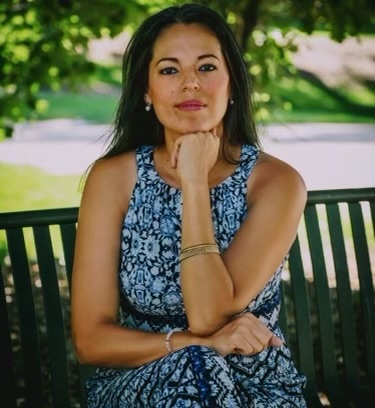
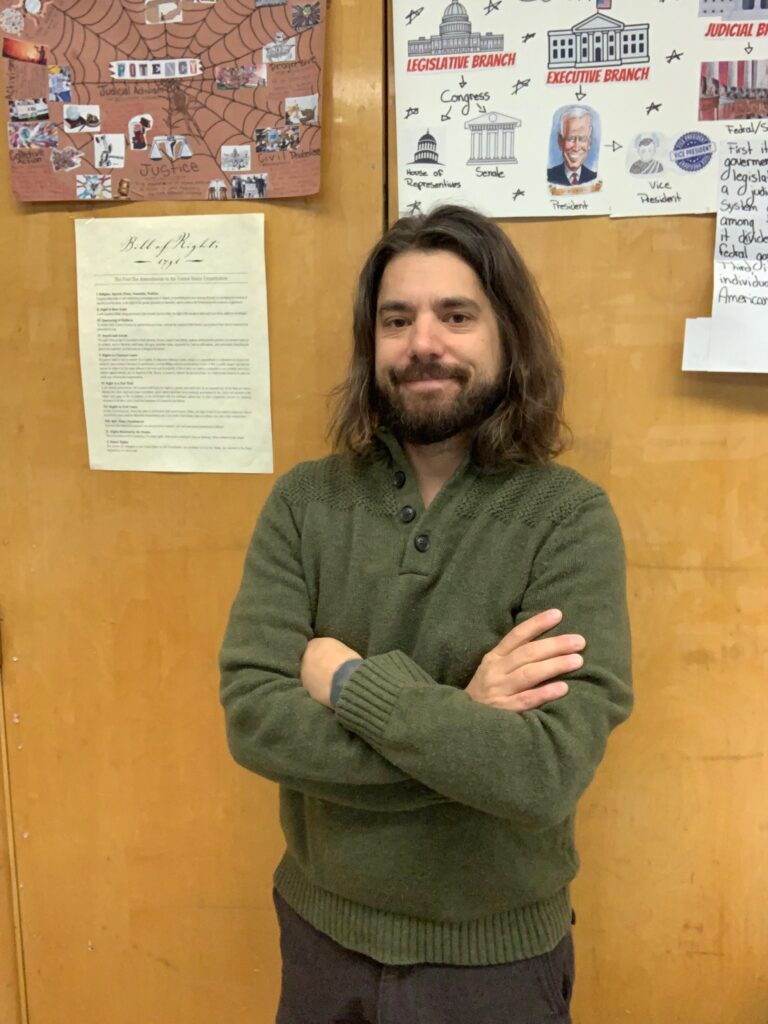
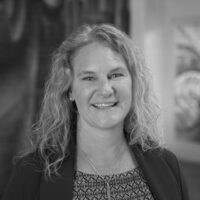
Noah Stout, of Denver, is an attorney who has worked on multiple wrongful conviction exonerations. 

Capitol Week in Review brings you news of bills we are tracking around our priorities of advancing educational equity and racial justice in Colorado and making our schools and communities safer and more supportive.

Legislative Update

HB23-1001, Expanding Assistance For Educator Programs, which supports student teachers toward the goal of diversifying the teacher workforce was heard by the House Education Committee on January 26th. It was passed on a unanimous vote and now goes to the Committee of the Whole. 

HB23-1003, School Mental Health Assessment, which creates the sixth through twelfth grade mental health assessment program was rescheduled to be heard by the House Public and Behavior Health and Human Services

Committee on February 7th.  

HB23-1064, Interstate Teacher Mobility Compact, which will make it easier for active-duty military spouses to transfer their teaching licenses without further testing, will be heard by the House Education Committee on February 1st.  

SB23-029, Disproportionate Discipline In Public Schools, which requires each school district board of education, institute charter school board for a charter school authorized by the state charter school institute, or governing board of a board of cooperative services (BOCES) to adopt a policy to address disproportionate disciplinary practices in public schools will be heard by the Senate Education Committee January 30th.   SB23-043, Continue School Access For Emergency Response Grant Program, extends the SAFER grant program for 5 years, until July 1, 2029, and clarifies when the state treasurer is required to transfer unexpended money from the SAFER grant program’s cash fund when the grant program is repealed passed out of the Senate Education Committee on a vote of 7-0 and was referred to the Committee on Appropriations.  

Our Take

We are encouraged by the unanimous vote in support of HB23-1001 Expanding Assistance For Educator Programs in this week’s House Education Committee hearing.  

This bill is a top priority for Stand this legislative session and is a continuation of HB22-1220, Removing Barriers to Educator Preparation a bill we championed last session that paid for teacher exam fees, expanded pathways to licensure by allowing multiple ways to demonstrate competency and paid teacher candidates for student teaching work.  

Colorado educator, Anthony Abel-Pype, joined us in support of the bill, submitting written testimony saying, “Bills that can offer incentives, financial and otherwise, for people in general, and people of color in particular, to choose a career path in education, and to stick with it, will go a long way to improving student outcomes in the state of Colorado.” You can read Anthony’s full testimony here.
Take Action

ASK HOUSE JUDICIARY COMMITTEE MEMBERS TO SUPPORT HB23-1042! 

Currently, law enforcement may use deception during interrogation of youth. Children are more susceptible to manipulation and more likely to provide inaccurate information and false confessions under such pressure. In fact, in the last twenty-five years, youth who were exonerated after being convicted of crimes, 38% gave false confessions. 

HB23-1042, Admissibility Standards For Juvenile Statements, which will be heard by the Senate Judiciary Committee on January 30th will:  

increase funding for interrogation training for law enforcement, and   

improve the general reliability of confessions by requiring all juvenile interrogations to be recorded, and  

if law enforcement does use deceptive tactics during custodial interrogation, the judge may discern whether the resulting confession was voluntary and therefore reliable and admissible in trial.    Tell House Judiciary Committee members to vote yes on HB23-1042 to protect truth and trust in interrogations!

What We’re Reading

Colorado would expand financial aid, loan forgiveness for student teachers

Chalkbeat’s Education Bill Tracker

Legislative session is picking up speed and the first hearing on one of our priority bills is Monday in the House Judiciary Committee. There is an opportunity for you to weigh in  on a bill designed to help ensure every child grows up in a safe and supportive community. 

First let me give you some more information. Currently, law enforcement may use deception during interrogation of youth. As you would imagine, children are more susceptible to manipulation and more likely to provide inaccurate information and false confessions under such pressure. In the last twenty-five years, youth who were exonerated after being convicted of crimes, 38% gave false confessions.

 HB 23- 1042, Admissibility Standards For Juvenile Statements will:

  • Increase funding for interrogation training for law enforcement, and
  • Improve the general reliability of confessions by requiring all juvenile interrogations to be recorded, and
  • If law enforcement does use deceptive tactics during custodial, interrogation, the judge may discern whether the resulting confession was voluntary and therefore reliable and admissible in trial. 

In Colorado, children of color are one and a half to three times more likely to be arrested and interrogated than their white counterparts (CO Dept. of Public Safety, 2020). As a result, children of color are more often harmed by false confessions, directly contributing to the racial disparity in the criminal justice system. 

Contact members of the House Judiciary Committee and ask them to vote yes on HB23-1042  to help ensure that law enforcement officers receive training for interrogation of youth and prioritize securing confessions that are voluntary and reliable. This will help build trust in the system and safety for the community.

The following is the written testimony of Colorado educator, Anthony Abel-Pype, submitted to the House Education Committee Hearing on HB23-1001, Expanding Assistance For Educator Programs. HB23-1001 supports student teachers toward the goal of diversifying the teacher workforce. While all students benefit from having a diverse teaching staff, students of color especially see tremendous benefits like improved academic performance and increased likelihood of going to college. This legislation is a continuation of HB22-1220, Removing Barriers to Educator Preparation, a bill we championed last session that paid for teacher exam fees, expanded pathways to licensure by allowing multiple ways to demonstrate competency, and paid teacher candidates for student teaching work. HB23-1001 was passed by the House Education Committee on January 26, 2023.

I submit this letter as written testimony for my support of HB23-1001 Expanding Assistance for Educator Programs. 

I have been a teacher in Denver Public Schools for 14 years serving students that qualify for free and reduced lunch at a rate of no less than 80% in any given school year over my career. 

18 years ago I had a decision to make about the career I wished to pursue, and while my options were wide open, a career in education was one I was highly interested in. However, I had hesitations due to time commitments of teachers as well as low starting salaries and low overall potential career earnings over a lifetime. One factor that helped push me into a career in education was the Public Service Loan Forgiveness program as it helped to curb the cost of the loans I had to take out to complete my education. Also, I am proud to say that just recently I was informed by the Department of Education that I have met all the requirements of the program, and the remainder of my student loan balance has been forgiven.

Next, in my career in Denver Public Schools, two issues have stood out every year that has been detrimental to student outcomes. First, people leave the career prematurely. This hurts students as it creates instability in the education system as teachers cycle in and out needing time to gain knowledge and experience to be effective educators. Next, a severe lack of diversity in the field. As someone who has worked in schools that have 90% students of color, I am confident that if there were more people in education that students could more closely relate to culturally, they would become more engaged in their studies and buy into the education process. Imagine if everyday you went to school and you could not relate to the  overwhelming majority of people in power. It is easy to imagine how that would negatively impact motivation. And, I have had a front row seat to how students are impacted when they have educators they feel understands them. 

Bills that can offer incentives, financial and otherwise, for people in general, and people of color in particular, to choose a career path in education, and to stick with it, will go a long way to improving student outcomes in the state of Colorado. This means more students graduating, more students pursuing higher education at traditional colleges and universities, as well as technical colleges. Ask any administrator in education right now about how recruiting and retaining high quality educators is going, and it will be extremely clear that any and all programs to help find and retain high quality educators should be a top policy priority. 

Education has, and always will be, an investment in the future society and economy. You may ask how the state can afford to do this, and I would counter with: how can we afford not to? 

The following is the prepared testimony of Bri Buentello, Stand Government Affairs Director, delivered before the House Education Committee Hearing on HB23-1001, Expanding Assistance For Educator Programs. HB23-1001 supports student teachers toward the goal of diversifying the teacher workforce and is a top priority for us this session. HB21-1001 was passed unanimously by the House Education Committee on January 26, 2023.

This legislation is a continuation of HB22-1220, Removing Barriers to Educator Preparation a bill we championed last session that paid for teacher exam fees, expanded pathways to licensure by allowing multiple ways to demonstrate competency, and paid teacher candidates for student teaching work.

Good afternoon Mr. Chair, House Education Committee Members, my name is Bri Buentello and I’m a former teacher and currently the Government Affairs Director with Stand for Children Colorado. Stand for Children is an education advocacy and racial justice nonprofit that supports parents, teachers, and community members in their fight for excellent public schools and systems changes that directly impact all of Colorado’s kids.  

Last year, we were proud to support HB22-1220 under the leadership of Rep. Kipp, alongside our friends in post-secondary education.  Parents, teachers, and even Ph.D.s all understand the importance of not only having culturally competent teachers, but also the intrinsic value of having a diverse teacher workforce and the overwhelmingly positive impact on all students.  

What is discussed less often are the profound impacts that financial barriers have on education candidates and how much harder it is for BIPOC students from low socio-economic standing to attain this degree. In addition to just the tuition costs, there are oftentimes fees associated with attaining teacher licensure and still further, and larger expenses as student teaching is unpaid and women like me are forced to take out more student loans, all so we can serve our community.  

HB22-1220 was a monumental step forward in the right direction, HB23-1001 continues this momentum by expanding the program to even more of Colorado’s teachers. Some notable changes include: 1)  increased eligibility for student teachers in rural teaching placements; 2) student loan forgiveness for principals and special service providers, 3) finally, it also expands the eligibility for financial assistance for testing fees and costs associated with student teaching. The bottom line is: more middle-class students will be eligible for assistance under the provisions of this bill. 

While diversifying the teacher workforce has been a priority for Colorado’s schools for decades, and that law made huge strides by creating funds for paid student teaching, relief for testing fees, and even some student loan forgiveness. We’re so excited to see this work continue under Representatives Kipp and McLachlan’s leadership and are looking forward to seeing the implementation of this bill for impact.  

In closing, good bill, vote yes on HB 23-1001.

Capitol Week in Review brings you news of bills we are tracking around our priorities of advancing educational equity and racial justice in Colorado and making our schools and communities safer and more supportive.

Legislative update

HB23-1001, Expanding Assistance For Educator Programs, which supports student teachers toward the goal of diversifying the teacher workforce will be heard by the House Education Committee on January 26th.  

HB23-1003, School Mental Health Assessment, which creates the sixth through twelfth grade mental health assessment program will be heard by the House Public and Behavior Health and Human Services Committee on January 25th.

SB23-029, Disproportionate Discipline In Public Schools, which requires each school district board of education, institute charter school board for a charter school authorized by the state charter school institute, or governing board of a board of cooperative services (BOCES) to adopt a policy to address disproportionate disciplinary practices in public schools will be heard by the Senate Education Committee January 30th.

SB23-043, Continue School Access For Emergency Response Grant Program, extends the
SAFER grant program for 5 years, until July 1, 2029, and clarifies when the state treasurer is required to transfer unexpended money from the SAFER grant program’s cash fund when the grant program is repealed will be heard by the Senate Education Committee January 25th.

SMART Act Hearing

Colorado Department of Education staff presented before both the House and Senate Education Committees last week. They focused on the department’s strategic plan, student academic achievement, recent graduation and dropout rates, READ Act implementation, teacher workforce challenges, and an ESSER funding update.

Our Take

HB23-1001, Expanding Assistance For Educator Programs, which supports student teachers toward the goal of diversifying the teacher workforce is a top priority for us this session. While all students benefit from having a diverse teaching staff, students of color especially see tremendous benefits like improved academic performance and increased likelihood of going to college. Yet, many Colorado students may not have a single teacher of color in elementary, middle, or high school.

This legislation is a continuation of HB22-1220, Removing Barriers to Educator Preparation a bill we championed last session that paid for teacher exam fees, expanded pathways to licensure by allowing multiple ways to demonstrate competency and paid teacher candidates for student teaching work.

What We’re Reading

Gov. Jared Polis promises to fully fund Colorado schools within four years, Chalkbeat

Chalkbeat’s Education Bill Tracker

Welcome to a Special Edition of Capitol Week in Review!   The First Session of the 74th General Assembly kicked off this week with mostly pomp and circumstance. Members were sworn in, leadership elections took place, committee assignments were made, and legislation started being introduced. Capital Week in Review is back to bring you news of bills we are tracking around our priorities of advancing educational equity and racial justice in Colorado and making our schools and communities safer and more supportive. This week we are sharing key information about leadership in the general assembly, updates from the State Board of Education and Governor’s office as well as a rundown on our priorities for this session.

Legislative update

HB23-1001, Expanding Assistance For Educator Programs, which supports student teachers toward the goal of diversifying the teacher workforce was introduced in the House.  

HB23-1003, School Mental Health Assessment, which creates the sixth through twelfth grade mental health assessment program was introduced in the House.  

HB23-1042, Admissibility Standards For Juvenile Statements, which increases funding for interrogation training for law enforcement, as well as improves the general reliability of confessions by requiring all juvenile interrogations to be recorded was introduced in the House and assigned to the Judiciary Committee.  

SB23-029, Disproportionate Discipline In Public Schools, which requires each school district board of education, institute charter school board for a charter school authorized by the state charter school institute, or governing board of a board of cooperative services (BOCES) to adopt a policy to address disproportionate disciplinary practices in public schools was introduced in the Senate and assigned to the Education Committee.  

SB23-043, Continue School Access For Emergency Response Grant Program, extends the SAFER grant program for 5 years, until July 1, 2029. The SAFER Grant Program provides funding to encourage and provide training for seamless communivations between schools and first responders.

Senate and House Leadership Elected

Senate
President
Steve Fenberg (D-Boulder)
Minority Leader Paul Lundeen (R-El Paso)
 
House of Representatives
Speaker of the House Julie McCluskie
(D-Summit) Minority Leader Mike Lynch (R-Larimer)

Education Committee Members NaMED

Senate Education Committee Members

Chair: Janet Buckner

Vice-Chair: Janice Marchman  

House Education Committee Members

Chair: Barbara McLachlan

Vice-Chair: Matthew Martinez

Governor Polis Sworn in for Second Term

Governor Jared Polis was sworn in for a second term on January 10, 2023 in front of the State Capitol in Denver. During his inaugural address he highlighted some of his accomplishments such as free full-day kindergarten. While education was not a centerpiece of his speech, he did mention implementation of universal preschool. He also called for unity as Coloradans and acceptance of differences throughout his remarks, “No matter what part of Colorado you call home, who you are, or who you love. No matter your race, or your gender, or how you worship, or how you vote. Colorado belongs to all of us and we will all help shape our future.”

Stand Government Affairs Director, Bri Buentello joins our partners at Healthier Colorado at inaugration this week. 

Members of State Board of Education Sworn In

This week, recently elected members Kathy Plomer, Steve Durham, Rebecca McClellan, and Rhonda Solis were sworn in to the State Board of Education. Rebecca McClellan was named chair and Lisa Escárcega was named vice-chair of the State Board. Read more about the roles and responsibilities of the State Board of Education.

Members of our team attended the swearing in ceremony for the new State Board of Education members.

Our Take: Priorities this Session

Stand advocates for educational equity and racial justice in Colorado through meaningful partnerships with families, educators, schools, and policymakers by prioritizing early literacy, high school success, and safe and supportive schools and communities. During legislative session this year our team will be advocating alongside our partners for a variety of policies aligned to our mission.

Our top priorities include:

  • Expanding funding for the Ninth Grade On- Track and Expelled and At-Risk Student Services (EARSS) grant programs.
  • Repealing deceptive interrogation tactics for juveniles, updating expulsion policies, eliminating cash bail, and raising the age for detention from 10 to 13.
  • Finalizing the updated school funding formula to include a new proxy for poverty, ensure a dedicated English Language Learner (ELL) weight, create a better balance for cost-of-living adjustment amounts, and fully fund special education services across districts.

Continuing work towards diversifying the teacher workforce. 

What We’re Reading

2023 Colorado General Assembly: The people’s guide to following education issues, Chalkbeat  

First day: Colorado lawmakers pledge ‘thoughtful’ school funding debate amid budget constraints, Chalkbeat    

CSU’s teacher preparation program wins state approval, gets kudos for science of reading shiftColorado voters may be asked to forgo their future, Chalkbeat  

TABOR refunds so the state can boost school funding, Colorado Sun

photo of Denver skyline with words this month at the DPS Board

Welcome to the December edition of “This Month at the DPS Board”, a monthly newsletter sharing information about the Denver Public Schools (DPS) Board of Education.    

Our goal is simple: to share what is happening at school board meetings so you can engage with the board and the district even if you cannot attend hours of meetings every month. 

The Finance and Audit Committee – December 1, 2022 

The meeting recording was not posted, but you can look at the minutes here. The Committee approved a variety of consent agenda items and all items moved forward for consideration by the Board of Education.  

Progress Monitoring and Public Comment- December 12, 2022 

Highlights on Student Athletics 

Superintendent Marrero introduced schools that became conference champions in the Fall of 2022. Northfield High School was back-to-back state champions in their Boys Soccer league. They also highlighted Denver East High School’s Boys Soccer team which gained a state championship title for the 4th time in their school’s history.  

Superintendent Update: Denver Online School 

Superintendent Marrero and DPS staff gave a brief update on the online school “Denver Online” that was created when families preferred the remote option due to COVID-19. The school opened in the fall of 2021 and in November of 2021, DPS decided to continue the programming for one more year as spread of the virus was still ongoing. DPS has now revisited the future of Denver Online this month and made the decision to end the elementary portion of the programming and only offer grades 6-12. The elementary students who were enrolled in the online school will receive supports to join the school choice process for the school year 2022-2023.  

Certification of Mill Levies 

DPS Staff presented the 2022 Mill Levy Certification which must be certified by the Board each year prior to December 15th. “The City and County of Denver collects property taxes on behalf of DPS  The Mill Levy Certification directs the City and County of Denver (specifically the county treasurer) the level at which to tax property in Denver on behalf of DPS students.” The taxes that make up the Mill levy Certification are School Finance Act, Mill Levy Overrides, Special Revenue Mill Levy Override, and Bond Redemption. Legislation that passed during the 2020 session, changed how districts levy mills for the School Finance Act, so DPS is required to mill at 27 for the tax rate.  

You can see more details here. The certification for the 2022 Mill Levy was approved by the DPS Board. 

EL-17 Monitoring: Asset Protection 

DPS staff explained executive limitation (EL) 17 which focuses on the protection of DPS assets. This EL encompasses a policy that will ensure that schools, the Board and DPS obtain insurance, make sure that the handling of funds is being done under accepted accounting procedures. The 11 points under this EL can be found here. Several Board members raised questions on how this EL would impact students’ intellectual property after the lawsuit against the girls who trademarked “Know Justice Know Peace.” A DPS attorney clarified that if a student or student group receives funds and resources such as educators and space from DPS, “legally speaking,” it is intellectual property that is owned by the district. The Board all agreed to make sure this is being conveyed as best as possible to students and families.  

DPS Board Meeting- December 15, 2022 

Proclamation Regarding Gun Violence Prevention 

Vice-President Anderson introduced a proclamation regarding gun violence prevention after hearing public comment from Denver East High School students. These students urged board members to work harder through also pushing for legislation that will protect students and DPS staff from gun violence. Each board member read a part of the proclamation.   

School Year Calendars Development: 2023-24 and 2024-25 

DPS staff and representatives from the Denver Classroom Teachers Association (DCTA) and Denver School Leaders Association (DSLA) presented updates on the progress to develop school calendars for years 2023-2024 and 2024-2025. They expressed that they have considered multiple factors such as family work schedules, professional development days, religious holidays and more. Feedback was received from teachers on when the school year should start and end. According to the surveys conducted, “about 50% of responses via paper survey (13/23) from MLE DAC prefer a start date the week of August 14 and nearly 70% of responses via paper survey (16/23) from MLE DAC prefer an end date the week of June 3”. The drafts for the school calendars in 2023-2024 and 2024-2025 would have the school year start in August 21 and end on June 5 and for SY 2023-2024 the start date would be August 19, end in June 3 for SY 2024-2025. 

District Accountability Committee Update 

Every district is required to have a District Accountability Committee, which is a group of parents and community members that recommend, review, and support the district with key decisions. Several representatives from the committee presented some recommendations to be a partner in the process of collaboration of the Unified Improvement Plan. “Unified Improvement Planning was introduced in 2009 to streamline improvement planning components of state and federal accountability requirements”. 

Unified Improvement Plan Update 

As the parents from the District Accountability Committee (DAC) finished their presentation on their recommendations, the Board decided to transition to an update on the Unified Improvement Plan (UIP). DPS staff’s update correlated with the recommendations from DAC because it was to make sure the creation of the UIP is streamlined through the different progress monitoring steps and committees such as DAC.  

Parent Teacher Home Visits 

DPS staff presented Parent Teacher Home Visits which is a program within DPS that encourages teachers to conduct home visits. They explained their model as starting with a phone call, which then moves into the first home visit. After the first home visit, there is follow-up and fostering relationship to the second visit. In the school year of 2022, 82 schools and 737 educators are participating in the program. So far, there have been 3,387 home visits with a goal of 9,000 for the school year. Furthermore, the National program adopted the DPS model and DPS was nationally recognized for most visits across US. 

First Reads- Board Policies – EL12 Employee Treatment and EL15 Budgeting 

The Board was presented with a first read on EL 12 which focuses on employee treatment and EL 15 which focuses on budgeting.  Community is encouraged to provide feedback on these policies (EL 12 and EL 15). 

Consent Agenda 

Before the Board voted on the items listed on the consent agenda, Vice President Anderson raised the recommendation of Robert F Smith Steam Academy relocating. The recommendation is to relocate to Robert F Smith Steam Academy to Barrett Elementary. In the end, all board members voted to pass all items on the consent agenda. 

On Thursday January 5, 2023 at 4:30 pm Colorado’s Center for High School Success will be hosting a showcase to highlight the 9th grade approach. Hear directly from a Colorado principal whose On-Track Rate was 92% in the 2021-2022 school year! You will also learn about:

  • the research driving the ninth-grade success model,  
  • coaching and support CHSS provides in Colorado schools,  
  • and demonstrated student outcomes in the 2021-22 school year

The Center for High School Success (CHSS), a Stand for Children program, supports high schools and districts in raising 9th Grade On-Track Rates in service of raising graduation rates and increasing readiness for postsecondary success through our CHSS Roadmap for 9th Grade Success. On-Track means a 9th grade student has earned a quarter of the credits needed to graduate and received no more than one F in any course. (toandthrough.uchicago.edu) 

Stand for Children Colorado advances educational equity and racial justice in Colorado through meaningful partnerships with families, educators, schools, and policy makers. One of the ways we uphold this work is through our annual Advocacy Fellowship.   

Stand Advocacy Fellows are community leaders advocating for policy solutions towards racial justice and equity in education.  With the support of Stand staff, advocacy fellows will deep dive into issues affecting Colorado communities today, co-create solutions, democratize knowledge back to their communities, work to break down barriers to power and access decision makers, and, in the process, build long lasting relationships and invaluable skills. 

Colorado State Board of Education passes inclusive social studies standards 

Together with our supporters and other partners we raised our voices in favor of students learning accurate, fact-based accounts of history. Learn more here

Celebrating Election Results   

Volunteers sent 170,000 texts to Colorado voters to support education champions in this year’s election. In addition to the re-election of Governor Polis, and the election of Stand endorsed candidates in the State Legislature, we are incredibly excited about the election of Kathy Plomer and Rebecca McClelland to the State Board. View the full list of Stand Education Champions elected here.  

Stand Event: Engaging Through Challenges 

This October, we hosted the Center for High School Success, Teach Kindness, and Home Visit Partnerships in a free, webinar to introduce programs and strategies to support safe and supportive school environments that lead to effective student and family engagement and improved attendance.  

Lorelei, Stand Advocacy Fellow

“I am excited to continue this fellowship because Stand is dedicated to change-making for our students and communities. I am looking forward to making change through careful research, thoughtful advocacy, and strong partnerships in a state policy context. I loved working with families and the Stand for Children advocates in the past and am happy to continue that work.” 

Thank you for standing for Colorado’s students, families, and educators. Whether you’ve signed a petition, emailed your lawmaker, or shared information with your family and friends, your action matters, and so does your support. Will you donate to support our work in 2023?

Every dollar raised will go towards: 

  • Fighting to expand funding for the Ninth Grade On-Track and Expelled and At-Risk Student Services (EARSS) grant programs. 
  • Providing families with training and resources to support their students outside of the classroom through workshops and one on one support to parents/guardians in schools we partner with. 
  • Working to eliminate the, currently allowable, practice of lying to juveniles during interrogation. 
  • Continued progress on early literacy outcomes for students