





HIGH SCHOOL READINESS:
PREPARED FOR LIFE
RETHINKING POST-GRADUATION READINESS
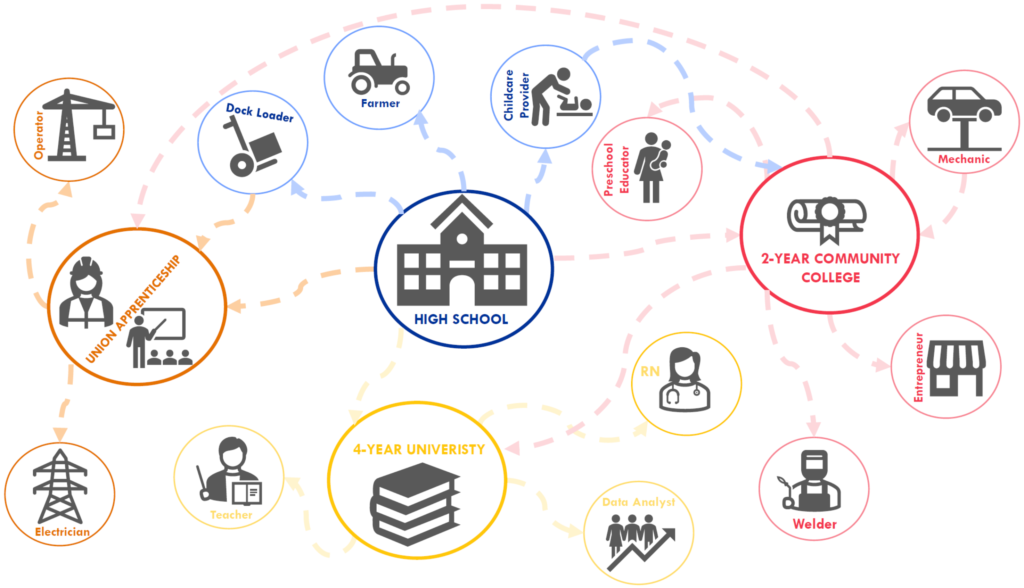
High school should prepare students for life after graduation—whether that’s attending a 4-year university, enrolling in an apprenticeship program, or earning a credential through a community college. But we know that life after graduation is rarely linear for any of us and students’ post-graduation paths may take them in and out of the workplace as they pursue additional certifications or change industries.
Yet, both the data we collect to mark success and the requirements we set to graduate all put an outsized focus on one path: university enrollment. While Illinois should continue to make it easier for students to access college, the high school experience should be as unique and diverse as Illinois’ students and the futures they choose.
CHRONIC ABSENTEEISM RATES BY STUDENT GROUP
There is mounting evidence that the traditional high school experience is falling flat with Illinois teens. Chronic absenteeism is stubbornly high for all grades, but particularly problematic in high school. Statewide, nearly half of all senior high school students are chronically absent, meaning they are missing 10% or more of school days. (Illinois Report Card)
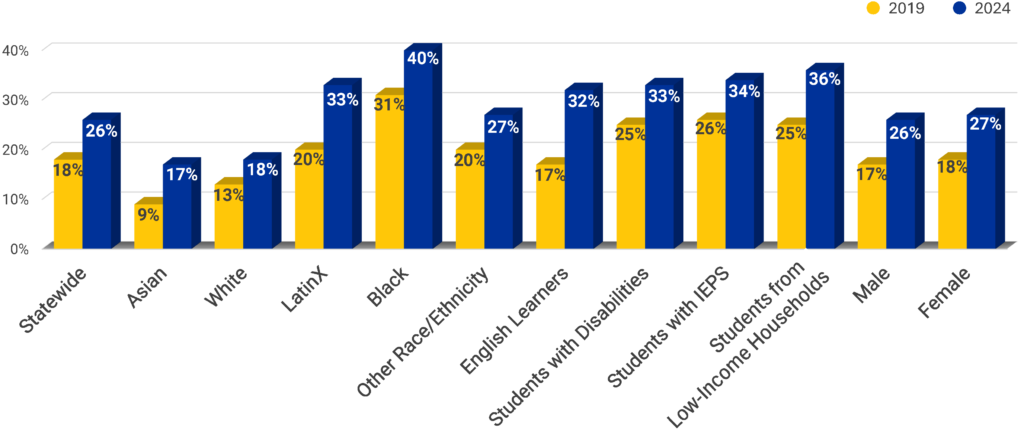
Chronic absenteeism is a worsening problem for many Illinois subgroups, particularly students of color and students from low-income households. Layering these statewide findings with national research that tell us students who are more engaged in the classroom are significantly more likely to feel prepared for and optimistic about their futures and less likely to be chronically absent from school (Walton Family Foundation-Gallup 2025).
This new generation of students are excited to explore career paths that are more likely to take them to trade school than university. The number of students at public, two-year schools that focus on vocational and trade programs grew by nearly 20 percent from 2020 to 2025 (National Student Clearinghouse 2025).
Illinois high school graduation requirements prioritize coursework designed for 4-year college admissions but offer very little flexibility for high-quality experiences like apprenticeships and career and technical education (CTE) courses.
CTE courses have come a long way from the traditional shop and culinary classes you may remember from high school. Today, CTE courses connect students with local employers through internships, offer hands-on learning through state-of-the-art facilities, and empower students to earn employer-recognized credentials while graduating high school.
HIGH-QUALITY CTE COURSES DO 3 POWERFUL THINGS FOR STUDENTS:
- Connects students to employers for networking and mentoring and to develop soft skills.
- A 2023 survey found that only 13% of teens felt that they had the resources they needed to fully prepare them for life after graduation (ECMC Group 2023). Connecting students with employers not only gives them a window into their future careers but also offers mentorship opportunities and career exploration—two critical resources to help students envision a future beyond the experience of their neighborhood or families.
- Provides value immediately upon graduation.
- The best CTE programs align with industry standards and postsecondary coursework so young people can fluidly move from the workforce to postsecondary education and back again as they level up their skills or transition industries. Many CTE programs serve as a map for life after graduation by loading students up with pre-requisites for postsecondary coursework, early college credit, and offers career exploration across an industry so students can envision themselves in multiple jobs within an industry instead of pigeonholing them in entry level positions.
- Embeds essential academic competencies in career-centric coursework that aligns with student’s interests.
- CTE is no longer just for skilled trades. Outstanding CTE programs in computer science, engineering, and healthcare use industry-professional instructors to teach students foundational skills through hands-on learning, team-based challenges, and technical applications. These 21st Century CTE programs prepare students for both the rigors of college while offering career exploration, unlike traditional coursework. A future doctor will find CTE coursework as valuable as the future certified nurse assistant.
But CTE opportunities remain sidelined as students struggle to fit CTE course sequences into schedules revolving around the state’s high school graduation requirements. Gone are the days of single-semester CTE courses. Today, most CTE courses are one of a sequence that may require two (or more) years to complete and typically involve traveling off campus to work directly with employers or learn at a separate facility. And of course, all of this requires funding.
In FY26, the state allocated $51M in CTE funds, which amounted to an average of $70 per high school student—not nearly enough to fully support these programs. Of course, a lack of state funding means a lack of equitable access as high-income districts use local resources to expand CTE opportunities for students, low-income communities struggle to re-envision outdated legacy programs or introduce new industries, like energy, that may not have existed
decades before.
Finally, our data systems allow for one measure of student success: college enrollment. If we only offer one measure of success, it’s no wonder that’s where schools are putting their efforts. Collecting and reporting on data that showed job placement rates or secondary credential attainment could help schools define new measures of success and build programs to help them achieve. Illinois has an opportunity to redefine what it means for students to be ready for life after high school. By modernizing graduation requirements, investing in high-quality CTE programs, and measuring success through multiple
postsecondary pathways—not just college enrollment—we can create a system that prepares every student for the future they choose, not just the one we’ve traditionally expected.


