

High angle view of professor is teaching in classroom. Multi-ethnic students and male teacher are discussing at school. They are wearing casuals in high school building.

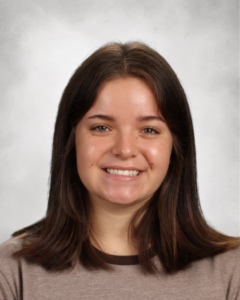
From the moment Iris Galicia stepped into Farragut Career Academy IB World School, she had more than just academic goals in mind, she had a promise to keep and a dream to fulfill. 

As early as second grade, Iris had already set her sights on one destination: the University of Illinois at Urbana-Champaign (UIUC). For many, this might seem like an ambitious plan for someone so young, but Iris had a reason that gave her purpose beyond her years. Her mother, a single teen parent, had once dreamed of a career in the medical field. She began college while raising Iris but ultimately had to put her aspirations aside to embrace motherhood fully. Witnessing her mother’s sacrifices planted a seed in Iris with a commitment to not only pursue higher education, but to chase the dreams her mother had set aside. 

“Everything I do is to make her proud,” Iris says. “She raised me to be kind, ambitious, and fearless. Living out our shared dreams is how I honor everything she gave up for me.” 

Her journey to UIUC, however, wasn’t only shaped by her mother’s story. In middle school, Iris learned something that would further fuel her determination: her grandfather had once been accepted to UIUC on a full-ride scholarship. But while traveling with her grandmother to visit the campus, they were involved in a traumatic accident. The experience left them both too afraid to continue traveling by highway, and sadly, her grandfather gave up the opportunity. 

“When I heard that, I felt like it was a sign,” Iris says. “His chance was taken from him, just like my mom’s. I wanted to go for all of us. Just like others dream of Harvard or Yale, my Ivy League has always been UIUC.” 

With her heart set, Iris began researching early. She looked up programs, scholarships, and how to stand out as an applicant. That led her to Farragut Career Academy IB World School, where she could join the International Baccalaureate (IB) Programme and take dual enrollment classes, two proven paths to academic distinction. She began IB Honors courses in her freshman and sophomore years, all while navigating the challenges of the COVID-19 pandemic. But even a global shutdown couldn’t dim her focus. In ninth grade, she earned scholarships and was accepted into SMASH Academy, an intensive, STEM-focused program for underrepresented students. As a sophomore, she joined more initiatives like After School Matters (ASM) and Serving People with a Mission, all of which helped her grow into an independent, outspoken young leader. 

Then came a turning point. Farragut was selected as a Hope Chicago school, offering a full college scholarship to eligible students—and UIUC was on the list. For Iris, this wasn’t just an opportunity. It was fate. In her junior and senior years, Iris fully embraced the rigor of the IB Diploma Programme (DP)—a globally recognized curriculum that pushes students to become critical thinkers, eloquent communicators, and academic leaders. She wrote extended essays, completed internal assessments, and delivered presentations that sharpened her voice and vision. Most students entered the DP program because Iris was joining—her quiet leadership inspired trust and motivation. But by the end of senior year, only a small core group remained. Where others saw pressure, Iris saw purpose. 

“DP was rigorous, but it was manageable. People dropped out, but I stayed. I knew what I was working for.” 

Alongside IB, Iris took dual enrollment courses focused on business to prepare for her dream program: the Gies College of Business at UIUC. Knowing it was one of the most competitive colleges within the university, she wanted her application to stand out. And it did. 

By the time she finished high school, Iris had: 

  • Earned around 30 transferable college credits 
  • Passed a couple of the rigorous IB exams 
  • Received the Illinois State Seal of Biliteracy in Spanish 
  • Graduated with high honors, ranked third in her class 

But her story is more than about achievements. Iris’s journey was about transformation. She started as a shy girl burdened by past insecurities and grew into a confident young woman who understood her voice, her value, and her purpose. 

Then came the moment she had been waiting for: 

January 26, 2024

Surrounded by her family, Iris opened her early admission decision to UIUC. The tears came instantly: she had not only been accepted, but she had also been admitted to the Gies College of Business. 

“That moment was everything. My mom was crying, my siblings were cheering, and my stepdad was on the phone celebrating with us. I felt proud, grateful, and unstoppable.” 

Now, Iris is a sophomore at the University of Illinois at Urbana-Champaign, double majoring in Business Administration – Management and Strategy, Innovation & Entrepreneurship, with a minor in Advertising. She walks on the campus not just as a student, but as a torchbearer of three generations’ worth of dreams. 

Iris’s story isn’t just one academic achievement; it’s a story of legacy, love, and relentless determination. 

“This dream was mine, my mom’s, and my grandfather’s. Now it’s my reality. And I’m just getting started.” 

Iris is especially grateful for the Hope Chicago Scholarship, which made it possible for her to attend her dream school debt-free. She credits Hope Chicago not only for relieving the financial burden of college, but for being deeply involved in her academic journey. “Hope Chicago is more than just a scholarship,” Iris says. “They’re constantly checking in, offering guidance, and helping us grow, not just as students, but as professionals and future leaders.” Through internships, programs, academic support, and mentorship, Hope Chicago ensures that students have the resources and opportunities they need to succeed. Their team stays on top of students’ progress and consistently pushes them to improve, stay focused, and dream big. “They are investing in us because they believe in us. They’re not just funding our education; they’re shaping the next generation of changemakers, and I’m so proud to be one of them. I’m forever thankful for everything they’ve done for me and for so many others. Hope Chicago is truly changing lives and bettering the future one student at a time. 

Preparing high schoolers for life Tell us how you think we can make high school meaningful for all students httpsbitlypreparedforlife

Blue circle with an outline of a megaphone on the bottom left. The circle reads "Career and Technical Education". On the bottom right of the circle there are two blocks, one yellow and one black. They contain text reading "Advancing CTE in IL."

Past CTE Funding

Last year, the General Assembly appropriated $58 million for secondary CTE.  The $58M reflects a $10M increase last year and two smaller increases in 2020 and 2022.  Before these increases, the state CTE appropriate had been stagnant for decades, all while CTE enrollment has been steadily increasing.  The state’s much-needed investments have helped maintain high-quality, industry-aligned CTE programing but it does not leave much for the expansion of either programs or CTE students. 

Last year, 285k students, or 48% of Illinois’ total high school student population, took at least one CTE course.  And it’s worth mentioning here that while the statewide graduation rate is 87.7%, for CTE concentrators, that is students who take at least 2 CTE courses in a sequence, were 10 points more likely to graduate and that boost applied across all student subgroups.  So, an investment in CTE not only supports career-connected learning but can even help more students graduate on time.  So as more Illinois students explore CTE pathways, something I’m sure we can all agree is positive, it also means that without significant increases in funding everyone’s slice of the pie is getting a little smaller.

If CTE funding had kept up with inflation, the state appropriation would be well over $80M.  Illinois has been investing in CTE in other ways however, the Postsecondary and Workforce Readiness Act (PWR Act) established a blueprint for aligned, regionally relevant, industry-informed, CTE that ensures students gradate college and career ready with a clear path to what’s next after graduation.  But without additional funding districts have been asked to do more with less and must make hard choices between maintaining existing programing and developing new ones in response to new policy and labor market demands.  Increased state investment will help districts maintain current programing while freeing up to develop new programs to engage more students in CTE.

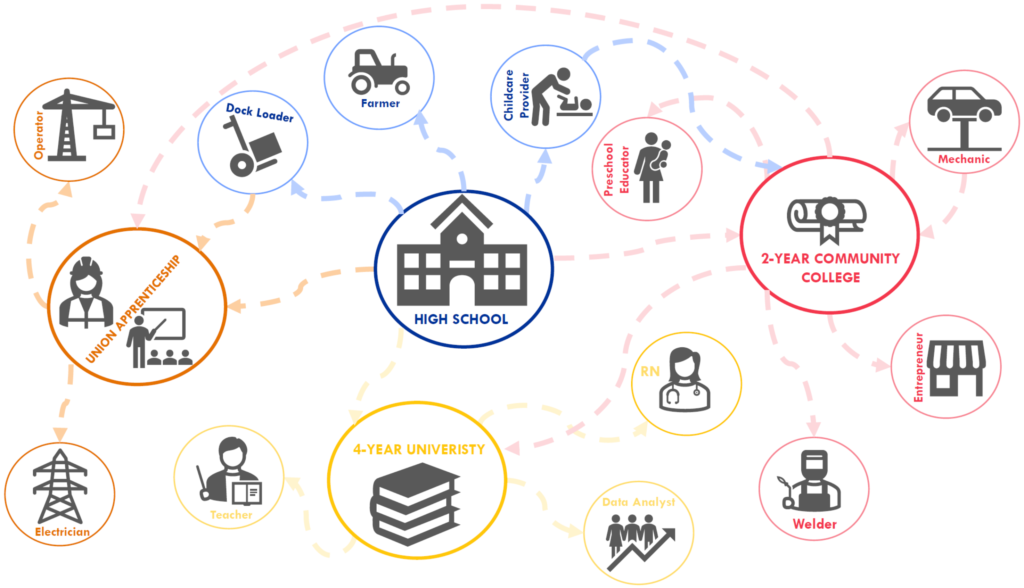
The Educator Career Pathway Grant is an excellent example of what is possible with targeted funds.  A total of $7.2M has been awarded 53 implementing high schools and in an analysis of CTE concentrators we found districts that were awarded the Educator Pathway Grant had stronger CTE concentrator rates and led the state in the number of Latina concentrators compared to other pathways.  These grants, while relatively small, have helped schools start critically needed educator pathways that have been successful in enrolling students traditionally under-represented in CTE courses.

Education For Employment Systems (EFEs)

On page 1 of your materials, you can see the state CTE appropriation funding flow chart.  We put this together in response to some of the questions from the Committee to prior CTE speakers and to provide some background information on how different CTE funds flow throughout the state.  On page one, you can see 99% of the state appropriated $58M flows directly to Education For Employment Systems, or EFEs.  EFEs are regional consortia of local districts, schools, and Area Career Centers that support and deliver high-quality CTE to students within their systems. To qualify for federal Perkins funding (which we’ll talk about in more depth shortly), recipients must qualify for a minimum grant of $15,000 based on a formula driven by population and poverty. But since some school districts were too small to qualify for the minimum grant, EFEs were created to ensure all schools received some federal funds.

But in an analysis of the state’s EFE districts we found that some EFEs receive nearly $700 per CTE participant in state funds while others are left with $62 per CTE participant.  ISBE’s new CTE funding formula seeks to ensure these funds flow more equitably by accounting for student enrollment, districts’ EBF adequacy target, and number of CTE concentrators, among other factors, but this formula is being incrementally rolled out so only a quarter of state CTE funds were distributed through the formula this year. Next year 50% of state funds will flow through the new formula and it is scheduled to be fully implemented by FY28, however this roll out is being threatened by insufficient funds to ensure that no EFE would receive lower investments than previous years.

In addition to the state secondary CTE appropriation, EFEs also receive federally appropriated Perkins funds.  In FY24 the state received $50M from the federal Perkins grant to support both secondary and postsecondary CTE programs.  On page two of your written materials, you can see how that $50M is split between secondary and postsecondary funds.  85% of the Perkins secondary funds are then distributed to the 56 EFEs across the state. 

These federal funds amount to about 50% of all available CTE funds for EFEs and they cannot be used for facility construction or renovation or to purchase facilities.  Unlike traditional classrooms, many CTE pathways require access to state-of-the-art equipment and facilities. To defray costs, districts often rely on Area Career Centers or Community Colleges to maintain these facilities, but even with pooled resources, the rate of new technologies and commitment to teaching industry-aligned standards can create significant financial burdens on secondary and postsecondary programs alike.

Our Budget Request

To receive Perkins grants the state must contribute a Maintenance of Effort in state funds.  ISBE’s target Maintenance of Effort is $45 million.  Given this provision, any increase in state CTE funds should be done incrementally to preserve funding stability across Illinois’ CTE system. However, some funds are exempt from the MOE and growing those investments with one-time infusions would assist districts in meeting the needs and challenges of a 21st Century CTE system. Capital funds are one such investment, as are competitive grants like the $5M education career pathway grant.

We are requesting a $42M increase to the state’s secondary CTE appropriation, which would bring the state’s total investment in secondary CTE to $100M, but if you want to preserve future flexibility, an idea could be to appropriate funding in seven competitive grants aligned to each of the seven CTE endorsement areas.  You can see the list of endorsement areas on page 6 of your packet.  This would help districts meet growing student demand and develop new CTE programming responsive to 21st century labor demands without increasing the state’s Perkins maintenance of effort.

Additionally, the General Assembly should charge ISBE and ICCB to conduct a joint study to determine how the current CTE facilities are meeting the needs of districts looking to scale up pathways, what kind of updates would be necessary to expand access to college and career endorsement pathways, particularly in under-resourced districts, and places for collaboration across the many regional CTE actors such as Regional Offices of Education, Education for Employment districts, high school districts, and community college districts. The recommendations should focus on capital improvements that guarantee access to college and career endorsement pathways in all regions of the state, address logistical challenges like transportation, stress collaboration and shared resources across actors, and prioritize the needs of districts furthest from adequate funding. Such an analysis is a critical first step in a campaign to secure more CTE capital funding which will help grow CTE access while maximizing federal investments.

Illinois state capitol

FOR IMMEDIATE RELEASE                                                                         

April 23, 2024                                                                            

CONTACT: Mea Anderson | [email protected]

Stand for Children Celebrates the Passage of House Bill 5020, Bringing Illinois One Step Closer to Equitable Access to Dual Credit Courses

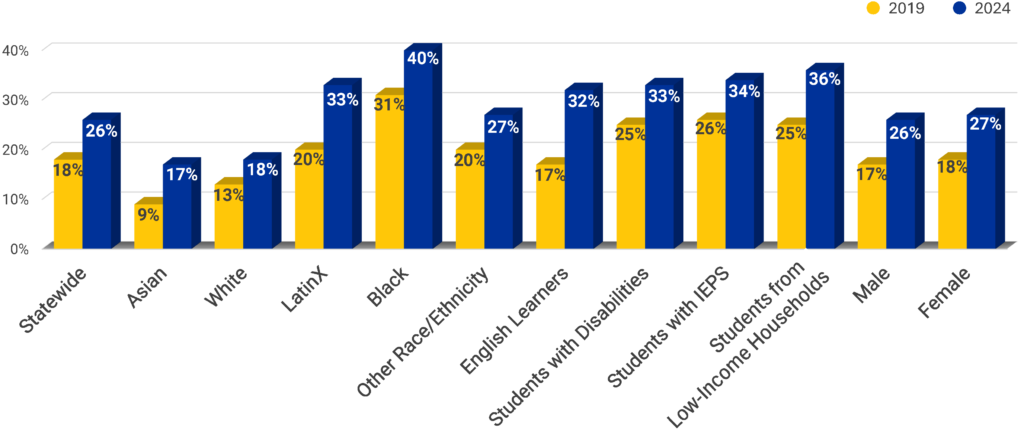
(Springfield) – Stand for Children celebrated a huge win for Dual Credit last week after the Illinois House passed House Bill 5020 (Blair-Sherlock). “Student access to dual credit has increased over the last five years, but those gains have not been equitable across student groups. HB5020 knocks down roadblocks to enable more Dual Credit access through strong local partnerships between high schools and community colleges, while maintaining a high bar for rigor,” said Stand for Children Government Affairs Director Aimee Galvin. 

Dual Credit courses allow high school students to get a jump start on their postsecondary and professional careers by providing them with opportunities to earn college credit while simultaneously earning high school credits. Inequitable access to Dual Credit persists and is felt more acutely in high-need regions of the state. This bill improves access for students across Illinois by providing multiple avenues for eligibility and better communication with families, helping more educators become fully qualified Dual Credit instructors, and prioritizing local partnerships. It also significantly improves access to Dual Credit within Career and Technical Education, where instructors will now qualify to teach based on relevant experience.

HB5020 passed with a near unanimous vote of 105-1-0 in the House on Thursday, thanks to the committed negotiations of the bill’s sponsor and education stakeholders. It now moves to the Senate for consideration. 

“Education is the key to economic mobility. Community college was my path to escape poverty, and that’s why we were so committed to working out this bill,” said Illinois State Representative Diane Blair-Sherlock, the bill’s House sponsor. “A student’s access to Dual Credit should not be driven by their zip code. A patchwork of inconsistent local policies around instructor qualifications is a recipe for inequitable access. We are grateful to the many education stakeholders who came to table to help us negotiate this bill to help students and protect the quality of Dual Credit courses.”

###

Stand for Children Illinois is a non-partisan education advocacy organization that fights for educational equity. Stand partners with parents to support their education journey and become strong advocates, and it advocates for proven policies and funding so that all students receive a high-quality, relevant education. Learn more about our work at stand.org/illinois.