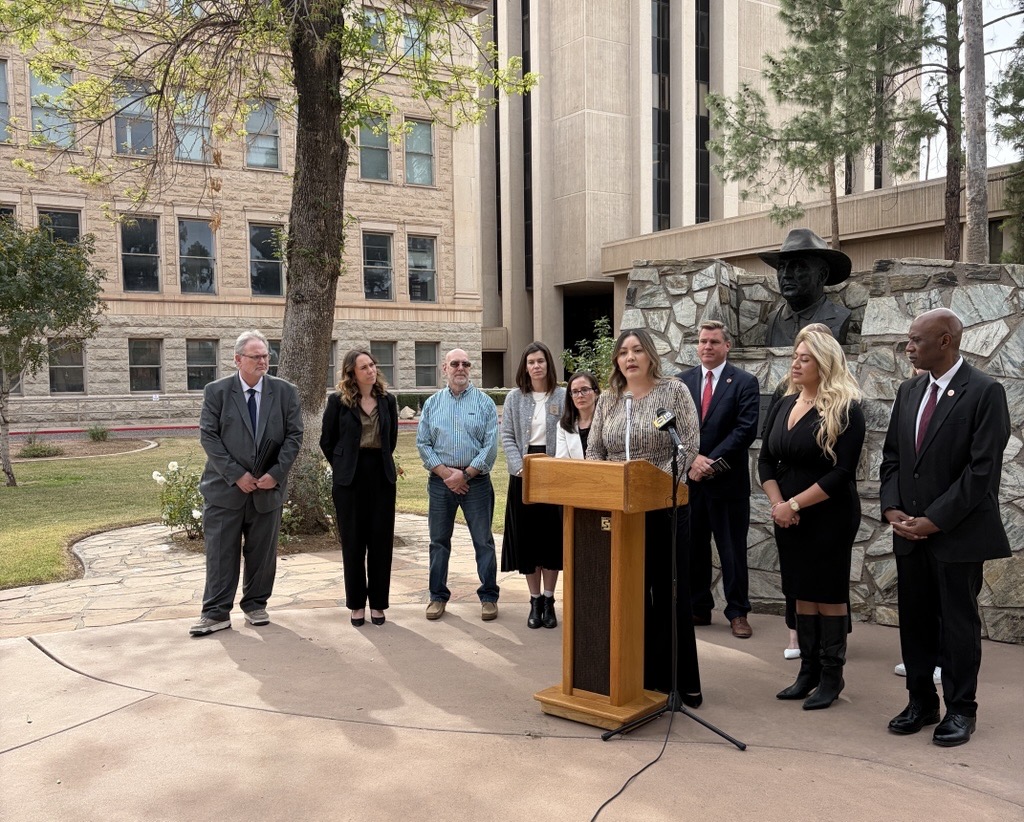


On Saturday, HB 2265—a bill passed by the Arizona legislature and signed into law by Governor Hobbs to eliminate constitutional due process fees for jury trials, public defenders, and appeals—went into effect. 

HB 2265 was a key bill supported by Stand for Children Arizona during the 2026 legislative session to ensure that no one is denied their constitutional due process rights because of an inability to pay. The bill passed out of the State House of Representatives 51-0 and the State Senate 24-5.

“We are grateful that HB 2265 has taken effect, and hope Arizona’s courts implement it quickly and seamlessly,” said Stand for Children Arizona Executive Director Rebecca Gau. “This is a crucial new law to ensure that every Arizonan can access their constitutional due process rights. But this is just the first step in our mission to eliminate the fines and fees that keep Arizonans in the criminal justice system long after their sentence is over and prevents them from starting their second chance.”
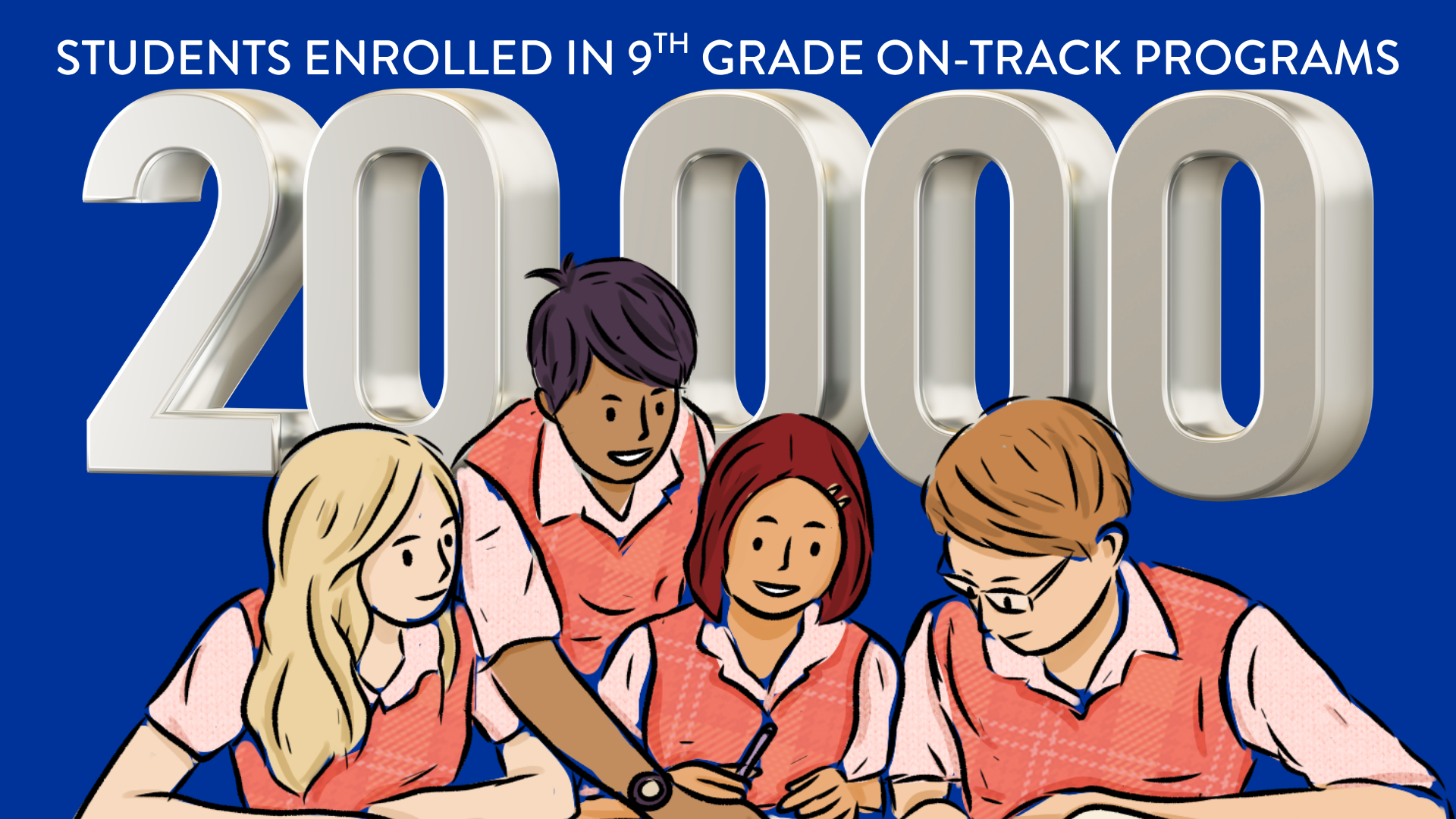
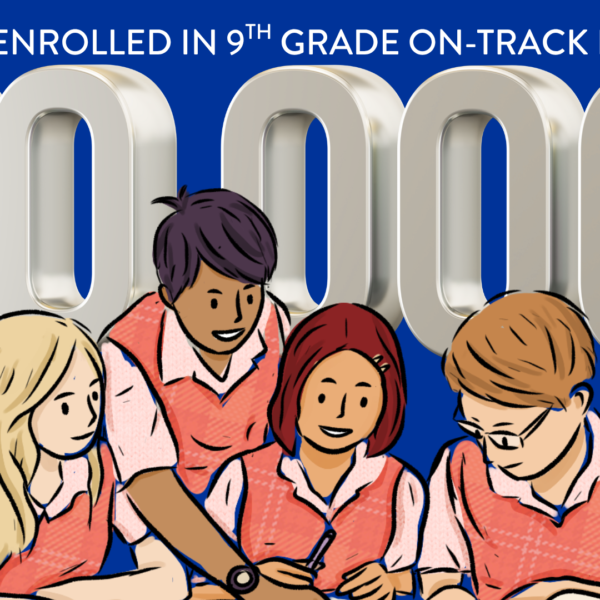
This year, more than 20,000 students will return to schools with 9th Grade On-Track programs due to $3.4 million of grant funding included in the Fiscal Year 2026 budget. This is up from 4,900 students during the 2025-2026 school year who attended schools with 9th Grade On-Track programs.  

Districts with newly implemented or expanded 9th Grade On-Track programs include Holbrook Unified, Mesa Public Schools, J.O. Combs Unified, Tolleson Union, Casa Grande Union, and Apache Junction Unified. These districts join Phoenix Union and Mingus Union that already have 9th Grade On-Track programs. 

9th Grade On-Track programs provide early intervention to freshman students at risk of falling behind through tailored academic support.  

Research shows that finishing freshman year on-track for graduation leads to students being “3x more likely to graduate on-time.”  At Phoenix Union’s Camelback High School, 9th Grade On-Track programs improved graduation rates by nearly 20 points and nearly doubled the on-track rate. Across the Phoenix Union district, 9th Grade On-Track programs increased enrollment in dual enrollment classes by more than 300%. Taken together, these benefits help students be better prepared for college, a career, or the military. 

“Thousands more high school students getting access to this program is a big win,” said Stand for Children Arizona Executive Director Rebecca Gau. “However, there are still tens of thousands of Arizona students who continue to attend schools without these programs. And at a cost of $150 per student, it has a great return on investment. The Arizona legislature must restore funding for 9th Grade On-Track so that every high school student can benefit.” 

Campaign to feature investment in all 30 legislative districts leading up to Election Day 

Today, Stand for Children Arizona launched Growing Arizona, a new multi-platform campaign to define early childhood as the most important issue on the ballot this November.  

The Growing Arizona campaign comes at a time when polling conducted by Tulchin Research found that 56% of Arizonans support expanding the Child Tax Credit to $350 and 61% support investing at least $45 million in affordable childcare. Polling by Noble Predictive Insights found that nearly 90% of Arizona parents say high gas prices are impacting their pocketbook.  

Analysis by Lending Tree found that the cost to raise a young child in Arizona rose by 14.6%—tied for 9th fastest in the country—between their 2025 and 2026 reports to nearly $28,000 per year. That makes Arizona the 15th most expensive state in the country for raising young kids. Among the most notable expenses is child care where Arizona is the 18th most expensive state. That may explain why the Lending Tree study found more than 40% of parents say the cost of raising a child has impacted the size of their families, including whether to have more kids. 

Today, Stand for Children Arizona launched five digital ads across the state informing communities about how the legislature can improve affordability for families. The digital ads can be viewed here.  

In addition to digital ads, Stand for Children Arizona released score cards for all 90 members of the legislature grading them on their support of working families and early childhood investments at the legislature. Every member of the Democratic caucus in both chambers received either an A or B, and a majority of Republicans in both chambers earned a B. Full methodology and results are available here. 

“We know that Arizona grows when families grow,” said Stand for Children Arizona Executive Director Rebecca Gau. “This campaign is about making sure that when Arizonans go to the ballot box—whether it’s this July in the primary or in November for the general election—that they keep in mind Arizona’s kids and look for candidates who will put them first.” 

### 

As we enter summer vacation, your local school boards are hard at work reviewing, editing, and approving their new budgets for the 2026-2027 school year! 

Here’s your quick June wrap-up for Mesa, Chandler, Gilbert, Paradise Valley, Scottsdale, Peoria, and Tucson school districts: 

Mesa Public Schools

School Board Members: Courtney Davis, Lacy Chaffee, Sharon Benson, Marcie Hutchinson, and Rachel Walden  

  • The Mesa School Board voted 3–2 to renew its membership with the Arizona School Boards Association for another year. 
    The board approved accepting an in‑kind gift from Teach Plus to support Year 2 of the Inspire Teaching and Exceptional Learning project at Stevenson Elementary, providing Amplify CKLA HQIM for K–5 literacy work without committing the district to future procurement. 
  • The board approved a one‑year lease with United Food Bank for 4,145 square feet of district office space downtown, generating about $88,956 in revenue and continuing a key community partnership with an option to renew. 
  • The Board extended its Head Start partnership through June 2027, ensuring continued services for preschool children with disabilities in compliance with federal requirements.  

Chandler Unified

School Board Members: Patti Serrano, Barb Mozdzen, Claudia Mendoza, Kurt Rhors, and Ryan Heap 

  • CUSD school board members approved resolutions honoring two longtime Hamilton High School leaders by dedicating the Fieldhouse to retiring Athletic Trainer, Lance Michel and renaming the Varsity Field after retiring Head Baseball, Coach Mike Woods, recognizing their decades of service and lasting impact on the school community. 
  • The board approved renewing MOUs with notMYkid, Jewish Family & Children’s Services, and Resilient Health to continue providing free prevention education and community‑based mental health supports for students and families, with referrals made only after required parental consent. 

Gilbert Unified

School Board Members: Jessie Brainard, Chad Thompson, Dr. Blake Robison, Jill Humpherys, Shana Murray 

  • The board approved a multivendor, multi‑year contract for Plumbing & Irrigation Parts, Equipment, and Supplies with an estimated annual cost of $230,000 beginning July 1, 2026 and renewable for up to four additional years. 
  • Gilbert school board members also approved a structural pay grade adjustment for all security positions, including a $1/hour increase for returning staff and updated grades for Security Guard, Lead Security Guard, and the District Security–Secondary Specialist role to address high turnover. 

Paradise Valley Unified

School Board Members: Sandra Christensen, Anne Greenberg, Dr. Amanda Lim, Jessica Wani, and Tony Pantera 

  • The board approved awarding multi‑vendor contracts for web content management and mass notification systems through the 1GPA consortium, replacing the expiring contract and supporting districtwide website, communication, accessibility, hosting, and technical needs. 
  • The board approved a $1,208,593.81 furniture purchase for the Indian Bend Elementary rebuild through Arizona Furnishings, covering all classroom, office, collaborative, and specialty space furnishings along with full delivery and installation, funded by Bond dollars. 
  • The board approved a retaining wall replacement project at Eagle Ridge, authorizing Willmeng to construct a new reinforced wall to address structural deterioration and safety concerns, with work funded through Maintenance & Operations.  

Scottsdale Unified

School Board Members: Carine Werner, Mike Sharkey, Dr. Matt Pittinsky, Dr. Donna Lewis, and Amy Carney 

  • The board approved using Plant Funds to contract with Willmeng Construction for an $860,675.26 renovation of the Mohave District Annex to relocate 47 staff from departments impacted by the sale of the 7575 E. Main Street property, with no negative impact on classroom budgets. 
  • The board approved awarding a contract to Accel Communications Inc. for alarm monitoring and repair services through June 30, 2027, with annual renewal options, following a competitive procurement process that identified the vendor as offering the most advantageous proposal. 

Peoria Unified

School Board Members: Melissa Ewing, Becky Proudfit, Heather Rooks, Jeff Tobey, Janelle Bowles 

  • The board approved administrative appointments for the 2026–27 school year, naming Beki Slater as Principal of Country Meadows Elementary and promoting Kristen Henninger to Principal of Alta Loma Elementary following a competitive selection process. 
  • Peoria school board members also voted to table the revised pro statement for the district Override election, delaying approval so members can continue refining the language before it is included in election publicity materials. 

Tucson Unified

School Board Members: Jennifer Eckstrom, Dr. Ravi Shah, Natalie Luna Rose, Val Romero, and Sadie Shaw 

  • TUSD school board members approved new supplemental literacy materials (SIPPS K–8) to strengthen foundational reading interventions across the district, funded through Move On When Reading. 
  • The board also approved multiple major Food Services contracts, including catered meal agreements, commercial kitchen equipment, beverage and snack food procurement, dairy purchases, and food safety and sanitation services for FY26–27. 
  • Lastly, they approved technology and instructional support agreements, including a five‑year K–12 content filtering and digital safety contract, cooperative technology purchases, and a renewed partnership with the UA Center for Recruitment and Retention of Mathematics Teachers. 

Thanks for reading this month’s update! 

If you missed May’s update, you can read it here.

Check out more:

dummy-img

HB 2265 Eliminating Constitutional Due Process Fees Now in Effect

jsumner Sep 14, 2026 1 min read

On Saturday, HB 2265—a bill passed by the Arizona legislature and signed into law by Governor Hobbs to eliminate constitutional due process fees for jury trials, public defenders, and appeals—went into effect.  HB 2265 was a key bill supported by…

More than 20,000 students are benefitting from 9th Grade On-Track programs during the 2026-2027 school year.

Arizona Students Celebrate First Day of School with New 9th Grade On-Track Programs 

jsumner Aug 3, 2026 2 min read

This year, more than 20,000 students will return to schools with 9th Grade On-Track programs due to $3.4 million of grant funding included in the Fiscal Year 2026 budget. This is up from 4,900 students during the 2025-2026 school year who attended schools with 9th Grade On-Track programs.   Districts with newly implemented or expanded 9th Grade On-Track programs include Holbrook Unified,…

Growing Arizona. Help parents thrive. Because Arizona grows when families grow.

Stand for Children Arizona Launches Issue Campaign Citing Early Childhood as the Defining Issue of 2026

jsumner Jul 8, 2026 3 min read

Campaign to feature investment in all 30 legislative districts leading up to Election Day  Today, Stand for Children Arizona launched Growing Arizona, a new multi-platform campaign to define early childhood as the most important issue on the ballot this November.   The Growing Arizona campaign comes at a time…

June School Boards Recap

June School Boards Recap

sjedlowski Jul 1, 2026 6 min read

Here’s your quick June wrap-up for Mesa, Chandler, Gilbert, Paradise Valley, Scottsdale, Peoria, and Tucson school districts:  School Board Members: Courtney Davis, Lacy Chaffee, Sharon Benson, Marcie Hutchinson, and Rachel Walden   School Board Members: Patti Serrano, Barb Mozdzen, Claudia Mendoza, Kurt Rhors, and Ryan Heap  School Board Members: Jessie Brainard, Chad Thompson, Dr. Blake…

Stand for Children Arizona Statement on Governor Hobbs Signing HB 2265

Stand for Children Arizona Statement on Governor Hobbs Signing HB 2265

jsumner Jun 29, 2026 1 min read

Stand for Children Arizona Executive Director Rebecca Gau released the following statement about Governor Hobbs signing HB 2265 into law on Friday, June 19th. HB 2265 would eliminate court fees for jury trials, public defenders, and appeals.  “We are grateful to Governor Hobbs and the…

Stand for Children Arizona Statement on Governor Hobbs Signing HB 2265

Stand for Children Arizona Executive Director Rebecca Gau released the following statement about Governor Hobbs signing HB 2265 into law on Friday, June 19th. HB 2265 would eliminate court fees for jury trials, public defenders, and appeals. 

“We are grateful to Governor Hobbs and the Arizona legislature for eliminating fees that create barriers for Arizonans to access their constitutional rights. The right to an attorney, jury trial, or appeal should never be restricted only to those with the ability to pay. 

While talking with Arizonans about this bill, we learned of several who were pressured to take a plea because they couldn’t afford an attorney,” said Stand for Children Arizona Executive Director Rebecca Gau. “The ability to pay should not be a deciding factor between guilt and innocence. This bill is going to make our criminal justice system stronger and more fair.”

Stand for Children Arizona Executive Director Rebecca Gau released the following statement about Arizona’s Fiscal Year 2027 budget that passed out of the legislature yesterday.

“We applaud Governor Hobbs and legislative leadership for working to make Arizona more affordable for working families. Their inclusion of a child tax credit and continuing to fund child care subsidies are wins. 

However, we are disappointed in what was not included in the budget,” said Stand for Children Arizona Executive Director Rebecca Gau. “No funding for 9th Grade On-Track. No funding for the Independent Corrections Oversight Office. And not enough funding to fully eliminate the childcare waitlist.

These are commonsense programs with a small overall expense that would pay huge dividends for Arizonans and our economy. We hope that when Arizona is in better financial shape, we make these important programs a priority again.”

###

Early Childhood Day at the Capitol 2026

As Schools Head Into Summer: Key Updates from Districts Across the Valley

Here’s your quick May wrap-up for Mesa, Chandler, Gilbert, Paradise Valley, Scottsdale, Peoria, and Tucson school districts: 

Mesa Public Schools

School Board Members: Courtney Davis, Lacy Chaffee, Sharon Benson, Marcie Hutchinson, and Rachel Walden  

  • Mesa renewed an Intergovernmental Agreement (IGA) to continue the FAFSA Peer Coach Project, which trains student leaders to help peers complete the Free Application for Federal Student Aid (FAFSA) and boost college‑going rates. 
  • The Board extended its Head Start partnership through June 2027, ensuring continued services for preschool children with disabilities in compliance with federal requirements.  

Chandler Unified

School Board Members: Patti Serrano, Barb Mozdzen, Claudia Mendoza, Kurt Rhors, and Ryan Heap 

  • Chandler Unified renewed its Intergovernmental Agreement with Maricopa County Head Start to continue providing preschool services, including services for children with disabilities for three‑ to five‑year‑olds. 
  • The Board approved a wide variety of updates to CTE course costs, student course fees, and school meal prices to keep pace with rising costs of goods and services and to cover materials needed for hands‑on courses. 
  • The Board also approved a 2025 bond project to convert stadium lights at Basha, Casteel, Chandler, Hamilton, and Perry High Schools to energy‑efficient LED systems, cutting energy use by 40–65% and saving about $40,000 annually. The upgrade will also improve field lighting while reducing glare and preserving darker skies for nearby neighborhoods. 

Gilbert Unified

School Board Members: Jessie Brainard, Chad Thompson, Dr. Blake Robison, Jill Humpherys, Shana Murray 

  • Gilbert Public Schools approved several major maintenance and facility upgrades, including gym floor refinishing across all high schools and junior highs, design work for Desert Ridge High’s roofing replacement, new flooring at South Valley Junior High, concrete repairs at Patterson Elementary, and sound/lighting/AV upgrades at Gilbert High School’s auditorium.  
  • The Board also approved a $412,155 refresh of CTE lab technology, adding new desktops, laptops, and monitors to support programs such as biomed, programming, marketing, agriculture, automotive, and digital communications. 

Paradise Valley Unified

School Board Members: Sandra Christensen, Anne Greenberg, Dr. Amanda Lim, Jessica Wani, and Tony Pantera 

  • PVUSD approved several maintenance and facility updates, including roofing renovations at Desert Trails Elementary, Sonoran Sky Elementary, and Whispering Wind Academy, along with awarding a new districtwide contract for paint and painting supplies. 
  • The Board also voted to call two Special Override Elections for November 2026: one for its 15% budget Maintenance & Operations (M&O) override and one for its $6,730,000 or 10% of its revenue control limit for a period of not to exceed seven (7) years District Additional Assistance (DAA) override, with August 7, 2026 at 5 p.m. set as the deadline to submit arguments for or against either measure to the Maricopa County School Superintendent. 

Scottsdale Unified

School Board Members: Carine Werner, Mike Sharkey, Dr. Matt Pittinsky, Dr. Donna Lewis, and Amy Carney 

  • Scottsdale Unified held an in‑depth discussion on its 1:1 technology model, outlining plans to expand parent options to increase transparency into student device use, and finalize a new Technology for Learning Framework that emphasizes instruction‑first, balanced screen time, and strong digital citizenship. The district will schedule a special board meeting for continued discussion. You can view the full presentation here. 
  • The Board approved resolutions calling for a Special Bond Election on November 3, 2026, asking voters to consider a new $375M bond package to support district capital needs; the Board also released the accompanying bond presentation and election materials for public review. 

Peoria Unified

School Board Members: Melissa Ewing, Becky Proudfit, Heather Rooks, Jeff Tobey, Janelle Bowles 

  • Peoria Unified approved a comprehensive PreK–12 English Language Arts curriculum adoption, selecting Teaching Strategies for Pre‑K; Amplify CKLA for K–5; Amplify ELA for grades 6–8 (including the Cactus Cluster); Great Minds’ Wit & Wisdom, Geodes, and Fundations for Peoria Traditional School; and Savvas MyPerspectives for high school core ELA. The Board also adopted new Bedford, Freeman & Worth supplemental materials for Pre‑AP, Honors, and AP English courses. 
  • The Board also approved updated 2026–27 schedules of course fees, non‑class fees, KidZone rates, and preschool fees for the upcoming school year. 

Tucson Unified

School Board Members: Jennifer Eckstrom, Dr. Ravi Shah, Natalie Luna Rose, Val Romero, and Sadie Shaw 

  • The TUSD school board approved updated personnel actions and a slate of new assistant principal appointments across multiple campuses, filling key leadership roles for the 2026–27 school year. 
  • The Board also approved major weatherization projects at Catalina High School and Hollinger K‑8, funded through the School Facilities Division, to improve building protection and extend facility life. 

Thanks for reading this month’s update! 

If you missed April’s update, you can read it here.

Check out more:

dummy-img

HB 2265 Eliminating Constitutional Due Process Fees Now in Effect

jsumner Sep 14, 2026 1 min read

On Saturday, HB 2265—a bill passed by the Arizona legislature and signed into law by Governor Hobbs to eliminate constitutional due process fees for jury trials, public defenders, and appeals—went into effect.  HB 2265 was a key bill supported by…

More than 20,000 students are benefitting from 9th Grade On-Track programs during the 2026-2027 school year.

Arizona Students Celebrate First Day of School with New 9th Grade On-Track Programs 

jsumner Aug 3, 2026 2 min read

This year, more than 20,000 students will return to schools with 9th Grade On-Track programs due to $3.4 million of grant funding included in the Fiscal Year 2026 budget. This is up from 4,900 students during the 2025-2026 school year who attended schools with 9th Grade On-Track programs.   Districts with newly implemented or expanded 9th Grade On-Track programs include Holbrook Unified,…

Growing Arizona. Help parents thrive. Because Arizona grows when families grow.

Stand for Children Arizona Launches Issue Campaign Citing Early Childhood as the Defining Issue of 2026

jsumner Jul 8, 2026 3 min read

Campaign to feature investment in all 30 legislative districts leading up to Election Day  Today, Stand for Children Arizona launched Growing Arizona, a new multi-platform campaign to define early childhood as the most important issue on the ballot this November.   The Growing Arizona campaign comes at a time…

June School Boards Recap

June School Boards Recap

sjedlowski Jul 1, 2026 6 min read

Here’s your quick June wrap-up for Mesa, Chandler, Gilbert, Paradise Valley, Scottsdale, Peoria, and Tucson school districts:  School Board Members: Courtney Davis, Lacy Chaffee, Sharon Benson, Marcie Hutchinson, and Rachel Walden   School Board Members: Patti Serrano, Barb Mozdzen, Claudia Mendoza, Kurt Rhors, and Ryan Heap  School Board Members: Jessie Brainard, Chad Thompson, Dr. Blake…

Stand for Children Arizona Statement on Governor Hobbs Signing HB 2265

Stand for Children Arizona Statement on Governor Hobbs Signing HB 2265

jsumner Jun 29, 2026 1 min read

Stand for Children Arizona Executive Director Rebecca Gau released the following statement about Governor Hobbs signing HB 2265 into law on Friday, June 19th. HB 2265 would eliminate court fees for jury trials, public defenders, and appeals.  “We are grateful to Governor Hobbs and the…

April School Boards Recap: Key Decisions Across AZ Districts 

Here’s your quick April wrap-up for Mesa, Chandler, Gilbert, Paradise Valley, Scottsdale, Peoria, and Tucson school districts: 

Mesa Public Schools

School Board Members: Courtney Davis, Lacy Chaffee, Sharon Benson, Marcie Hutchinson, and Rachel Walden  

  • Mesa Unified approved a new memorandum of understanding (MOU) to rename and expand the former Mesa K‑Ready program into “Mesa K‑Ready and Beyond,” a broader early‑literacy and kindergarten‑readiness initiative. The expanded program will support families as children’s first teachers and strengthen connections to local human and social services through city and community partnerships. 
  • The Board also approved a $550,000 renewal for Social Studies supplemental software for grades 6–12 and a $2 million increase for student technology purchases, allowing the district to buy 6,000 high school laptops early to avoid cost increases and ensure timely summer configuration and deployment. 

Chandler Unified

School Board Members: Patti Serrano, Barb Mozdzen, Claudia Mendoza, Kurt Rhors, and Ryan Heap 

  • Chandler Unified approved a $3.65 million contract with McCarthy Building Companies to begin summer renovations of Chandler High School’s Culinary Arts classroom and long‑lead cafeteria components. The project updates early‑2000s facilities to current industry standards, including new back‑of‑house kitchens and a converted front‑of‑house instructional space aligned to CTE Culinary Arts requirements. 
  • The Board also approved an MOU with Gabriel’s Angels to bring registered pet‑therapy teams to selected schools from July 2026–June 2027. 
  • Chandler Unified placed the new 7th‑grade OpenSciEd science curriculum into the required 60‑day public review period. While the curriculum is free, the district will purchase $177,421 in materials to support labs and student learning before bringing it forward for final approval. 

Gilbert Unified

School Board Members: Jessie Brainard, Chad Thompson, Dr. Blake Robison, Jill Humpherys, Shana Murray 

  • Gilbert Public Schools approved the purchase of Defined Learning as a supplemental inquiry‑based curriculum for K–6 gifted students, offering real‑world performance tasks and project‑based learning to deepen critical thinking and cross‑curricular understanding. 
  • The Board approved the appointments of Erica Helfrey as principal of Campo Verde High School and Johnny Stegall as principal of Mesquite Junior High, both beginning in the 2026–2027 school year. 

Paradise Valley Unified

School Board Members: Sandra Christensen, Anne Greenberg, Dr. Amanda Lim, Jessica Wani, and Tony Pantera 

  • Paradise Valley Unified approved the districtwide K–12 science learning materials adoption, following the committee’s full evaluation of materials across all grade levels. The adoption includes Imagine Learning Twig for K–8 and a range of high school resources—CK12, McGraw‑Hill Inspire Biology, OpenSciEd, SAVVAS Experience Chemistry, OpenStax, HMH Dimensions, and Cengage—along with supplemental tools such as AP Classroom, code.org, and the American Modeling Teachers Association. 

Scottsdale Unified

School Board Members: Carine Werner, Mike Sharkey, Dr. Matt Pittinsky, Dr. Donna Lewis, and Amy Carney 

  • Scottsdale Unified highlighted strong achievements within the Native American Education Program, including students collectively passing AP exams and earning meaningful college credit savings. Check out the full presentation here. 
  • Scottsdale Unified approved the 2026–2027 Governing Board meeting calendar, which includes 11 regular meetings and 5 special/study sessions. 

Peoria Unified

School Board Members: Melissa Ewing, Becky Proudfit, Heather Rooks, Jeff Tobey, Janelle Bowles 

  • Peoria Unified approved a resolution to place a 13% Maintenance & Operation Override renewal on the November 3, 2026 ballot, with August 7 set as the deadline for submitting pro and con arguments to the County Superintendent. 
  • The Board also voted to place a separate November 3, 2026 Special Election question before voters, seeking authorization to sell, lease, or exchange identified district properties, including the District Administration Center and the closed Kachina Elementary School. 

Tucson Unified

School Board Members: Jennifer Eckstrom, Dr. Ravi Shah, Natalie Luna Rose, Val Romero, and Sadie Shaw 

  • The Board received an overview of the district’s school‑closure, consolidation, and boundary‑review process, including statutory requirements and community‑input steps, with findings scheduled to be reported to the Governing Board in December. 
  • Tucson Unified approved override‑funded compensation increases for 2026–27, including a $3,000 raise for teachers on TDR‑A/B and Exceptional Education schedules and a 4% increase for all other eligible employees, funded through the voter‑approved 15% M&O Override. 

Thanks for reading this month’s update! 

If you missed February’s update, you can read it here.

Check out more:

dummy-img

HB 2265 Eliminating Constitutional Due Process Fees Now in Effect

jsumner Sep 14, 2026 1 min read

On Saturday, HB 2265—a bill passed by the Arizona legislature and signed into law by Governor Hobbs to eliminate constitutional due process fees for jury trials, public defenders, and appeals—went into effect.  HB 2265 was a key bill supported by…

More than 20,000 students are benefitting from 9th Grade On-Track programs during the 2026-2027 school year.

Arizona Students Celebrate First Day of School with New 9th Grade On-Track Programs 

jsumner Aug 3, 2026 2 min read

This year, more than 20,000 students will return to schools with 9th Grade On-Track programs due to $3.4 million of grant funding included in the Fiscal Year 2026 budget. This is up from 4,900 students during the 2025-2026 school year who attended schools with 9th Grade On-Track programs.   Districts with newly implemented or expanded 9th Grade On-Track programs include Holbrook Unified,…

Growing Arizona. Help parents thrive. Because Arizona grows when families grow.

Stand for Children Arizona Launches Issue Campaign Citing Early Childhood as the Defining Issue of 2026

jsumner Jul 8, 2026 3 min read

Campaign to feature investment in all 30 legislative districts leading up to Election Day  Today, Stand for Children Arizona launched Growing Arizona, a new multi-platform campaign to define early childhood as the most important issue on the ballot this November.   The Growing Arizona campaign comes at a time…

June School Boards Recap

June School Boards Recap

sjedlowski Jul 1, 2026 6 min read

Here’s your quick June wrap-up for Mesa, Chandler, Gilbert, Paradise Valley, Scottsdale, Peoria, and Tucson school districts:  School Board Members: Courtney Davis, Lacy Chaffee, Sharon Benson, Marcie Hutchinson, and Rachel Walden   School Board Members: Patti Serrano, Barb Mozdzen, Claudia Mendoza, Kurt Rhors, and Ryan Heap  School Board Members: Jessie Brainard, Chad Thompson, Dr. Blake…

Stand for Children Arizona Statement on Governor Hobbs Signing HB 2265

Stand for Children Arizona Statement on Governor Hobbs Signing HB 2265

jsumner Jun 29, 2026 1 min read

Stand for Children Arizona Executive Director Rebecca Gau released the following statement about Governor Hobbs signing HB 2265 into law on Friday, June 19th. HB 2265 would eliminate court fees for jury trials, public defenders, and appeals.  “We are grateful to Governor Hobbs and the…

Springing into Business – March School Boards Recap

Here’s your quick March wrap-up for Mesa, Chandler, Gilbert, Paradise Valley, Scottsdale, Peoria, and Tucson school districts: 

Mesa Public Schools

School Board Members: Courtney Davis, Lacy Chaffee, Sharon Benson, Marcie Hutchinson, and Rachel Walden  

  • Mesa School Board members voted to renew the architectural and engineering services contract for up to $3,500,000 to ensure uninterrupted access to licensed firms and maintain continuity for facility assessments, design work, and capital improvement projects beginning April 1, 2026. 
  • They also voted to increase the asphalt, concrete, and related services contract by $3,000,000 to fully utilize newly approved Adjacent Ways Levy funds and support expanded repair and replacement projects across district facilities. 

Chandler Unified

School Board Members: Patti Serrano, Barb Mozdzen, Claudia Mendoza, Kurt Rhors, and Ryan Heap 

  • Chandler School Board members voted to approve the hiring of Dr. Anna Battle as the district’s next Superintendent and to authorize her employment contract for July 1, 2026 through June 30, 2029. 
  • They also voted to approve the purchase of fifteen Blue Bird All‑American 84‑passenger buses for $3,999,413.06 funded by 2019 and 2025 bond dollars. 
  • Lastly, they voted to approve an education affiliation agreement with Empire Southwest to provide CTE automotive students with industry‑aligned training, internships, and workforce pathways in diesel and heavy‑equipment technologies. 

Gilbert Unified

School Board Members: Jessie Brainard, Chad Thompson, Dr. Blake Robison, Jill Humpherys, Shana Murray 

  • Gilbert School Board members voted to approve a new Superintendent Employment Agreement for Dr. Jared Ryan for the term of July 1, 2026 through June 30, 2029. 
  • They also voted to approve the appointment of two new principals to lead Mesquite High School and Gilbert Classical Academy. 

Paradise Valley Unified

School Board Members: Sandra Christensen, Anne Greenberg, Dr. Amanda Lim, Jessica Wani, and Tony Pantera 

  • PVUSD Governing Board members voted to approve flooring replacements at Desert Shadows Middle School, Larkspur Elementary, Quail Run Elementary, Pinnacle High School, and Horizon High School, as well as lighting upgrades for the Horizon High School Performing Arts Center. 
  • Board members also voted to approve a Memorandum of Understanding with the Phoenix Children’s Chorus to expand advanced choral opportunities for students, provide professional learning for music educators, and support district arts programming through the 2026–27 school year. 

Scottsdale Unified

School Board Members: Carine Werner, Mike Sharkey, Dr. Matt Pittinsky, Dr. Donna Lewis, and Amy Carney 

  • Scottsdale School Board members voted to approve a National Center for Construction Education and Research grant for Saguaro High School’s CTE program to fund products, curriculum, professional development, and industry certifications totaling an estimated $13,250. 
  • The Board also voted to approve offering half‑day Pre‑School and Pre‑Kindergarten tuition at $500 per block as part of a pilot program at Anasazi for the 2026–27 school year. 
  • Scottsdale School Board members voted to approve renaming Laguna Elementary to Laguna Prep after a naming committee review and a parent survey in which 73% of families participated and 93% supported the change. 

Peoria Unified

School Board Members: Melissa Ewing, Becky Proudfit, Heather Rooks, Jeff Tobey, Janelle Bowles 

  • Peoria School Board members voted to approve the closure of Kachina Elementary School with students reassigned to Canyon Elementary beginning in the 2026–27 school year; they also approved the closure of Pioneer Elementary School with students reassigned to Foothills Elementary for 2026–27; they further approved reconfiguring Cactus High School to a 7–12 grade model to include incoming 7th and 8th grade students starting in 2026–27; and they additionally approved designating the new Cactus High School 7–12 program as a voluntary choice option for Oakwood Elementary’s 7th and 8th grade students while keeping Oakwood as a K–8 campus. 

Tucson Unified

School Board Members: Jennifer Eckstrom, Dr. Ravi Shah, Natalie Luna Rose, Val Romero, and Sadie Shaw 

  • Tucson Unified School Board members voted to approve an Intergovernmental Agreement and addendum with Pima County JTED to continue offering joint technical education courses retroactive to July 2025. 
  • They also voted to approve a $131,849 grant from the Tohono O’odham Nation to renovate student restrooms at Pueblo High School. 
  • They further voted to approve a $75,000 increase to the Occupational and Physical Therapy Services contract to support additional special education staffing needs. 

Thanks for reading this month’s update! 

If you missed February’s update, you can read it here.

Check out more:

dummy-img

HB 2265 Eliminating Constitutional Due Process Fees Now in Effect

jsumner Sep 14, 2026 1 min read

On Saturday, HB 2265—a bill passed by the Arizona legislature and signed into law by Governor Hobbs to eliminate constitutional due process fees for jury trials, public defenders, and appeals—went into effect.  HB 2265 was a key bill supported by…

More than 20,000 students are benefitting from 9th Grade On-Track programs during the 2026-2027 school year.

Arizona Students Celebrate First Day of School with New 9th Grade On-Track Programs 

jsumner Aug 3, 2026 2 min read

This year, more than 20,000 students will return to schools with 9th Grade On-Track programs due to $3.4 million of grant funding included in the Fiscal Year 2026 budget. This is up from 4,900 students during the 2025-2026 school year who attended schools with 9th Grade On-Track programs.   Districts with newly implemented or expanded 9th Grade On-Track programs include Holbrook Unified,…

Growing Arizona. Help parents thrive. Because Arizona grows when families grow.

Stand for Children Arizona Launches Issue Campaign Citing Early Childhood as the Defining Issue of 2026

jsumner Jul 8, 2026 3 min read

Campaign to feature investment in all 30 legislative districts leading up to Election Day  Today, Stand for Children Arizona launched Growing Arizona, a new multi-platform campaign to define early childhood as the most important issue on the ballot this November.   The Growing Arizona campaign comes at a time…

June School Boards Recap

June School Boards Recap

sjedlowski Jul 1, 2026 6 min read

Here’s your quick June wrap-up for Mesa, Chandler, Gilbert, Paradise Valley, Scottsdale, Peoria, and Tucson school districts:  School Board Members: Courtney Davis, Lacy Chaffee, Sharon Benson, Marcie Hutchinson, and Rachel Walden   School Board Members: Patti Serrano, Barb Mozdzen, Claudia Mendoza, Kurt Rhors, and Ryan Heap  School Board Members: Jessie Brainard, Chad Thompson, Dr. Blake…

Stand for Children Arizona Statement on Governor Hobbs Signing HB 2265

Stand for Children Arizona Statement on Governor Hobbs Signing HB 2265

jsumner Jun 29, 2026 1 min read

Stand for Children Arizona Executive Director Rebecca Gau released the following statement about Governor Hobbs signing HB 2265 into law on Friday, June 19th. HB 2265 would eliminate court fees for jury trials, public defenders, and appeals.  “We are grateful to Governor Hobbs and the…

From Budgets to Book Fairs

Here’s your quick February wrap-up for Mesa, Chandler, Gilbert, Paradise Valley, Scottsdale, Peoria, and Tucson school districts: 

Mesa Public Schools 

School Board Members: Courtney Davis, Lacy Chaffee, Sharon Benson, Marcie Hutchinson, and Rachel Walden  

  • Mesa School Board members approved a grant for Eisenhower Center for Innovation to apply for $540,000 in funding that would support free after‑school tutoring, enrichment, and childcare through the Boys & Girls Club from 2026–2031, covering staffing and resources for participating students. 
  • Board members also approved a grant for Stevenson Elementary to apply for $540,000 in funding that would support free after‑school tutoring, enrichment, and childcare through the Boys & Girls Club from 2026–2031, covering staffing and resources for students. 
  • Lastly, board members approved a proposal for Sirrine Montessori Center to allow 4th–6th grade students to take a field trip to Biosphere 2 and the Arizona‑Sonora Desert Museum in March 2026 with more than 100 parents submitting surveys in support of the field trip. 

Chandler Unified School District 

School Board Members: Patti Serrano, Barb Mozdzen, Claudia Mendoza, Kurt Rhors, and Ryan Heap 

  • Chandler Unified School District board members approved closing Hill Academy @ ICAN beginning in 2027 as part of the transition to Ken “Chief” Hill Learning Academy, which has the space to absorb remaining students and already has a transition plan in place for families and state reporting. 
  • The board members also approved a series of campus upgrades, including $1.52 million in renovations to convert Culinary Arts classrooms at Basha and Casteel high schools into industry‑standard instructional spaces, funded with CTE capital dollars. They also approved flooring replacements across Andersen Elementary, CTA Independence, CTA Freedom, Ryan Elementary, and Payne Junior High, each replacing aging carpet and vinyl, using 2025 Bond funds for a combined investment of more than $1.47 million. 
  • CUSD board members approved a $125,082 contract to refurbish two aging cooling towers at Perry High School’s central plant, using 2019 bond funds to complete the preventative maintenance needed to keep the school’s cooling system operating reliably. 

Gilbert Public Schools

School Board Members: Jessie Brainard, Chad Thompson, Dr. Blake Robison, Jill Humpherys, Shana Murray 

  • Gilbert Public Schools board members approved continuing their intergovernmental agreement with the City of Mesa so the district can keep receiving solid‑waste and recycling collection services. 
  • Board members also approved routine budget revisions, updating their unrestricted capital budget to reflect changes in state funding, carry‑forward balances, and interest earnings. 

Paradise Valley Unified School District 

School Board Members: Sandra Christensen, Anne Greenberg, Dr. Amanda Lim, Jessica Wani, and Tony Pantera 

  • Paradise Valley Unified School District board members approved several furniture refresh projects to fund new classroom furniture across Palomino Intermediate, Quail Run Elementary, Greenway Middle School, and Cactus View Elementary, updating classrooms with new furnishings through District Contract 23‑16PV. 

Scottsdale Unified School District 

School Board Members: Carine Werner, Mike Sharkey, Dr. Matt Pittinsky, Dr. Donna Lewis, and Amy Carney 

  • Scottsdale Unified School District board members reviewed recommendations from the K–11 and upper‑level math adoption committee to approve and purchase new math curriculum materials for use in classrooms beginning in the 2026–27 school year. 
  • SUSD board members approved revised attendance boundaries for Pima Elementary following the school’s planned repurposing for the 2026–27 school year. A boundary committee of staff and parents reviewed multiple options, and the board held a public hearing in February to gather community input before finalizing the new boundaries. 
  • Lastly, board members approved new instructional materials, including NASM Essentials of Personal Fitness Training for the CTE Sports Medicine pathway, Medical Terminology: Mastering the Basics for the CTE Nursing Services program, and All Things EQ Academic & Leadership Skills for Desert Canyon Middle School. 

Peoria Unified School District 

School Board Members: Melissa Ewing, Becky Proudfit, Heather Rooks, Jeff Tobey, Janelle Bowles 

  • Peoria Unified School District board members voted to begin the process of interviewing candidates to replace Superintendent KC Summers, who is resigning and will step down on June 1. 
  • Board members also approved updated cooperative contracts that allow the district to continue purchasing cybersecurity services, sports‑court maintenance, and sheet music and instrument services. The new agreements replace older contracts that recently expired and designate updated vendors for each service area. 

Tucson Unified School District 

School Board Members: Jennifer Eckstrom, Dr. Ravi Shah, Natalie Luna Rose, Val Romero, and Sadie Shaw 

  • Tucson Unified School District board members approved a $350 supplemental curriculum purchase for 9th‑grade English at Pueblo High School, using Title I funds to add a modern mythological fiction text that supports students’ study of The Odyssey with more accessible language. 
  • TUSD board members also approved a new dual‑credit course, Administration of Justice (AJS) 109 – Criminal Law, which will allow 12th‑grade students to earn college credit through Pima Community College while also meeting their high‑school government requirement. The course introduces students to the criminal justice system, constitutional law, ethics, and policy‑making, with an emphasis on college‑level research and writing. 
  • Lastly, they approved a lease agreement allowing Premium Parking to use 22 spaces at Carrillo K–5 Magnet School during non‑school hours for downtown event overflow parking, with the district receiving 50% of net revenue and staff retaining free access to the lot at all times. 

Thanks for reading this month’s update! 

If you missed January’s update, you can read it here.

Check out more:

dummy-img

HB 2265 Eliminating Constitutional Due Process Fees Now in Effect

jsumner Sep 14, 2026 1 min read

On Saturday, HB 2265—a bill passed by the Arizona legislature and signed into law by Governor Hobbs to eliminate constitutional due process fees for jury trials, public defenders, and appeals—went into effect.  HB 2265 was a key bill supported by…

More than 20,000 students are benefitting from 9th Grade On-Track programs during the 2026-2027 school year.

Arizona Students Celebrate First Day of School with New 9th Grade On-Track Programs 

jsumner Aug 3, 2026 2 min read

This year, more than 20,000 students will return to schools with 9th Grade On-Track programs due to $3.4 million of grant funding included in the Fiscal Year 2026 budget. This is up from 4,900 students during the 2025-2026 school year who attended schools with 9th Grade On-Track programs.   Districts with newly implemented or expanded 9th Grade On-Track programs include Holbrook Unified,…

Growing Arizona. Help parents thrive. Because Arizona grows when families grow.

Stand for Children Arizona Launches Issue Campaign Citing Early Childhood as the Defining Issue of 2026

jsumner Jul 8, 2026 3 min read

Campaign to feature investment in all 30 legislative districts leading up to Election Day  Today, Stand for Children Arizona launched Growing Arizona, a new multi-platform campaign to define early childhood as the most important issue on the ballot this November.   The Growing Arizona campaign comes at a time…

June School Boards Recap

June School Boards Recap

sjedlowski Jul 1, 2026 6 min read

Here’s your quick June wrap-up for Mesa, Chandler, Gilbert, Paradise Valley, Scottsdale, Peoria, and Tucson school districts:  School Board Members: Courtney Davis, Lacy Chaffee, Sharon Benson, Marcie Hutchinson, and Rachel Walden   School Board Members: Patti Serrano, Barb Mozdzen, Claudia Mendoza, Kurt Rhors, and Ryan Heap  School Board Members: Jessie Brainard, Chad Thompson, Dr. Blake…

Stand for Children Arizona Statement on Governor Hobbs Signing HB 2265

Stand for Children Arizona Statement on Governor Hobbs Signing HB 2265

jsumner Jun 29, 2026 1 min read

Stand for Children Arizona Executive Director Rebecca Gau released the following statement about Governor Hobbs signing HB 2265 into law on Friday, June 19th. HB 2265 would eliminate court fees for jury trials, public defenders, and appeals.  “We are grateful to Governor Hobbs and the…

Original ran in The Arizona Republic on Monday, February 16th.
The original article written by Dr. Jose B. Ashford can be found here.

Check Out More

dummy-img

HB 2265 Eliminating Constitutional Due Process Fees Now in Effect

jsumner Sep 14, 2026 1 min read

On Saturday, HB 2265—a bill passed by the Arizona legislature and signed into law by Governor Hobbs to eliminate constitutional due process fees for jury trials, public defenders, and appeals—went into effect.  HB 2265 was a key bill supported by…

More than 20,000 students are benefitting from 9th Grade On-Track programs during the 2026-2027 school year.

Arizona Students Celebrate First Day of School with New 9th Grade On-Track Programs 

jsumner Aug 3, 2026 2 min read

This year, more than 20,000 students will return to schools with 9th Grade On-Track programs due to $3.4 million of grant funding included in the Fiscal Year 2026 budget. This is up from 4,900 students during the 2025-2026 school year who attended schools with 9th Grade On-Track programs.   Districts with newly implemented or expanded 9th Grade On-Track programs include Holbrook Unified,…

Growing Arizona. Help parents thrive. Because Arizona grows when families grow.

Stand for Children Arizona Launches Issue Campaign Citing Early Childhood as the Defining Issue of 2026

jsumner Jul 8, 2026 3 min read

Campaign to feature investment in all 30 legislative districts leading up to Election Day  Today, Stand for Children Arizona launched Growing Arizona, a new multi-platform campaign to define early childhood as the most important issue on the ballot this November.   The Growing Arizona campaign comes at a time…

June School Boards Recap

June School Boards Recap

sjedlowski Jul 1, 2026 6 min read

Here’s your quick June wrap-up for Mesa, Chandler, Gilbert, Paradise Valley, Scottsdale, Peoria, and Tucson school districts:  School Board Members: Courtney Davis, Lacy Chaffee, Sharon Benson, Marcie Hutchinson, and Rachel Walden   School Board Members: Patti Serrano, Barb Mozdzen, Claudia Mendoza, Kurt Rhors, and Ryan Heap  School Board Members: Jessie Brainard, Chad Thompson, Dr. Blake…

Stand for Children Arizona Statement on Governor Hobbs Signing HB 2265

Stand for Children Arizona Statement on Governor Hobbs Signing HB 2265

jsumner Jun 29, 2026 1 min read

Stand for Children Arizona Executive Director Rebecca Gau released the following statement about Governor Hobbs signing HB 2265 into law on Friday, June 19th. HB 2265 would eliminate court fees for jury trials, public defenders, and appeals.  “We are grateful to Governor Hobbs and the…

More than 300 people attended Early Childhood Day to advocate for affordable childcare, closing tobacco tax loophole 

Phoenix, Ariz. – Today, the Arizona Early Childhood Alliance hosted Early Childhood Day at the Arizona Capitol. More than 300 people showed up to advocate for crucial investments in Arizona’s youngest residents including child care subsidies, closing the tobacco tax loophole that funds early childhood support, and establishing a child tax credit.  

Early Childhood Day comes as the importance of early childhood investments grows. Arizona’s waitlist for childcare subsidies has grown to over 11,000 kids. Revenue from the tobacco tax to fund First Things First is down nearly $70 million since its inception. Arizona ranks as the 20th most expensive state to raise a child and child care costs in 2024 rose at more than three times the rate of inflation.  

Stand for Children Arizona’s 2026 Survey of Arizona Voters shows that investing in affordable child care, closing the tobacco tax loophole, and establishing a state-level Child Tax Credit are supported by a majority of Arizonans.  

“Investing in Arizona’s youngest residents is imperative” said Stand for Children Arizona Executive Director Rebecca Gau. “And I hope our legislature will listen to the hundreds of Arizonans from all corners of the state who traveled to the Capitol today. Arizona’s working families deserve our support.”  

For pictures from Early Childhood Day, click here.  

Back from Break & Back to Business

School boards across the state started the year strong with some big decisions that affect our communities, from school closures and budget deficits to new programming and choosing new governing board presidents. We’ve recapped it for you here. 

Now here’s your quick January wrap-up for Mesa, Chandler, Gilbert, Paradise Valley, Scottsdale, Peoria, and Tucson school districts: 

Mesa Public Schools 

School Board Members: Courtney Davis, Lacy Chaffee, Sharon Benson, Marcie Hutchinson, and Rachel Walden  

  • Members elected Courtney Davis as Governing Board President for the 2026 calendar year. 
  • Mesa voted to approve a $2,000,000 contract increase to buy new technology, including teacher laptops, before prices go up, ensuring the tech team has time to get them ready for staff this summer. 

 Chandler Unified 

School Board Members: Patti Serrano, Barb Mozdzen, Claudia Mendoza, Kurt Rhors, and Ryan Heap 

  • The Chandler Governing Board narrowly approved a vote on a complex set of staff cuts totaling $12 million for the 2026–27 budget after multiple long meetings and significant community input. The final plan includes reductions to teachers, media center staff, and district‑level positions. 
  • The board approved spending $1,051,498 through an Omnia Partners contract with Daktronics to install new scoreboards and videoboards at Basha, Chandler, Casteel, and Hamilton High Schools as part of the Arizona Sports & Tourism Authority grant. 
  • The board also approved spending $266,064.20 through a 1GPA contract with Precise Sign Company to remove old units and install new Daktronics scoreboards at Basha, Casteel, Chandler, and Hamilton High Schools as part of the Arizona Sports & Tourism Authority grant. 

Gilbert Unified 

School Board Members: Jessie Brainard, Chad Thompson, Dr. Blake Robison, Jill Humpherys, Shana Murray 

  • Gilbert Public Schools governing board members voted to close Pioneer Elementary School at the end of the 25/26 school year due to declining enrollment and budget shortfalls. 
  • The board also approved expanding the attendance boundaries of Carol Rae Ranch, Harris, and Val Vista Lakes Elementary to absorb parts of Pioneer’s current boundary beginning in 2026–27. 

Paradise Valley Unified 

School Board Members: Sandra Christensen, Anne Greenberg, Dr. Amanda Lim, Jessica Wani, and Tony Pantera 

  • The governing board voted to table a measure that would increase pricing for community education programming across the district. Instead, they will host a study session on the issue before voting.  
  • The district held its third and final reading of a policy to follow state policy, which requires schools providing routine student health services to share health care credentials and emergency response training information upon parent request without releasing any personally identifiable employee information. 

Scottsdale Unified 

School Board Members: Carine Werner, Mike Sharkey, Dr. Matt Pittinsky, Dr. Donna Lewis, and Amy Carney 

  • Scottsdale scheduled a public hearing to gather input on proposed new attendance boundaries for students in the Pima Elementary area following its December 9, 2025, decision to close and repurpose the school, with a final vote set for the February 10, 2026 governing board meeting. 
  • The board approved a revision to establish a Planning and Boundary Design Advisory Committee (PABDAC) and waived the second read, creating a formal advisory process to support transparent, long‑range planning for attendance boundaries. 

Peoria Unified 

School Board Members: Melissa Ewing, Becky Proudfit, Heather Rooks, Jeff Tobey, Janelle Bowles 

  • Peoria Unified School District voted to re-elect Heather Rooks as President of the board for the 2026 calendar year. 
  • The board approved notifying Glendale Community College by certified mail that Peoria Unified will relocate its early childhood program to another district elementary school for 2026–27, with the letter reviewed by district legal counsel. 

Tucson Unified 

School Board Members: Jennifer Eckstrom, Dr. Ravi Shah, Natalie Luna Rose, Val Romero, and Sadie Shaw 

  • To fill upcoming vacancies on the Tucson Unified School District Budget Advisory Committee, the board is pushing forward two community members, Corissa Shepard and Krista Millay. 
  • The board also voted to extend the current superintendent, Dr. Trujillo’s contract with the district to June 30, 2029.  

Thanks for reading this month’s update! 

If you missed December’s recap, you can find it here.

Check Out More:

dummy-img

HB 2265 Eliminating Constitutional Due Process Fees Now in Effect

jsumner Sep 14, 2026 1 min read

On Saturday, HB 2265—a bill passed by the Arizona legislature and signed into law by Governor Hobbs to eliminate constitutional due process fees for jury trials, public defenders, and appeals—went into effect.  HB 2265 was a key bill supported by…

More than 20,000 students are benefitting from 9th Grade On-Track programs during the 2026-2027 school year.

Arizona Students Celebrate First Day of School with New 9th Grade On-Track Programs 

jsumner Aug 3, 2026 2 min read

This year, more than 20,000 students will return to schools with 9th Grade On-Track programs due to $3.4 million of grant funding included in the Fiscal Year 2026 budget. This is up from 4,900 students during the 2025-2026 school year who attended schools with 9th Grade On-Track programs.   Districts with newly implemented or expanded 9th Grade On-Track programs include Holbrook Unified,…

Growing Arizona. Help parents thrive. Because Arizona grows when families grow.

Stand for Children Arizona Launches Issue Campaign Citing Early Childhood as the Defining Issue of 2026

jsumner Jul 8, 2026 3 min read

Campaign to feature investment in all 30 legislative districts leading up to Election Day  Today, Stand for Children Arizona launched Growing Arizona, a new multi-platform campaign to define early childhood as the most important issue on the ballot this November.   The Growing Arizona campaign comes at a time…

June School Boards Recap

June School Boards Recap

sjedlowski Jul 1, 2026 6 min read

Here’s your quick June wrap-up for Mesa, Chandler, Gilbert, Paradise Valley, Scottsdale, Peoria, and Tucson school districts:  School Board Members: Courtney Davis, Lacy Chaffee, Sharon Benson, Marcie Hutchinson, and Rachel Walden   School Board Members: Patti Serrano, Barb Mozdzen, Claudia Mendoza, Kurt Rhors, and Ryan Heap  School Board Members: Jessie Brainard, Chad Thompson, Dr. Blake…

Stand for Children Arizona Statement on Governor Hobbs Signing HB 2265

Stand for Children Arizona Statement on Governor Hobbs Signing HB 2265

jsumner Jun 29, 2026 1 min read

Stand for Children Arizona Executive Director Rebecca Gau released the following statement about Governor Hobbs signing HB 2265 into law on Friday, June 19th. HB 2265 would eliminate court fees for jury trials, public defenders, and appeals.  “We are grateful to Governor Hobbs and the…

Today, Stand for Children Arizona released results from its annual survey of Arizona voters concerning cell phones at Arizona schools. The survey, conducted in November, asked 800 likely 2026 general election voters about their thoughts on Arizona’s law restricting cell phone use during the school day.    

When asked about the current law that requires restricting cell phone use during class time, 90% of survey respondents supported the law, including 76% who strongly supported it. That number includes 85% of parents (65% strongly).    

In an initial sample, 69% (45% strong) supported phone-free policies prohibiting students from using their phones throughout the entire school day, including lunch and passing periods. That includes 63% of parents (42% strong support).    

As respondents were given more information about phone-free policies, including the academic benefits of rigorous full day phone-free policies and the strong support from school safety professionals, support climbed to 81%, including 61% strong support. Among parents, support reached 77% (52% strong support).    

“This shows there is a broad appetite among parents and our community to implement robust phone-free policies at our schools, beyond just instructional time. This makes sense because it takes the onus off the teacher. It also saves money for schools and takes some pressure off administrators, eliminating many of the discipline issues caused by cell phones.” said Stand for Children Arizona Executive Director Rebecca Gau. “We owe it to our students and our future to implement phone-free policies to help students be successful at school and in life.”    

Full survey results are available here.    

Mar 23, 2017; Phoenix, AZ, USA; Stand for Children Arizona document Kindergarteners at local schools in Phoenix, Arizona. (Photo by Jennifer Stewart)

Today, Governor Hobbs delivered her 4th State of the State address as the 2nd Session of the 56th Legislature kicked off. At a time when over 60% of Arizona voters think the state is on the wrong track, Governor Hobbs laid out her agenda to move Arizona forward.  

Stand for Children Arizona applauds the Governor for continuing to prioritize crucial investments in education and reducing costs for working families. We look forward to the legislature taking up these measures to support Arizonans.  

According to our 2025 Survey of Arizona Voters, a super-majority of Arizonans (75%), including 59% of Republicans, believe there is a need for additional funding for public education. 

“We are happy to see that Governor Hobbs continues to lay out a pro-affordability and pro-education agenda for Arizona and will help to reduce costs for working families,” said Stand for Children Arizona Executive Director Rebecca Gau. “We look forward to working with Governor Hobbs and the legislature to lower costs for Arizonans on these and other issues like affordable child care. We also must provide needed resources to Arizona’s schools by renewing Prop 123 and continuing to fund successful and cost-effective 9th Grade On-Track programs. These steps will give Arizona families a chance at a brighter future.”  

Apply here: Applications for the Stand for Children Arizona Renaissance Scholarship are now open! Learn more and apply today!

First generation college students can apply for $20,000 scholarships 

Arizona – Today, Stand for Children Arizona began accepting applications for its 2026 Stand for Children Arizona Renaissance Scholarship. This marks the third time Stand for Children Arizona has awarded scholarships to high school students.  

The scholarship, in partnership with longtime Stand for Children supporter The Renaissance Foundation, is worth $20,000 over 4 years. To be eligible for the scholarship, students must be in the first generation of their family to attend college, have a track record of support for their community, and show financial need and community leadership. Last year, Stand for Children Arizona recognized five students who wanted to be nurses, engineers, and musicians.  

“Being selected as a Stand for Children Arizona Renaissance Scholar was a huge honor,” said 2025 Stand for Children Arizona Renaissance Scholar Keisha Orozco Lopez. “Winning the scholarship took a big weight off the shoulders of my family and me as I began college this fall. I’m excited the class of 2026 will have the same opportunity to benefit as I did.” 

“This scholarship helped me afford to attend college and allowed me to pursue my dream of becoming a teacher,” said 2025 Stand for Children Arizona Renaissance Scholar Nerissa Felix. “I am so grateful for Stand for Children Arizona and The Renaissance Foundation for selecting me and helping open these doors.” 

“We’re honored to continue supporting the education of Arizona’s future leaders as they begin a new chapter of their lives,” said Stand for Children Arizona Executive Director Rebecca Gau. “We are grateful for our partners at The Renaissance Foundation for allowing us to continue offering this life-changing $20,000 scholarship and cannot wait to meet our 2026 scholars.” 

Applications are due February 1st, 2026 and can be found here. 


Winners of the Stand for Children Arizona Renaissance Scholarship will be honored on May 7th at Gateway Community College. For information about sponsoring the luncheon, please email Christina Morales Wood at [email protected].

That’s a wrap on 2025! Check out our December School Boards recap to ring in the New Year.

Even though schools were out of session for winter break most of December, that didn’t stop our school boards from voting on big items like budget revisions, approval of new contracts, and stamps of approval on new construction. 

Now here’s your quick December wrap-up for Mesa, Chandler, Gilbert, Paradise Valley, Scottsdale, Peoria, and Tucson school districts: 

Mesa Public Schools 

School Board Members: Courtney Davis, Lacy Chaffee, Sharon Benson, Marcie Hutchinson, and Rachel Walden  

  • Mesa voted to approve a contract to replace the roof at Smith Junior High School. 
  • The board also made small revisions to the FY2025/26 budget, specifically the Classroom Site Fund and District Additional Assistance, and briefly outlined the expected solutions for shortfalls that will impact FY2027.  
  • They also approved an extensive list of supplemental materials for courses across Mesa Public Schools to help achieve college, career, and community preparedness. 

 Chandler Unified 

School Board Members: Patti Serrano, Barb Mozdzen, Claudia Mendoza, Kurt Rhors, and Ryan Heap 

  • CUSD board members approved a motion to rebuild Hartford Sylvia Encinas Elementary School, aiming to reduce overall repair and maintenance costs for the aging campus.  
  • The board also made revisions to the FY2025/26 budget in line with the core pillars of CUSD’s Journey to Excellence.
  • Additionally, a contract with EMCOR was approved to replace the outdated HVAC system at Chandler High School.  

Gilbert Unified 

School Board Members: Jessie Brainard, Chad Thompson, Dr. Blake Robison, Jill Humpherys, Shana Murray 

  • Gilbert approved a consent agenda item to replace the failed electrical supply service that supports the land lab at Mesquite High School.  
  • They also approved a project to replace refrigeration systems at the Meats Lab Space at Gilbert High School.  
  • Last on the approval list, GPS approved a proposal to replace the elevator’s hydraulic cylinder at Gilbert High School. 


Paradise Valley Unified 

School Board Members: Sandra Christensen, Anne Greenberg, Dr. Amanda Lim, Jessica Wani, and Tony Pantera 

  • PVUSD board members approved a series of policies in line with new statewide legislation to adjust the Governing Board policies, including: 
    • Changes to the student wireless communication device policy to limit acceptable student use of cell phones to educational purposes, in the case of an emergency, or if a student requires access for a medical condition. Social media use is limited to educational purposes. 
    • Changes allowing parents to opt their student out of a school-administered assessment if the student takes a different nationally recognized test outside of school and submits the official score to the school district, and to allow districts to use nationally recognized tests not administered by the district. 
  • The board also approved a partnership with Soles4Souls to provide students experiencing homelessness with access to free new shoes and other essential items.  

Scottsdale Unified 

School Board Members: Carine Werner, Mike Sharkey, Dr. Matt Pittinsky, Dr. Donna Lewis, and Amy Carney 

  • Scottsdale Unified School District board members voted 3-2 this month to move forward with the closure and repurposing of Echo Canyon K-8 and Pima Elementary School beginning in the 2026/27 school year. These closures come at a time of declining school enrollment and budget shortfalls. 

Peoria Unified 

School Board Members: Melissa Ewing, Becky Proudfit, Heather Rooks, Jeff Tobey, Janelle Bowles 

  • Peoria adjusted its starting pay scale to reflect the new AZ minimum wage this month. In January 2026, the AZ state minimum wage will increase from $14.70 to $15.15. 
  • Peoria also adjusted its Student Code of Conduct cell phone policy to include Pre-K in the K-8 cell phone away all day restrictions. 
  • The board also approved an updated contract with OMNI RFP for a 2026 learning management system. 

Tucson Unified 

School Board Members: Jennifer Eckstrom, Dr. Ravi Shah, Natalie Luna Rose, Val Romero, and Sadie Shaw 

  • TUSD approved the construction of a new building at Davis-Romero Bilingual Elementary Magnet School. The building will serve as the home for the school’s Mariachi program and include three additional classrooms to expand access for waitlisted students. 
  • Board Members also approved the construction of a new building at Rincon/University High School to replace the current portables with permanent structures. 

Thanks for reading this month’s update! 

Check Out More:

dummy-img

HB 2265 Eliminating Constitutional Due Process Fees Now in Effect

jsumner Sep 14, 2026 1 min read

On Saturday, HB 2265—a bill passed by the Arizona legislature and signed into law by Governor Hobbs to eliminate constitutional due process fees for jury trials, public defenders, and appeals—went into effect.  HB 2265 was a key bill supported by…

More than 20,000 students are benefitting from 9th Grade On-Track programs during the 2026-2027 school year.

Arizona Students Celebrate First Day of School with New 9th Grade On-Track Programs 

jsumner Aug 3, 2026 2 min read

This year, more than 20,000 students will return to schools with 9th Grade On-Track programs due to $3.4 million of grant funding included in the Fiscal Year 2026 budget. This is up from 4,900 students during the 2025-2026 school year who attended schools with 9th Grade On-Track programs.   Districts with newly implemented or expanded 9th Grade On-Track programs include Holbrook Unified,…

Growing Arizona. Help parents thrive. Because Arizona grows when families grow.

Stand for Children Arizona Launches Issue Campaign Citing Early Childhood as the Defining Issue of 2026

jsumner Jul 8, 2026 3 min read

Campaign to feature investment in all 30 legislative districts leading up to Election Day  Today, Stand for Children Arizona launched Growing Arizona, a new multi-platform campaign to define early childhood as the most important issue on the ballot this November.   The Growing Arizona campaign comes at a time…

June School Boards Recap

June School Boards Recap

sjedlowski Jul 1, 2026 6 min read

Here’s your quick June wrap-up for Mesa, Chandler, Gilbert, Paradise Valley, Scottsdale, Peoria, and Tucson school districts:  School Board Members: Courtney Davis, Lacy Chaffee, Sharon Benson, Marcie Hutchinson, and Rachel Walden   School Board Members: Patti Serrano, Barb Mozdzen, Claudia Mendoza, Kurt Rhors, and Ryan Heap  School Board Members: Jessie Brainard, Chad Thompson, Dr. Blake…

Stand for Children Arizona Statement on Governor Hobbs Signing HB 2265

Stand for Children Arizona Statement on Governor Hobbs Signing HB 2265

jsumner Jun 29, 2026 1 min read

Stand for Children Arizona Executive Director Rebecca Gau released the following statement about Governor Hobbs signing HB 2265 into law on Friday, June 19th. HB 2265 would eliminate court fees for jury trials, public defenders, and appeals.  “We are grateful to Governor Hobbs and the…

Today, Stand for Children Arizona released results from its annual survey of Arizona voters. The survey, conducted in November, asked 800 likely 2026 general election voters about their thoughts on a variety of policies affecting everyday Arizonans, ranging from public schools and early childhood to inflation and tariffs. 

The poll found support from 66% of Arizonans for investing at least $3.4 million in 9th Grade On-Track. Of that, more than half (39%) support increasing funding to $15 million to expand the program to every high school. This support was bipartisan in nature with 50% of Republicans and 84% of Democrats supporting at least $3.4 million.  

9th Grade On-Track: 

  • 66% support investing at least $3.4 million in 9th Grade On-Track.
  • 39% support increasing funding to $15 million, enough to fund the program at every high school.
  • Support for continuing or increasing 9th Grade On-Track funding enjoyed bipartisan support with 50% of Republicans supporting at least $3.4 million.  

Early Childhood: 

  • 56% support renewing a $350 state Child Tax Credit, including 45% of Republicans.
  • 61% support investing at least $45 million in affordable childcare. 35% support investing $136 million.  
  • 76% support closing the vape tax loophole to fund affordable childcare and 9th Grade On-Track programs. 64% of Republicans support this.  

Criminal Justice:  

  • 62% support eliminating juvenile life without parole sentences.
  • 49% of Republicans support eliminating juvenile life without parole sentences.  

Arizona’s Public Schools:  

  • 75% think Arizona’s public schools need more funding including 59% of Republicans. 
  • 15% listed a lack of adequate funding as the top issue facing schools. 

The Legislature: 

  • 61% of voters think Arizona is on the wrong track, a 4-point increase from a year prior.
  • 37% of voters would give the legislature an “F” for their handling of public schools, up from 36% a year ago. 

The Economy: 

  • 19% of voters listed inflation as the most important issue facing Arizonans, 
  • 12% of voters listed inflation as the second most pressing issue. 
  • 59% of voters said they have seen prices rise due to tariffs. 

“These survey results show that Arizonans want our legislature to invest in public schools and working families,” said Stand for Children Arizona Executive Director Rebecca Gau. “We hope the legislature will take the opportunity presented to them next year to meet voters where they are on these issues.” 

Full survey results are available here.  

Many school districts opted to condense their two monthly meetings into a single, packed night this month due to November break.  

School letter grades are out, and as always, it was an eventful month for AZ school boards! 

Now here’s your quick November wrap-up for Mesa, Chandler, Gilbert, Paradise Valley, Scottsdale, Peoria, Tucson AND, for this special edition, Amphitheater school districts: 

Mesa Public Schools 

School Board Members: Courtney Davis, Lacy Chaffee, Sharon Benson, Marcie Hutchinson, and Rachel Walden  

  • Mesa Public Schools received an overall B letter grade as a district with over 24 schools receiving As and 37 schools receiving Bs.  
  • Mesa School Board Members voted 5-0 to approve a lease agreement for a portion of the property at Smith Junior High School to be utilized by Polaris Academy LLC, a specialized school for autistic and neurodivergent children. 

Chandler Unified 

School Board Members: Patti Serrano, Barb Mozdzen, Claudia Mendoza, Kurt Rhors, and Ryan Heap 

  • The Board approved a contract with Norcon Industries, Inc. for new outdoor aluminum bleachers for the baseball and softball fields at Perry High School and to repair the bleachers at Arizona College Prep High School.  
  • They also approved a contract with Progressive Roofing to replace the roof at Bogle Junior High School with grant dollars approved and administered through the AZ Department of Administration. 
  • School Board Members heard recommendations for new K-5 Math and AP World History curriculums. Requests for Information and more information can be found here on the district website.  

P.S. We wanted to share the wonderful news that BOTH the Chandler Unified School District Bond and Override passed this November. Thank you to all the parents, community members, alumni, and leaders who supported these measures! 

Gilbert Unified 

School Board Members: Jessie Brainard, Chad Thompson, Dr. Blake Robison, Jill Humpherys, Shana Murray 

  • Gilbert School Board Members voted to approve inflationary increases to school meal prices for Fiscal Year 2027. 
  • They also voted to approve changes to the 2026/27 school course catalog with some new additions to available courses, internships, and EVIT/CTE programs. 

Paradise Valley Unified 

School Board Members: Sandra Christensen, Anne Greenberg, Dr. Amanda Lim, Jessica Wani, and Tony Pantera 

  • The PVUSD Governing Board approved a contract with Pueblo Mechanical to replace outdated heating and cooling chillers at Horizon High School. 
  • The board had a second read of the revised PVUSD course catalog for the 2026/27 school year.  

Scottsdale Unified 

School Board Members: Carine Werner, Mike Sharkey, Dr. Matt Pittinsky, Dr. Donna Lewis, and Amy Carney 

  • The SUSD Governing Board approved additions to the High School Planning Guide for the 2026/27 school year. A few new course offerings include Construction Management Tech I & II, Education Professions I & II, AP-CTE Cybersecurity I & II, and IB French, Mandarin, Spanish, and Math Applications. 
  • They also approved a new curriculum for the Introduction to Statistics course for the 2025/26 school year.  
  • Lastly, a discussion was held on the option of repurposing Echo Canyon Elementary School into Scottsdale Arts Academy, an arts-focused magnet school designed to elevate Scottsdale’s long-standing identity as an arts-centered community. 

Peoria Unified 

School Board Members: Melissa Ewing, Becky Proudfit, Heather Rooks, Jeff Tobey, Janelle Bowles 

  • Peoria Unified updated its Intergovernmental Agreement (IGA) with West-MEC to include the addition of two additional attachments to the already existing agreement that clarify funding and support for district staff. 
  • They approved a contract with SAVE IFB for art class ceramic supplies to replace the expiring contract with another business.  
  • The board also approved an emergency measure, so the district can quickly buy the grocery items needed for classes and programs while long-term contracts are still being finalized. This approval lets the district temporarily skip the normal bidding process to keep culinary, science, and other programs stocked with essential grocery items. 

Tucson Unified 

School Board Members: Jennifer Eckstrom, Dr. Ravi Shah, Natalie Luna Rose, Val Romero, and Sadie Shaw 

  • TUSD voted to approve a delegating authority to individual school councils to hold the required public meetings for D-rated schools (Hudlow Elementary School, Grijalva Elementary School, Manzo Elementary School, and Vesey Elementary School) due to short, required timeline windows. 
  • They also approved a contract with ASPIRE to provide curriculum around substance abuse beginning in Spring 2026. This is in line with the implementation plan to address both prevention and intervention, K-12 districtwide passed in May 2025.  

Amphitheater Unified 

School Board Members: Susan Zibrat, Deanna M. Day, Vicki Cox Golder, Michael Gemma, and Matthew A. Kopec 

Our team wanted to highlight Amphitheater Unified School District in this wrap-up due to the recent news of plans to close four schools across the district. The district spans 112 miles and covers parts of Catalina, Oro Valley, and Tucson, and has been serving students for 132 years. 

This month: 

  • Amphi teacher Michaela Rodrigues, a third-grade teacher at Innovation Academy, was honored at the governing board meeting as the Arizona Science Teachers Association’s Elementary Science Teacher of the Year. 
  • Mandi Cordell and Ashlee Manley Watson from Innovation Academy were named finalists for the Raytheon Leaders in Education Awards, and their dedication and commitment to Amphi students were celebrated at the meeting.  
  • 11 of the district’s 21 schools achieved an A rating by the state A-F letter grade system for 2025. No schools received D or F ratings. 
  • Supplemental texts were approved for the district CTE Culinary (9-12), REACH Honors English 11 (11th), and ELA courses (K-2). 

If you are an Amphi parent, student, or community member who would like to provide feedback on the news of school closures, you can complete the district feedback survey here.  

Thanks for reading this month’s update! 

Check Out More

dummy-img

HB 2265 Eliminating Constitutional Due Process Fees Now in Effect

jsumner Sep 14, 2026 1 min read

On Saturday, HB 2265—a bill passed by the Arizona legislature and signed into law by Governor Hobbs to eliminate constitutional due process fees for jury trials, public defenders, and appeals—went into effect.  HB 2265 was a key bill supported by…

More than 20,000 students are benefitting from 9th Grade On-Track programs during the 2026-2027 school year.

Arizona Students Celebrate First Day of School with New 9th Grade On-Track Programs 

jsumner Aug 3, 2026 2 min read

This year, more than 20,000 students will return to schools with 9th Grade On-Track programs due to $3.4 million of grant funding included in the Fiscal Year 2026 budget. This is up from 4,900 students during the 2025-2026 school year who attended schools with 9th Grade On-Track programs.   Districts with newly implemented or expanded 9th Grade On-Track programs include Holbrook Unified,…

Growing Arizona. Help parents thrive. Because Arizona grows when families grow.

Stand for Children Arizona Launches Issue Campaign Citing Early Childhood as the Defining Issue of 2026

jsumner Jul 8, 2026 3 min read

Campaign to feature investment in all 30 legislative districts leading up to Election Day  Today, Stand for Children Arizona launched Growing Arizona, a new multi-platform campaign to define early childhood as the most important issue on the ballot this November.   The Growing Arizona campaign comes at a time…

June School Boards Recap

June School Boards Recap

sjedlowski Jul 1, 2026 6 min read

Here’s your quick June wrap-up for Mesa, Chandler, Gilbert, Paradise Valley, Scottsdale, Peoria, and Tucson school districts:  School Board Members: Courtney Davis, Lacy Chaffee, Sharon Benson, Marcie Hutchinson, and Rachel Walden   School Board Members: Patti Serrano, Barb Mozdzen, Claudia Mendoza, Kurt Rhors, and Ryan Heap  School Board Members: Jessie Brainard, Chad Thompson, Dr. Blake…

Stand for Children Arizona Statement on Governor Hobbs Signing HB 2265

Stand for Children Arizona Statement on Governor Hobbs Signing HB 2265

jsumner Jun 29, 2026 1 min read

Stand for Children Arizona Executive Director Rebecca Gau released the following statement about Governor Hobbs signing HB 2265 into law on Friday, June 19th. HB 2265 would eliminate court fees for jury trials, public defenders, and appeals.  “We are grateful to Governor Hobbs and the…

Stand for Children Arizona is excited to announce Republican Senator J.D. Mesnard and Democrat Representative Consuelo Hernandez have been named its 2025 Legislative Champions. Both Senator Mesnard and Representative Hernandez were selected because of their leadership on several key issues — 9th Grade On-Track, childcare subsidies, and a child tax credit—to help Arizona children build a brighter future.  

Senator Mesnard played a key role in securing $3.4 million in funding to expand 9th Grade On-Track programs and including the program in state statute. Representative Hernandez was a co-sponsor of a bill to fund 9th Grade On-Track and the lead sponsor of a Child Tax Credit bill.  

“We are honored to recognize both Senator Mesnard and Representative Hernandez with this award,” said Stand for Children Arizona Executive Director Rebecca Gau. “It was a pleasure to work with them to support our students and help Arizona’s children have a brighter future. We deeply appreciate J.D. Mesnard’s sound judgement, fairness, steadfast commitment to justice, and proven ability to build coalitions that put Arizona’s children first. Representative Hernandez proved that she is a champion for working families, willing to build coalitions and reach consensus to build a brighter future. We look forward to continuing to work with them to support Arizona’s future!” 

Arizona’s child care waitlist is approaching a new milestone. Almost 10,000 kids are now waiting for access to child care subsidies. That’s 10,000 futures on hold.  

The child care waitlist was reinstated in August of 2024. In July, 900 children were released from the waitlist thanks to funds appropriated by the legislature in the FY2026 budget. Despite that, the need for affordable child care continues to grow thanks to cuts in federal funding.  

A new report from the Center for the Future of Arizona suggests that expanding access to affordable child care could provide a more than $12 billion boost to our state economy. Previous reports estimate the lack of affordable child care is a nearly $5 billion hit to our state economy.  

“As Arizonan’s wonder about the declining birth rate, and the cost of raising a family skyrockets, investing in child care for working families just makes sense. It means investing in a strong, prosperous economy,” said Stand for Children Arizona Executive Director Rebecca Gau. “Our economy does not work if thousands of Arizona parents are missing work because child care is unaffordable. That’s why more than 60% of Arizonans support funding for affordable child care.” 

### 

School districts can now apply for grants to implement evidence-based programs to improve on-track rates 

Arizona – This week, the Arizona Department of Education published a Request for Proposals for 9th Grade On-Track grant funding. These grants, funded by the legislature in the Fiscal Year 2026 budget, will enable schools to roll out evidence-based programming to improve graduation and on-track rates. 

Ninth grade has been described as one of the most important years for a student’s education. Students who finish freshman year on-track for graduation are “3x more likely to graduate on-time.” In Chicago, improved on-track rates also came with improvements in overall academic performance. Across all CHSS schools, absenteeism has dropped by 26 points and on-track rates are up 19 points.  

Currently, 4,900 students are benefiting from these programs across the Phoenix Union, JO Combs Unified, and Tolleson Union school districts. At Camelback High School, this program has helped improve the on-track rate by nearly 100% and the graduation rate by 20 points, decrease the absenteeism rate by 20 points, and allowed students more opportunities to take CTE classes to prepare for future careers. The grant will allow almost 20,000 more students to benefit from 9th Grade On Track programming. 

For help applying, school districts can contact Gina Yacovetta at [email protected].  

###

Phoenix, Ariz. – For years, Arizona students have attended underfunded schools that are facing a teacher shortage crisis and are ranked near the bottom of the country. And as we begin a new school year, Arizona students face continued threats to their success, despite public school leaders and teachers who are giving their all every day.      

Students are returning to public schools that are ranked last in the country—or 48th, depending on who you ask—due in large part to the fact that Arizona’s public schools are funded at only 2/3 of the national average. That’s $5300 per pupil below the average!    

Meanwhile, Arizona’s public schools are in the midst of a teacher shortage crisis. Last year, more than 8% of classrooms were either vacant or filled with a teacher who “did not meet state requirements”. That’s part of why Arizona schools have the worst student-to-teacher ratio in the nation.   

However, there is some good news this year. The legislature appropriated $3.4 million for 9th Grade on Track programs, meaning that more students will be able to benefit from this scientific approach to keep them on track for graduation. The legislature also included a two-year waiver of the AEL in the Fiscal Year 26 budget that will allow schools to spend their entire budget for the next two school years. And the legislature passed a bill requiring school districts to prohibit the use of phones during class time, a policy shown to improve academic outcomes and make students more engaged.  

“Constant underfunding of the public schools which are chosen by the vast majority of Arizona students, and a failure to end the teacher shortage crisis, continue to shortchange the education of Arizona’s students,” said Stand for Children Arizona Executive Director Rebecca Gau. “Arizona’s students, teachers, and communities deserve better. Investments in programs like 9th Grade on Track are a start, but must be accompanied by larger investments in Arizona’s students.”   

Phoenix, Ariz. – Today, the Arizona legislature passed a bipartisan budget funding the Arizona government for the next fiscal year. Although not perfect, the budget makes important steps toward strengthening Arizona’s children and families and setting them up for a brighter future.  

Among the notable pro-child and pro-family investments included in the budget: 

  • $3.4 million for 9th grade on track programs, investing in improving on-track and graduation rates at Arizona high schools. At Camelback High School, on-track rates have nearly doubled since the program was implemented in 2019.   
  • $3.8 million for free school lunches, investing in eliminating co-pays for students on the reduced-price lunch program. Last year, this program increased school breakfast and lunch participation by 1 million. 
  • $45 million for childcare subsidies, to begin eliminating the childcare waitlist that currently has nearly 6,000 children on it and help parents afford to work. 
  • 2-year waiver of the Aggregate Expenditure Limit, eliminating near-term uncertainty pertaining to school budgets. Had this not been included, schools may not have been able to spend their full budgets, despite having been approved by the legislature.  

“We applaud Governor Hobbs and the Arizona legislature for working together to make crucial investments in Arizona’s children and families,” said Stand for Children Arizona Executive Director Rebecca Gau. “Although we would have liked to see more investments in Arizona’s families over some other elements of the budget, we are grateful for a focus on keeping kids on track for high school graduation, eliminating co-pays for reduced price lunches, expanding childcare subsidies, and giving schools the confidence to spend their budget. Continuing to invest in these programs will help set thousands of Arizona children on the path to a brighter future.” 

Phoenix, Ariz. – Today, the Arizona Early Childhood Alliance (AZECA) hosted a press conference at the Arizona Capitol to call on the legislature to include crucial investments in childcare in the Fiscal Year 2026 budget. The Arizona Early Childhood Alliance was joined by Representative Sarah Ligouri (LD 5), childcare providers, parents, and early childhood advocates.  

The press conference comes just weeks before legislators believe a budget could be finalized and while Arizona families are struggling under the high cost of childcare. The average cost of childcare for a single child has risen to nearly $11,000 per year while more than 2,600 children are stuck on a waitlist for childcare subsidies.   

In the Fiscal Year 2026 budget, Arizona has the opportunity to end the waitlist for childcare subsidies and bring down the cost of childcare for thousands of Arizonans.  

“In response to this pressing issue, I, along with several dedicated colleagues, have sponsored HB 2643,” said Representative Sarah Ligouri (LD 5). “This legislation proposes an appropriation from the state general fund to draw down federal funds for childcare assistance and to clear the wait list. These funds are intended to expand access to affordable childcare, support our hardworking families, and stimulate economic growth.” 

“Childcare is very important to single mothers like myself and give us the peace of mind to go back to work and take care of business while our kids are being taken care of in safe and secure facilities,” said Rachel Camara, a mom from Glendale, Arizona. “Childcare is very important to Arizona and family as well doesn’t matter the background. But it’s very, very important that we work on this waiting list.” 

Photos from the press conference can be found here. 

###

Tucson, Ariz. – Today, Stand for Children Arizona gathered parents and childcare providers from across Tucson to speak with Representative Alma Hernandez (LD 20) about the importance of early childhood investments to be included in the Fiscal Year 2026 budget. Among the topics discussed was the importance of investments in affordable childcare and the need for an earned income tax credit.  

The roundtable came at a time when the average cost of childcare for a single kid has risen to nearly $11,000 per year and nearly one-third of young children are eligible for child care subsidies. Numbers suggest than more than 2,000 children are currently on a waitlist for childcare subsidies.  

“As I talk to families in my district, the need for greater access to affordable childcare is evident,” said Representative Alma Hernandez. “Childcare is a vital necessity for these young families. I will continue to advocate for our state to make these crucial investments to support families in my district and throughout the state.”  

Video from the Early Childhood Roundtable can be seen here.  

Phoenix, Ariz. – Today, Stand for Children Arizona joined the Arizona Early Childhood Alliance for Early Childhood Day at the Capitol. As part of the festivities, more than 300 advocates from across the state came together at the Arizona Capitol to meet with lawmakers to advocate for pro-early childhood policies like an earned income tax credit and childcare subsidies. 

In addition to meeting with legislators, Early Childhood Day featured a panel discussion on Improving Arizona’s Early Childhood Education System. The panel featured experts in economic development including Katie Hurst, the Arizona Association for Economic Development Executive Director, Andrea Helart, the President and CEO of the Lake Havasu Chamber of Commerce, and Mike Hutchinson, the Executive Vice President of the Phoenix East Valley Partnership.  

Advocates also participated in a stroll around the Capitol and an advocacy training, learning important skills to help continue advocating for legislation to invest in childcare and an earned income tax credit.  

“Our children are the future of our state,” said Stand for Children Arizona Executive Director Rebecca Gau. “That’s why it is so important that we invest in them and their families to reduce the cost of childcare and return money to working families—two policies that 62% of Arizonans support.”

Pictures and video from the event can be found here.  

Juvenile Court Fees Vacated

What fees can be vacated?

  • Public defender fees (including application fees)  
  • Costs of court-ordered counseling, treatment, or education programs for parents or guardians   
  • Probation supervision fees   
  • Cost of care, treatment, or education programs while in custody, residential placement, or detention   
  • Cost of medical care while in custody, residential placement, or detention   
  • DUI screening fees    
  • Administrative victim fees   
  • Diversion fees    
  • Time payment fee   
  • Monetary assessments for certain offenses 
  • Cost of family counseling programs, community-based alternative programs, treatment programs, or diversion programs   

Note: Unpaid juvenile restitution and juvenile fines cannot be canceled. 

Click here for more information on what fees can be canceled. 

You must ask the court where your case was heard to have your unpaid juvenile fees vacated by completing a petition. 

The petition form can be completed by: 

  • Someone with fees owed from a previous juvenile case 
  • A parent or guardian, for their child with a juvenile case 
  • A parent or guardian, for themselves, if they owe fees as part of their child’s case 

The petition form can be completed by you or by your attorney. You do not need to have an attorney to complete the form.  

  • You must file a petition for each case you want unpaid fees vacated. You will need your case number, which you can find on your paperwork from the case, or you can call the court where the case was heard to ask for your case number. 
  • You must file the petition in the county where the juvenile case was heard. File the original form with the court clerk and a copy with the county or city attorney. There is no fee to file the petition. 
  • Click here for the petition form. You can use this form regardless of which county you will file the petition in. 
  • Click here for detailed instructions from the court about how to complete the petition. 

Links and Contact Information: 

Arizona Supreme Court website about vacating juvenile fees 

County Clerk contact information 

County Superior Court Clerk Phone Number 
Apache (928) 337-7550 
Cochise 520) 432-8600 (Bisbee) and (520) 803-3060 (Sierra Vista) 
Coconino (928) 679-7600 
Gila (928) 402-8866 (Globe) and (928) 474-3978 (Payson) 
Graham (928) 428-3100 
Greenlee (928) 865-4242 
La Paz (928) 669-6131 
Maricopa (602) 372-5375 
Mohave (928) 753-0713 (Kingman), (928) 453-0701 (Lake Havasu City) and (928) 758-0730 (Bullhead City) 
Navajo (928) 524-4188 
Pima (520) 724-4200 
Pinal (520) 866-5300 
Santa Cruz (520) 375-7700 
Yavapai (928) 771-3312 
Yuma (928) 817-4222 

For more information:

Click the button for links to more information on the court website, petition forms and instructions, court phone numbers, and to join our Justice Reform Facebook Community.

Arizona Statewide survey results

NEW POLL SHOWS VOTERS APPROVE OF REFORMING INVESTMENTS IN EDUCATION ACROSS PARTY LINES

A new public opinion poll of Arizona voters reveals a resounding dissatisfaction with the current state of leadership, particularly within the legislature and with Arizona’s Superintendent of Public Instruction, Tom Horne. The data sheds light on key issues facing education in the state and highlights a clear call for reform. 

(PHOENIX) – Stand for Children Arizona conducted an annual poll of Arizona voters asking them to weigh in on key issues facing education in the state. The 2023 public opinion survey results reveal that a majority of Arizonans are concerned about the direction of the state and continue to think that there is a great need for additional funds for schools, giving the legislature poor grades when it comes to supporting our students. 

State of Concern
Arizonans are dissatisfied with leadership and let down by the support they feel from elected officials when it comes to our children and their education.  

  • 57% of voters feel that Arizona is on the wrong track. This percentage is unchanged from last year.  
  • Favorability of Arizona Superintendent of Public Instruction, Tom Horne, has decreased since May, while his name ID has increased.  
  • 55% of Arizonans have an unfavorable opinion of the Republican-led state legislature. 
  • When asked to give a grade to the Arizona state legislature when it comes to helping our public schools, 56% of voters said “D/F.” 

Demand for School Funding
There is a pressing need for increased public education funding and voters believe that the Arizona state legislature is failing by investing in wealthy corporations over our kids. 

  • 73% of voters think that there is a need for additional funds for Arizona’s public schools, with a majority believing that need is “great.” 
  • Even amidst rising costs and inflation, a majority of Arizonans believe that funding for public schools should increase. 
  • Arizona voters overwhelmingly believe that to address the projected $400 million budget shortfall, the state legislature should stop giving out tax breaks to large corporations and the wealthy instead of taking funds from schools. 
  • 62% of Arizonans, an increase of 8% over last year, would vote yes on a ballot measure to reform the expenditure limit on education to more adequately fund public schools. 

Calls to Reform ESA Vouchers
Arizona’s Empowerment Scholarship Account (ESA) voucher program is failing our most vulnerable students and a majority of voters are calling for drastic changes.  

  • After hearing about the lack of safety measures, such as background checks for teachers, use on non-educational expenses, and lack of accreditation or transparency, a majority of Arizona voters oppose the ESA voucher program. 
  • 65% of Arizonans would vote yes on a ballot measure to reform the ESA voucher system by increasing oversight, financial transparency and accountability, and limiting the program to students in need. 

Investing in our Children’s Futures
Across party lines, Arizonans are in support of investing in our state’s future through programs that directly impact our youngest learners. 

  • 73% of voters support establishing state funding for all-day Kindergarten in all Arizona public school districts and charters. 71% support the same establishment for pre-Kindergarten. 
  • 60% of voters support a permanent annual $350 per child tax rebate. 

Connecting Families in Arizona’s Justice System 
Prison telecom corporations charge families with incarcerated loved ones up to a dollar per minute for a phone call. Preying on families, these companies take in $1.4 billion annually and pay hundreds of millions in kickbacks to correctional agencies. As a result, 1-in-3 families with someone incarcerated falls into debt trying to stay connected. 

  • A majority, 58% of voters, support a proposal to make telephone communications between people inside and outside of prisons and jails free in Arizona. 

Rebecca Gau, executive director of Stand for Children Arizona says about the poll results, “voters are clearly unhappy with how the legislature and Superintendent of Public Instruction Tom Horne have approached education and the state budget. From ESA vouchers to school funding, I am hopeful that state leaders will address the needs of kids and families and put kids before politics.” 

The survey was conducted November 13-20, 2023, by Tulchin Research. Poll results are attached. 

Click here to view detailed polling results. 

4 ways Arizona schools chief Tom Horne is wrong about dual language learning

Originally published by azcentral. “Tom Horne Attacks Lessons for English Learners without Knowing the Law.” August 26, 2023.

Our local public schools in Arizona remain under attack. While the legislature voted to pass a one-year waiver to address the aggregate expenditure limit (AEL) for this year, avoiding a financial crisis that would have forced Arizona schools to cut $1.3 billion dollars, there is currently no commitment in place to ensure this issue doesn’t come back next year.

What is the Aggregate Expenditure Limit (AEL)?

The Arizona Public Schools Aggregate Expenditure Limit (AEL) is a state law that limits the amount of money that public schools in Arizona can spend each year. It was passed in 1980 to set a spending cap for all public schools based on attendance and inflation (it excludes charter schools since they didn’t exist in 1980).​ The AEL is an antiquated measure that does not account for modern day school finance or the ways education has changed since 1980. The AEL is calculated each year by taking the average per-pupil spending for the previous three years, and then adjusting it for inflation and student enrollment. The AEL is then used to determine the maximum amount of money that each school district can spend in the following year – regardless of how much the state legislature and the Governor have budgeted for schools.

How does it impact our schools?

This year alone, schools across the state would have lost $1.3 billion, if not for the legislature passing a waiver. This will mean that next year, we can estimate schools will be in danger of losing a similar amount of money. Meaning, our local schools would be forced to:

  • Close schools
  • Fire teachers (worsening an already existing teacher shortage)
  • Fire of support staff
  • Cancel after school programs
  • Shorten the school day

To see how much the AEL would cost YOUR district if not overturned, check out this list of impacted districts.

Didn’t the state increase education

funding last year? Why is this an issue?

In 2022, the Arizona state legislature passed a bipartisan budget which included historical investments in education. We were on the front lines to get this $1 billion investment added.

Education stakeholders were promised by the governor and legislators that the AEL would be fixed to allow these funds to actually be spent by schools.

Ultimately, Governor Ducey did not follow through on his commitment, and now schools are being forced to annually plan contingencies based on political theatre. We need our elected officials to put kids ahead of politics and do the right thing.

What can we do?

Legislators have until June 30th to place a waiver for the AEL for the upcoming school year.

Our local public schools in Arizona are under attack once again. Currently, the legislature has not voted to pass a one-year waiver to address the aggregate expenditure limit (AEL), and as a result, schools will be forced to cut $1.3 billion dollars on March 1st

What is the Aggregate Expenditure Limit (AEL)?

The Arizona Public Schools Aggregate Expenditure Limit (AEL) is a state law that limits the amount of money that public schools in Arizona can spend each year. It was passed in 1980 to set a spending cap for all public schools based on attendance and inflation (it excludes charter schools since they didn’t exist in 1980).​ The AEL is an antiquated measure that does not account for modern day school finance or the ways education has changed since 1980. The AEL is calculated each year by taking the average per-pupil spending for the previous three years, and then adjusting it for inflation and student enrollment. The AEL is then used to determine the maximum amount of money that each school district can spend in the following year – regardless of how much the state legislature and the Governor have budgeted for schools.

How does it impact our schools?

This year alone, schools across the state will lose $1.3 billion. This will mean that after March 1 districts may have to

  • Close schools
  • Fire teachers (worsening an already existing teacher shortage)
  • Fire of support staff
  • Cancel after school programs
  • Shorten the school day

To see how much the AEL will cost YOUR district if not overturned, check out this list of impacted districts.

Didn’t the state increase education

funding last year? Why is this an issue?

Last year, the Arizona state legislature passed a bipartisan budget which included historical investments in education. We were on the front lines to get this $1 billion investment added.

Education stakeholders were promised by the governor and legislators that the AEL would be fixed to allow these funds to actually be spent by schools.

Ultimately, Governor Ducey did not follow through on his commitment, and now schools are being forced to plan contingencies based on political theatre. We need our elected officials to put kids ahead of politics and do the right thing.

What can we do?

We have until March 1st to pressure our elected officials to lift the AEL for this year. Here’s what to do to help:

STEP ONE – Sign our petition asking the legislature to lift the AEL. We are delivering collected signatures for an in-person “Lift with Love” event on February 14 (Valentine’s Day) at the Arizona state capitol. We’ll be handing out valentines (the petition) to lawmakers and asking that they use their heart and think of the kids who will be affected by this archaic policy.

STEP TWO – Call your legislators (1 senator, 2 representatives) and ask them to lift the AEL immediately. Use this to determine your legislative district and then use this to find their phone number.

STEP THREE – Tell your friends! According to our 2022 annual survey, most Arizonans support lifting the AEL. The more people are aware they need to contact their legislators about this issue, the more likely it is we’ll have impact. Share this blog, share the petition, and tell everyone you know that we have until March 1 to support our local schools!

Stand for Children Arizona applauds Governor Hobbs for her strong display of leadership in her first State of the State address. Her call for bipartisanship to tackle key issues signals a unique landscape for our students and schools. It is evident, more than ever, that Arizonans need their leaders to act, and Governor Hobbs has made her message clear: if we are to make progress, we need to work together.

Heading into this legislative session, schools are struggling with burdensome policies such as the Aggregate Expenditure Limit (AEL) blocking schools from critical funding that was allocated in last year’s state budget, and the extreme budgetary consequences from the unaccountable ESA voucher program from previous Governor Doug Ducey’s administration. The current cost is well over $300 million – much higher than advertised during the budget process last year.

In her speech, Governor Hobbs appropriately called on the legislature to act quickly to address the AEL. As one of the organizations that led the charge to increase school funding last session, Stand for Children Arizona couldn’t agree more that legislators have an obligation to honor the promise made to fix the AEL as soon as possible – both for this year, and in the long term.

It is estimated that if the AEL is not waived this year, districts will be forced to cut 17% of their budget, a total of $1.3 billion taken from our local schools. This could result in shortened school years, a deeper teacher shortage, and decaying buildings and infrastructure.

In Stand for Children Arizona’s annual poll, voters indicated they want the AEL fixed immediately as well.

The December 2022 results showed that:

  1. When asked if there were to be a statewide ballot measure that would permanently raise the expenditure limit, 62% of Arizonans said they would vote “Yes” on it.
  2. When asked the same question, but for a ballot measure that would remove the limit altogether, 54% said they would vote “Yes”.

Also, according to our survey, the legislature heads into 2023 with 54% of voters unhappy with their performance – the highest it has ever been in our survey’s history. We hope that legislators will put kids before politics, and work together with Governor Hobbs to support our students and teachers.

Every year, Stand for Children Arizona, conducts a poll of Arizona voters asking them to weigh in on key issues facing education in the state. Our 2022 public opinion survey results reveal that the majority of Arizonans feel failed leadership in the legislature has negatively impacted our students and that “lack of adequate funding” is the biggest issue facing our schools. 

Arizonans are unhappy with failed leadership and think schools need more funding, prompting many to support a fix for the AEL 

  • 57% of voters feel Arizona as a whole is on the wrong track, a 5% increase from Dec. 2021 and the worst sentiment since these polls began in 2019. 
  • When asked to evaluate how well the legislature is serving schools, 57% of voters gave a “D” or Failing grade, the worst result since that question was first asked in 2020. 
  • Voters feel “lack of adequate funding” is the biggest problem facing our schools – 19% chose it as the highest-ranking issue. 
  • When asked how much of a need there is for additional funding for Arizona’s public schools, 69% still feel there is “Great” or “Some” need – with over 51% saying there is “Great” need. 

Not only do Arizonans feel dissatisfied with leadership, Arizonans are feeling let down by their own schools. When asked to evaluate Arizona’s public schools in grades K through 12: 

  • 44% of voters gave Arizona public schools a “D” or Failing grade 

Now, when asked to evaluate schools in voters’ personal communities: 

  • This year, only 29% of voters gave their own schools an “A” or “B” grade – a full 5% drop since Dec. 2021 and the lowest since we began asking that question over five years ago. 

Clearly, parents feel their schools are becoming less effective and less well supported by the legislature. 

To fix the issue of state funding for education, many leaders and organizations have pointed to the outdated Aggregate Expenditure Limit (AEL) as a major obstacle to Arizona’s public schools providing a high-quality education that they can be proud of.   

In June, the legislature passed and Governor Ducey approved a state budget that substantially increased investment in Arizona public schools. However, the nearly $1 billion allotted to public schools has yet to make it to classrooms due to the archaic spending cap. Stand for Children Arizona asked voters how they felt about dealing with the limit. 

The survey suggests a ballot measure to resolve the AEL issue could be successfully passed 

  • When asked if there were a statewide ballot measure that would permanently raise the expenditure limit, 62% of Arizonans said they would vote “Yes” on it. 
  • When asked the same question, but for a ballot measure that would remove the limit altogether, 54% said they would vote “Yes.” 

The polling then asked voters to respond to statements surrounding the AEL: 

  • 63% of Arizonans feel that “the state’s current budget process is cumbersome, bureaucratic, and out of touch with what schools really need to provide a high-quality education that we can be proud of” is a strong argument to eliminate the expenditure limit. 
  • 60% of Arizonans find the fact that “the spending limit creates undue financial stress and burden on our schools” is a strong argument to “raise the spending limit or remove it altogether.” 

Arizonans want teachers to be able to teach.  

  • Voters feel teacher pay is the main reason to increase funding – 21% of voters who expressed schools had “Great” or “Some” need of additional funding said teacher pay was the main reason to increase funding. 

They are also sympathetic to teacher’s need for academic freedom: 

  • 63% of surveyed Arizonans agree that teachers should be assured of academic freedom in setting curriculum without government interference in setting curriculum. 
  • 57% of voters agree with the statement that Arizona legislators “are trying to tie the hands of teachers by preventing them from teaching important topics that kids need to learn so we don’t repeat the mistakes of our past.” 

Arizonans want investment in early learning. 

  • 68% of voters support establishing state funding for all-day Kindergarten in all Arizona public school districts and charters. 
  • 65% of voters support establishing state funding for pre-Kindergarten programs in all Arizona public school districts and charters. 

Along with questions surrounding school performance and budget concerns, the survey included questions about how voters feel about the “wide array of administrative fees on youth and their families,” offering Arizonans the opportunity to share their thoughts on improving the justice system for our youth. 

Arizonans support fairer treatment of kids in juvenile court 

  • A majority of surveyed Arizonans support a proposal to eliminate court administrative fees associated only with juvenile court – 51% support, 29% oppose, and 20% don’t know. To note: eliminating these administrative fees does not impact civil and criminal penalties or restitution for victims. 

There are multiple supported justifications on eliminating these fees: 

  • 61% of voters feel “reforming the juvenile court system to eliminate burdensome administrative court fees does not mean that convicted offenders will be excused from having to pay civil penalties or restitution to victims” is a strong argument for eliminating all fees associated with juvenile court. 
  • 60% of Arizonans think a good reason to remove the financial burden of juvenile court fees on our youth is that “ultimately, a well-functioning juvenile court system will reduce the likelihood of those youth ending up in our state prisons in the future”. 

As we turn the page to 2023, I think many former colleagues of mine can learn a lot from this data. When I served in the legislature, the findings of a survey like this were incredibly important. Now, I’m eager to apply this same insight into the work we are doing here at Stand for Children Arizona! 

Clearly, Education remains a major focus for Arizonans, and voters support the Aggregate Expenditure Limit getting removed or, at the very least, raised. Also, it is relevant to point out that the legislature heads into 2023 with 54% of voters unhappy with their performance – the highest it has ever been in all of the years Stand for Children has surveyed the public. I’d hope that reasonable leaders will respond to the needs of Arizona and work together with our new Governor to support our students and teachers. 

Click here to view detailed polling results.