





Better focus.
Real friendships.
Academic success.
It starts with phone-free schools.
Join the movement for Phone-free schools
Give your child an extra hour of learning every day, while reducing anxiety and building real friendships.
Hear from students and parents about the impact of cell phones on young people:
Why Phone Free?
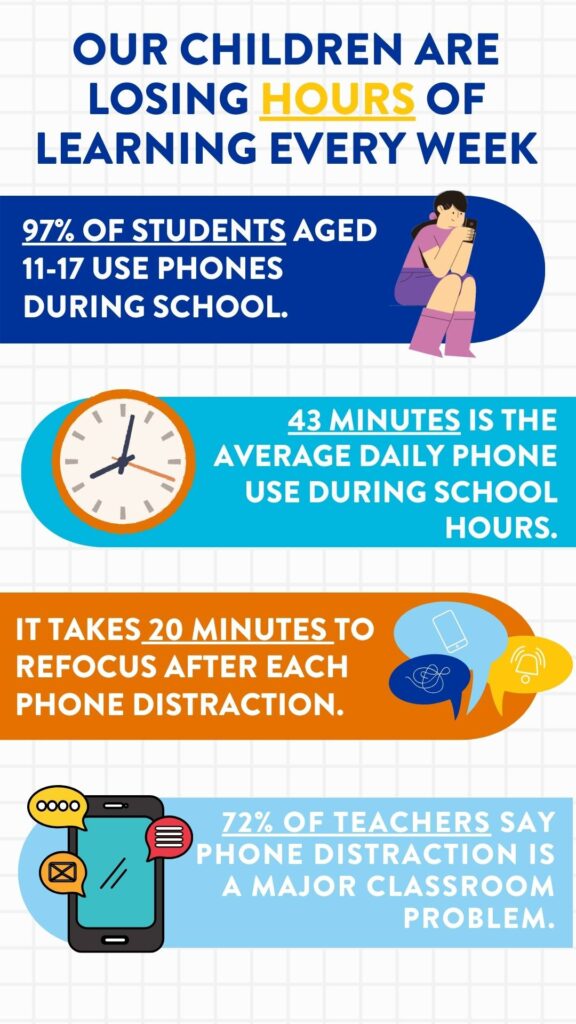
We all want what’s best for our children. We want them to succeed academically, develop healthy relationships, and build the skills they need for a bright future.
The research is clear: phone-free schools give students an extra hour of learning daily, reduce bullying, and create space for authentic peer connections.
Phones are designed to distract—kids deserve classrooms designed for learning.
Schools across the country, and in Arizona, are adopting “bell-to-bell” phone-free policies with remarkable results: students report less anxiety, teachers see improved engagement, and academic performance improves.
Arizona has an opportunity right now. Legislation passed in 2025 requires every district to develop cell phone policies for schools. This is our moment to ensure those policies prioritize student wellbeing and academic success.
PHONE-FREE SCHOOLS MOVEMENT MODEL DEFINITION
A phone-free school has a “first bell to last bell” policy that requires all personal electronic devices (cell phones, smartwatches, earbuds, AirPods, fitness trackers, and Bluetooth connected headphones, etc.) are turned off, securely stored away (like in a backpack or locker), and inaccessible for the entire school day.
Learn more about how phone-free school policies are implemented in our Educator Resource Guide.
Are you a school district leader?
The Research
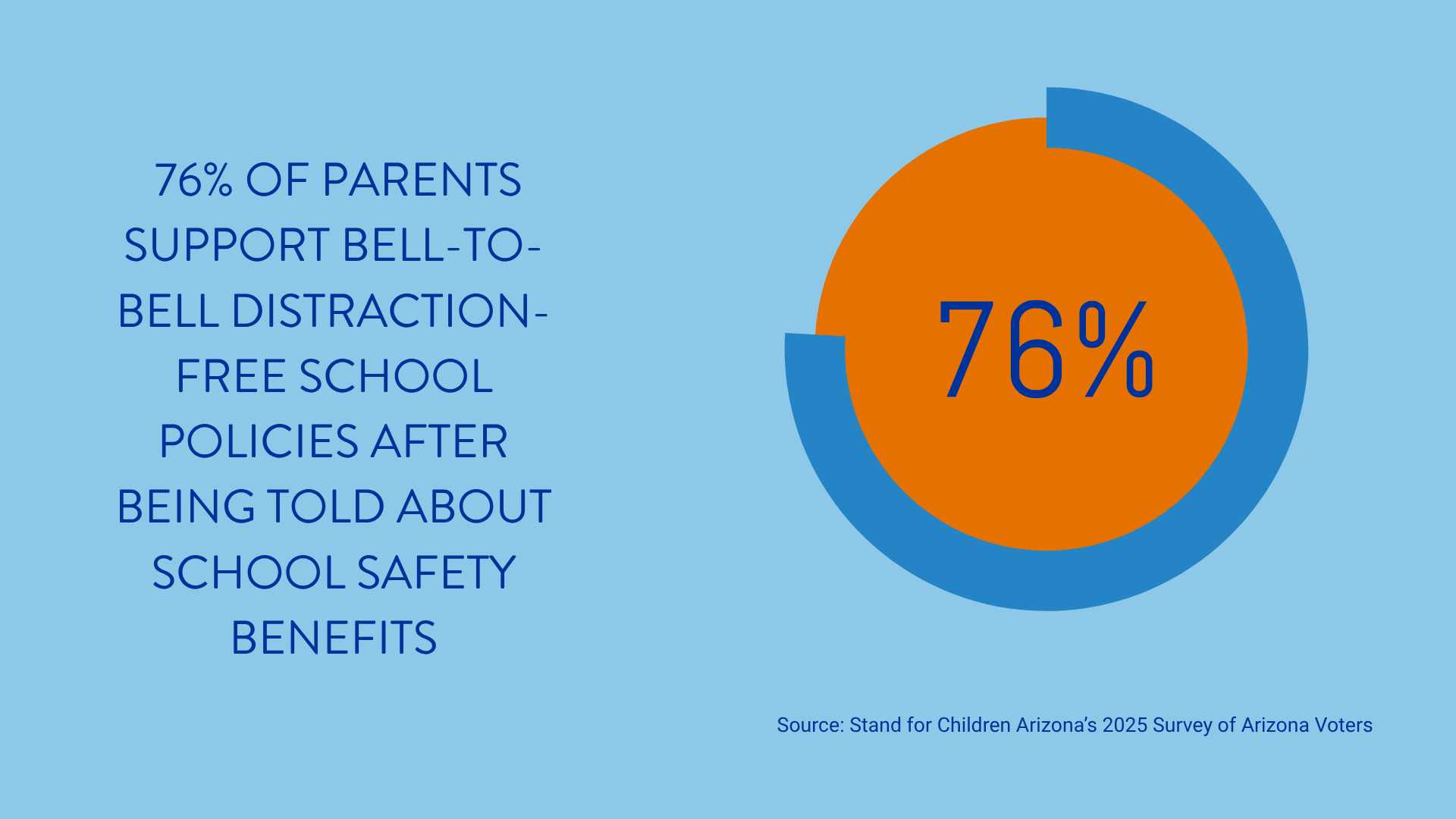
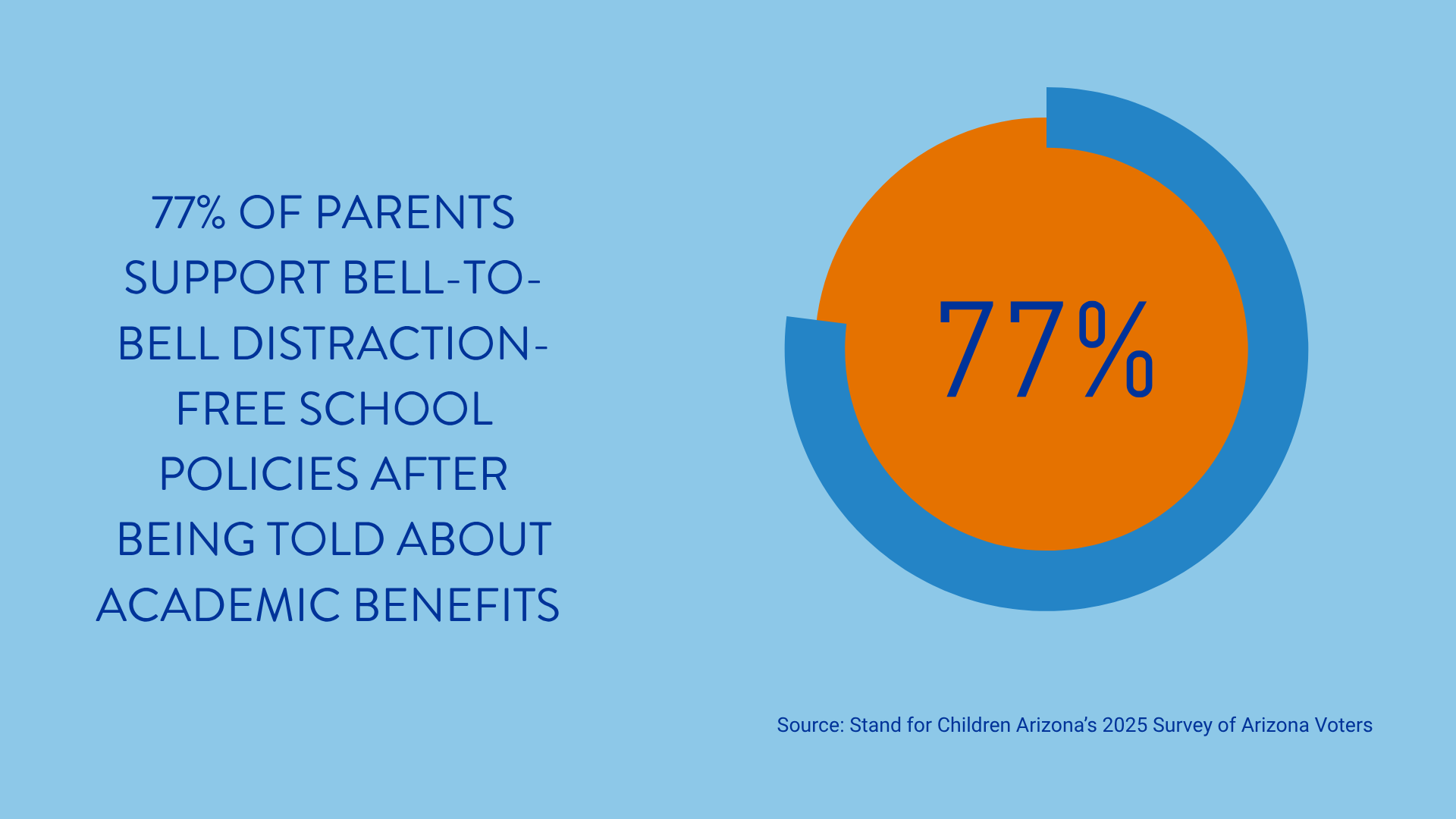
The research supporting phone free school policies is growing, particularly around the academic benefits and improvements in student mental health.
- The greater the use of a phone while studying, the greater the negative impact on learning and academic achievement1
- Use is associated with worse sleep, low self-esteem, poor body image, eating disorder behaviors; and online harassment3
- 83% of NEA members support bell to bell cell phone restrictions4
- Disciplinary actions decrease – 75% at North Adams in Massachusetts, 57% at Bentonville in Arkansas, and 14% at Indian River County in Florida5
Find more resources about implementing a bell-to-bell cell phone away all day policy with our research hub.
Want to help create distraction-free classrooms at schools across arizona?
Read more

Phone-Free School Policies Enjoy Broad Support Among Parents
Today, Stand for Children Arizona released results from its annual survey of Arizona voters concerning cell phones at Arizona schools. The survey, conducted in November, asked 800 likely 2026 general election voters about their thoughts on Arizona’s law restricting cell phone use…


