Welcome to Capitol Week In Review, our newsletter keeping you informed about policy concerning educational equity and making our schools and communities more supportive.  You will also hear from us about opportunities to engage in advocacy on topics important to you. 


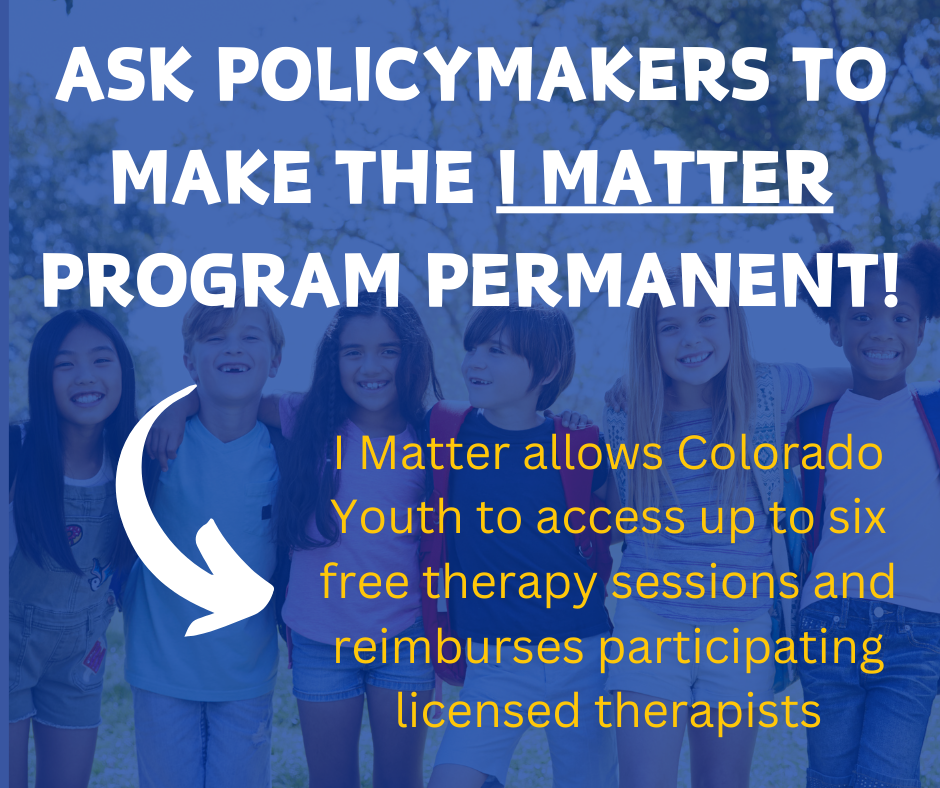
SB24-001, Continue Youth Mental Health Services Program, which will continue the “I Matter” youth mental health services program indefinitely, was amended and passed by the Senate Committee on Health and Human Services. It was referred to the Senate Appropriations Committee. 

SB 24-034, Increase Access to School-Based Health Care, authorizes grants for evidence-informed, school-linked healthcare services which may include primary healthcare, behavioral, oral, and preventive healthcare services. The bill is scheduled to be heard by the Senate Education Committee on January 29th. 

SB24-049, Content of Material in Libraries, establishes a process for people to object to a library resource in a school or public library, and creates a framework for reviewing/removing materials. It is scheduled to be heard by the Senate Education Committee, February 12th. 

HB24-1070, Allowing Certain Items at School Graduation, allows preschool, public school, or university students to wear or display religious or cultural regalia at a graduation ceremony. It is scheduled to be heard by the House Education Committee, February 7th. 

HB24-1003, Opiate Antagonists and Detection Products in Schools, expands upon current law to allow schools to maintain a supply of opiate antagonists on school buses and allows school bus operators to administer them in good faith. The bill is scheduled to be heard by the House Education Committee, February 8th. 

HB24-1063, Addressing Abbreviated School Days, is scheduled to be heard by the House Education Committee, February 22nd. The bill clarifies what constitutes an “abbreviated school day” and seeks to address the effect of abbreviated school days on children with disabilities in public schools.


Let’s Improve Colorado’s Recidivism Rates

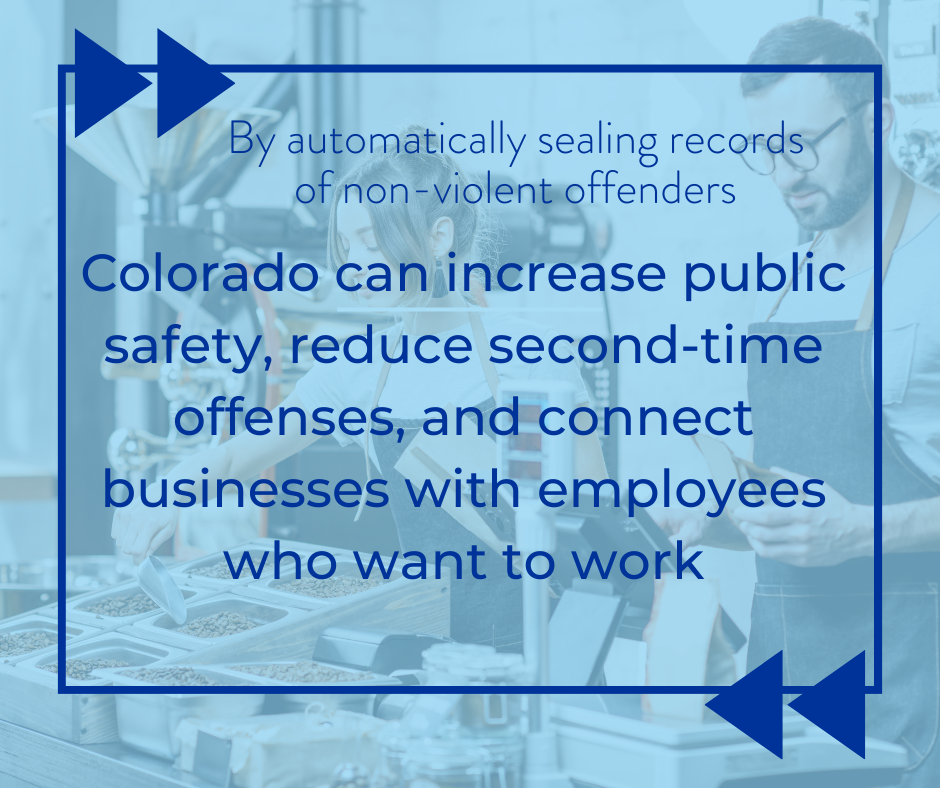
One of our policy priorities this legislative session is to expand opportunities for remote reporting via online platform or phone for individuals under parole or probation. This enables the use of technology to ensure people can meet the requirements of their parole or probation while supporting their ability to work, seek education, care for children, or other responsibilities.  

By providing comprehensive support and opportunities for reintegration, we not only reduce the risk of recidivism but also contribute to a more productive and inclusive society.  

Currently, lower-risk individuals under probation or parole supervision in Colorado may have the option to check in virtually with their supervising officers in some parts of the state. However, this option varies across the Colorado and we aim t change that. By providing comprehensive support and opportunities for reintegration, we not only reduce the risk of recidivism but also contribute to a more productive and inclusive society.  


Follow Us!

Are we in your feed yet on TikTok and Instagram? This is the best way to get regular updates about the policies we’re tracking, what is happening at the Capitol, and opportunities for you to advocate for legislation that is important to you. 


Chalkbeat Colorado, Colorado bill to make free youth therapy permanent moves forward

Chalkbeat Colorado, 2024 Colorado General Assembly: The people’s guide to following education issues

Welcome to Capitol Week In Review, our newsletter keeping you informed about policy concerning educational equity and making our schools and communities more supportive.  You will also hear from us about opportunities to engage in advocacy on topics important to you. 


SB24-001, Continue Youth Mental Health Services Program, which will continue the “I Matter” youth mental health services program indefinitely, was introduced in the Senate.  

SB 24-034, Increase Access to School-Based Health Care, was introduced in the Senate. The bill authorizes grants for evidence-informed, school-linked health-care services which may include primary health-care, behavioral health-care, oral health-care, and preventive health-care services.

HB24-1003, Opiate Antagonists and Detection Products in Schools, expands upon current law to allow schools to maintain a supply of opiate antagonists on school buses and allows school bus operators to administer them in good faith. The bill was introduced in the House. 

HB24-1063, Addressing Abbreviated School Days, was introduced in the House. The bill clarifies what constitutes an “abbreviated school day” and seeks to address the effect of abbreviated school days on children with disabilities in public schools.

HB24-1070, Allowing Certain Items at School Graduation, was introduced in the House. The bill allows a preschool, public school, or university students to wear/display religious or cultural regalia at a graduation ceremony.


Increasing Graduation Rates by Investing in 9th Grade On-Track

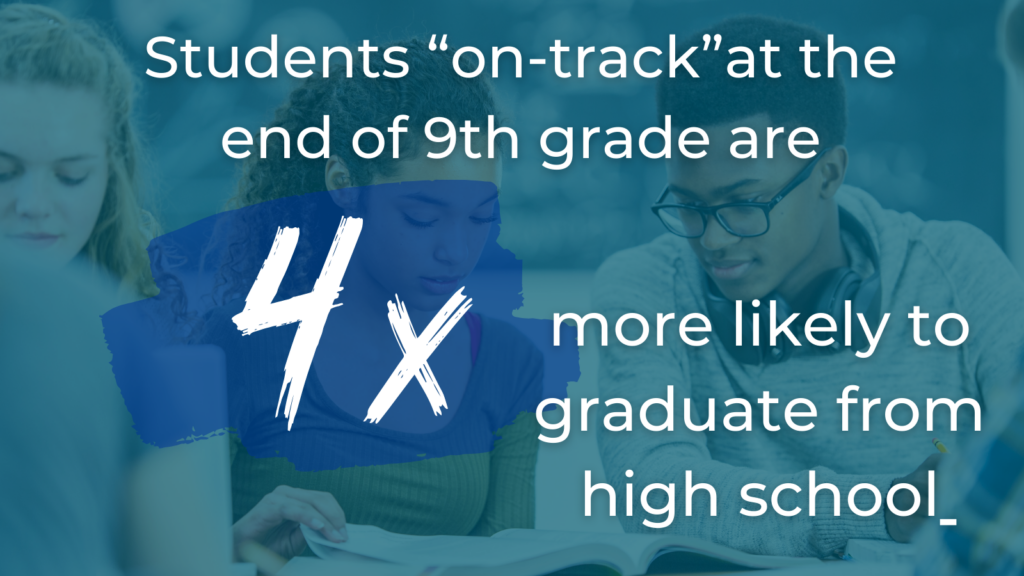
9th grade has come to be well known as the make-or-break year.  How well students perform academically in 9th grade can predict their future success.  To be “on-track” means a 9th grade student has earned at least a quarter of the credits needed to graduate and received no more than one F in any course. Research shows that on-track status is a stronger predictor of high school graduation than race/ethnicity, level of poverty, and test scores combined!   

9th  Grade Success programming includes targeted interventions, transition supports, school-based teaching teams, and certain instructional approaches. 

This year, we are advocating for legislators to increase funding for the Colorado 9th Grade Success Grant Program, and make it a permanent program. This will allow more Colorado schools to participate in the 9th Grade Success Grant Program, which is changing the trajectory for many Colorado high schoolers.


Follow Us on TikTok

Did you know we are on TikTok now? Stay informed about ways to advocate for what matters to you by following us for regular updates. Next week, we are launching a series about the legislature, policymaking, and advocacy. Don’t miss it! 


Chalkbeat Colorado, Five things to know about how Colorado leaders propose to reshape workforce education

Chalkbeat Colorado, Colorado becomes one of the first to employ an incarcerated professor

Chalkbeat Colorado, 2024 Colorado General Assembly: The people’s guide to following education issues

Colorado Sun, Colorado’s 2024 legislative session begins today. Here’s your guide to get involved

Stand for Children Colorado advances educational equity and racial justice in Colorado through meaningful partnerships with families, educators, schools, and policymakers. One of the ways we uphold this work is through our annual Advocacy Fellowship.   

Stand for Children Colorado Advocacy Fellows are community leaders advocating for policy solutions towards racial justice and equity in education.  With the support of Stand staff, advocacy fellows will deep dive into issues affecting Colorado communities today, co-create solutions, democratize knowledge back to their communities, work to break down barriers to power and access decision makers, and, in the process, build long-lasting relationships and invaluable skills. 

We are excited to introduce the 2023–2024 Fellows! 


Meet Jesse

Jesse is a mother of three and a Denver native. She has been working for Denver Public Schools since 2018 and prior to that she worked for Jefferson County Public Schools. She is passionate about working with youth, especially those at risk of falling through the cracks. She was drawn to Stand for Children because of all the great work they have done to help families and young people. This is her 3rd year as a Stand Advocacy fellow, and she is so proud of the work that has been done. 

  1. What are you most excited about this year’s fellowship program? Every year I continue to learn more, and I get a little more confident. I am excited about the work we will do this session and to learn more about what is happening around the state.
  2. What is your favorite children’s book? The Giving Tree is a book I have a love/hate relationship with. It is such a deep book for kids. It can be used as a beautiful story about loving someone more than yourself (a mother’s love). However, it can also be a cautionary tale about giving all of yourself away, especially to someone who doesn’t appreciate it.
  3. What do you like most about Colorado? I love how many parks we have. There are so many things to do and places to go.

DPS SchoolChoice enrollment is open now through 4pm, February 12, 2024. This is the time for families to learn about the options Denver Public Schools provides and decide if they want to move their student to a different school. This is also an important time for families who are just joining their first school in kindergarten, or with students moving to a middle school, or a high-school.   

Choice enrollment can be overwhelming as you try to identify the best school for your children, which is why we are thrilled to share this new tool that can help!  One of our partners, RootED, created The Mile High School Guide, a tool for families and caregivers to find in-depth information about public schools in Denver. 

This valuable online tool is the newest addition to the Denver Education Explorer platform, which will now offer two tools for users to explore either citywide or school-specific information. Not only will you be able to see academic information, but also: 

  • Teacher demographics
  • School program offerings 
  • Student and parent survey results 
  • Discipline information 
  • Information about absenteeism 

As an organization, we strive to ensure families have access to information, so we encourage you to use this tool and send any feedback on how it can be improved! If you have any questions on the DPS School Choice Enrollment process, Call 720-423-3493, email [email protected] or visit schoolchoice.dpsk12.org for more information. 

Happy New Year! Welcome to Capitol Week In Review, our newsletter keeping you informed about legislation concerning educational equity and making our schools and communities more supportive.   The 2024 Colorado Legislative Session convened January 10th and for the next five months, policymakers will be making decisions that affect our communities, students, educators, and families. 


The Second Session of the 74th General Assembly kicked off this week with mostly pomp and circumstance. Members were sworn in, committee assignments were made, and legislation started being introduced. 

Governor Jared Polis delivered his State of the State address this week, highlighting housing, transit, public safety and other priorities. He celebrated the multi-year effort to fund free full-day Kindergarten and preschool for Colorado families and applauded legislators for acting to support policy and funding to “ensure more than 300,000 Colorado children have healthy meals through Summer EBT.”

Governor Polis also outlined plans to eliminate the Budget Stabilization Factor saying, “This historic investment means an additional $705 per student on average, or another $15,500 more for a classroom of 22 kids. This is on top of last year’s increase of more than $1,000 per student, made possible by this legislature. 

It means better teacher pay, expanded learning opportunities for students, professional development for teachers, and better resources in our classrooms.” 

You can watch the recording here. 


Get Involved!  At Stand Colorado, we deeply believe that policymaking is most effective when the voices of those impacted are at the center of decision-making. Want more regular updates about key bills and opportunities to engage? Follow us on social media to stay informed about ways to advocate for what matters to you!  

While legislators are the ones introducing and voting on the bills, YOU can play a critical role too. We believe in the power of community, so we are here to support you if you want to get involved. 


Chalkbeat Colorado, 2024 Colorado General Assembly: The people’s guide to following education issues

Colorado Sun, 8 storylines to watch at the Colorado Capitol this year as the 2024 legislative session begins

Last year we championed, HB23-1133, Cost of Phone Calls for Persons in Custody This bill was passed, making prison communication free across Colorado in state and private facilities. 

This year, one of our top priorities is to ensure this policy can be implemented as planned by 2025 by protecting the ramped up funding needed to bring free prison phone calls to families. The bill cut call costs by 25% in the first year, 35% in the second year, and will then make all calls free starting July 1, 2025. 

Every year, Colorado families –who are disproportionately Black, brown, and low-income – pay over $8.8 million to speak to their incarcerated loved ones. Over 50% of families with an incarcerated loved one struggle to meet basic housing and food needs. One out of three families with a loved one behind bars goes into debt just to stay in touch, and women carry 87% of the burden

Research has shown that keeping families connected while a loved one is incarcerated helps reduce recidivism. Now, it is critical that we protect the ramped-up funding needed to ensure this policy can be fully implemented. Sign up to get updates on this important policy so you will be ready to advocate for children and families when the legislative session kicks off in January!

Did you know, four out of ten people released from Colorado prisons in 2018 returned within three years, and two out of ten people released from prison returned for technical violations (meaning they did not comply with the terms & conditions of probation or parole)?

That’s why one of our policy priorities next year is to expand opportunities for remote reporting (via online platform or phone) for individuals under parole or probation.  This enables us to use technology to ensure people can meet the requirements of their parole or probation while supporting their ability to work, seek education, care for children, or other responsibilities.   

Currently, lower-risk individuals under probation or parole supervision in Colorado may have the option to check in virtually with their supervising officers in many jurisdictions. However, this option varies across the state. With this policy, we have the opportunity to improve our recidivism rates in Colorado. By providing comprehensive support and opportunities for reintegration, we not only reduce the risk of recidivism but also contribute to a more productive and inclusive society.       

Please sign up to stay informed about how you can join us in advancing this important policy next legislative session to level the playing field and offer remote supervision statewide. 

Stand for Children Colorado advances educational equity and racial justice in Colorado through meaningful partnerships with families, educators, schools, and policymakers. One of the ways we uphold this work is through our annual Advocacy Fellowship.   

Stand for Children Colorado Advocacy Fellows are community leaders advocating for policy solutions towards racial justice and equity in education.  With the support of Stand staff, advocacy fellows will deep dive into issues affecting Colorado communities today, co-create solutions, democratize knowledge back to their communities, work to break down barriers to power and access decision makers, and, in the process, build long-lasting relationships and invaluable skills. 

We are excited to introduce the 2023–2024 Fellows! 

Meet Leah

Leah claims to be from Colorado, though she was technically born in Texas. Her ability to attract odd suitors — like the man who took her to buy a gun rack on a first (and last) date — earned her a monthly dating column in a now-defunct women’s magazine produced by the Boulder Daily Camera and launched her freelance writing career. Since then, her words have been published online and in print for a wide range of publications, including Marie Claire, INSIDER, Colorado Life Magazine, and Fodor’s Travel. In addition to writing and editing, Leah works primarily with arts and culture organizations and nonprofits as a communications and marketing consultant. As someone passionate about her Northeast Denver community, she is excited to be a Stand fellow and to learn about how to most effectively advocate for her 80205 and 80216 communities. 

  1. What are you most excited about this year’s fellowship program? I am excited to increase my community organizing skills and learn how to have more impact through this fellowship. I’m hoping to learn even a little bit about how to better navigate what bills exist and where they are in the process.
  2. What is your favorite children’s book? My favorite children’s book is called “The Missing Piece Meets the Big O” by Shel Silverstein. It is about a lonely wedge shaped piece looking for where it fits and realizing it doesn’t have to fit anywhere to be fulfilled.
  3. What do you like most about Colorado? My favorite thing about Colorado is how varied the landscape is. People only think about the mountains, but so much of Colorado is plains or high desert, deep canyons and wide plateaus. 

Colorado has expanded the number of schools implementing a 9th grade success approach. One of our top priorities for next year is to work with the legislature to expand funding for the 9th Grade Success Grant Program.  

Last week, the State Board of Education named 27 schools across Colorado recipients of 9th Grade Success Grants. Let’s ensure that even more students are finishing 9th grade on-track by expanding funding for more Colorado schools. 

Decades of research has shown that supporting students by implementing a 9th Grade Success approach improves graduation rates. In fact, students who are “on-track” (meaning they have no more than one F) at the end of their 9th grade year are three times more likely to graduate from high school than their off-track peers.  On-track status is a stronger predictor of high school graduation than race/ethnicity, level of poverty, and test scores combined!  

Join us and stay in engaged in this work when the legislature convenes in January. Sign up, and we will email you when there are opportunities to advocate for our high school students. 

Today is Colorado Gives Day, and on behalf of our team at Stand for Children Colorado, we would be honored to have your support. Will you give in support of Colorado’s kids with a gift to Stand?

Over the last year we’ve passed policies to increase equitable funding for Colorado students and diversify the educator workforce, co-championed the effort to expand universal preschool to more Colorado children, and hosted dozens of advocates for a Day at the Capitol. We have ambitious goals for our work together next year, and hope you will help support them with a gift of $25, $50, or $100.