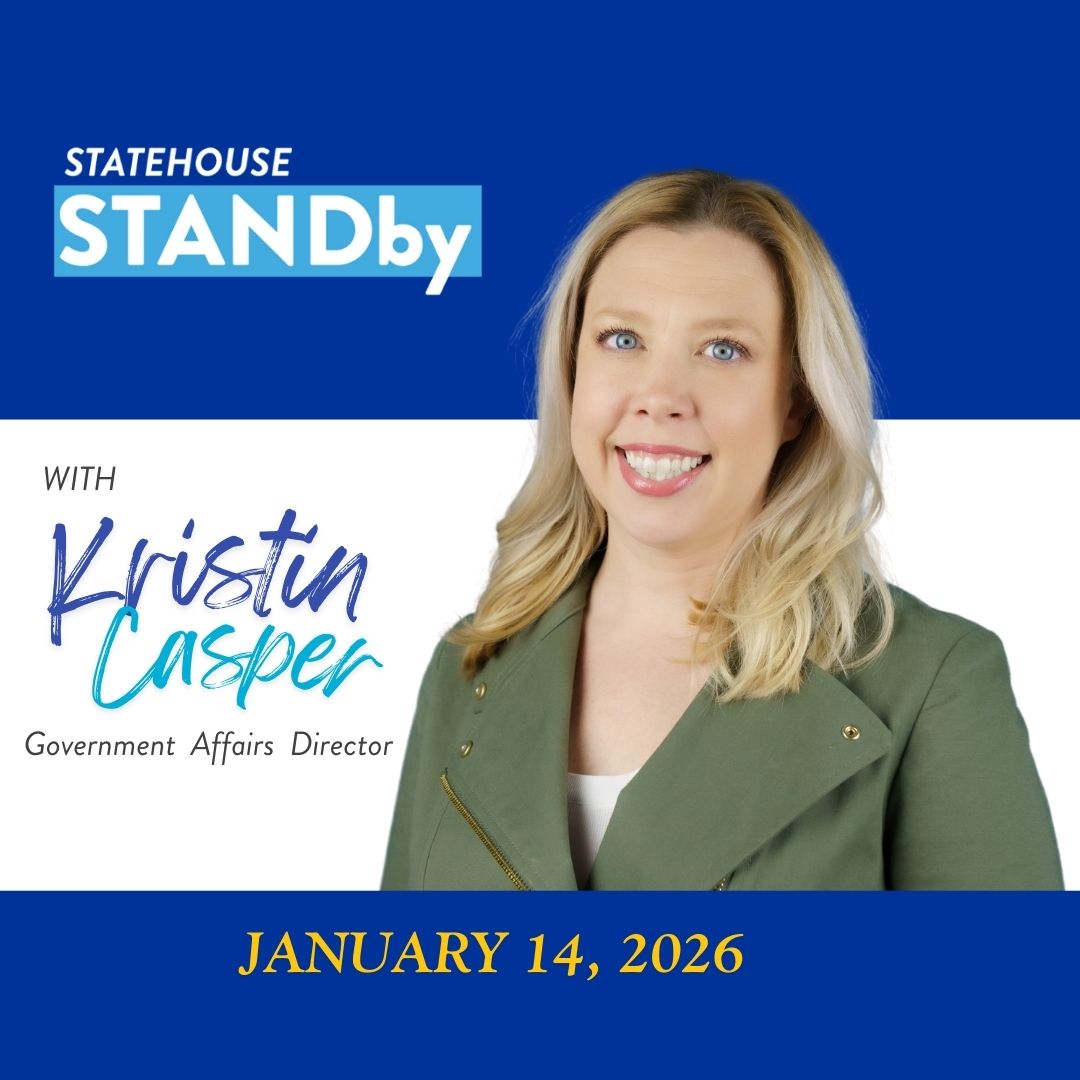

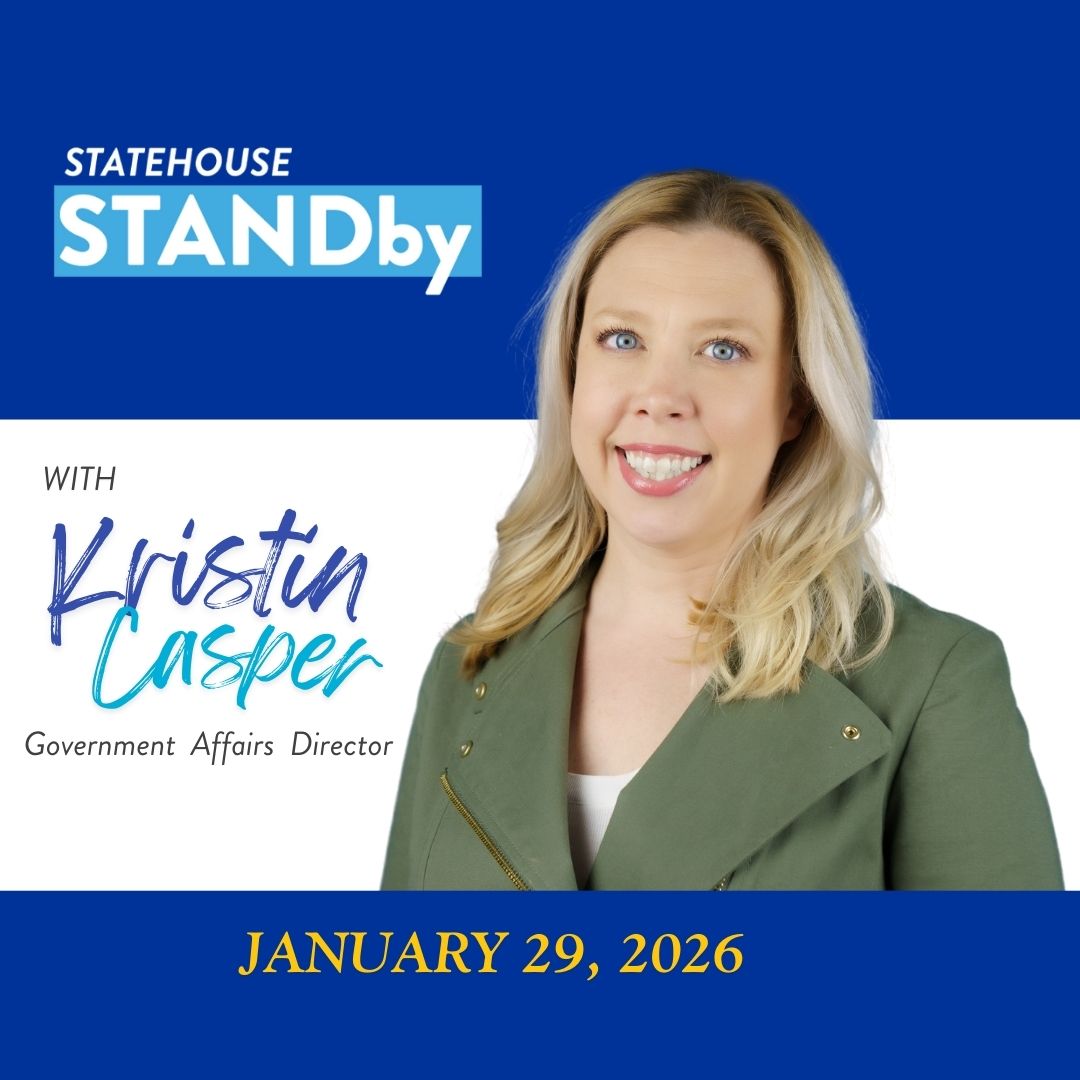
In our second video update, we share important progress on two bills. This update is part of the Statehouse Standby newsletter Jan. 29:

  • Senate Bill 78 – Great news: SB78 passed in the Senate and is now headed to the House. This bill supports “away for the day” cell phone policies that research shows improve academic achievement, mental health, and school safety.
  • House Bill 1423 – HB1423 continues to move through the legislative process. This bill would establish an independent building and transportation authority for IPS, helping ensure reliable transportation for every student. Parents and advocates previously testified in support of this bill, noting their desires for an accountability system and transportation for all.


Watch the video below to get the full update.

Thank you for standing with us and for your continued advocacy on behalf of Indiana’s students.

This MLK Day, remember that each of us has the power to make a difference!


I’ve always been passionate about making the world a better place. I knew at an early age that I wanted to spend my life helping others. Important figures, like Dr. Martin Luther King Jr. inspired me to stand up for what I believe in and speak truth to power.

But their legacies also cast a long shadow. As I grew up, I began to feel less and less sure of my ability to effect change. I thought it would be impossible to make a real difference if I didn’t have the charisma, the fearlessness, the ability to build a movement of my own.

That fear kept me frozen. I felt like nothing I did was enough. If the impact wasn’t massive, I thought, why do it at all?

A mentor of mine eventually sat me down and told me, “Jamayka, your hands are not big enough to hold the whole world. Focus on what you can change right now, right here, today.”

Like most teenagers, I rolled my eyes at that advice, and continued to let my fear of failure prevent me from seeing the real impact everyday people, like my mentor, were having on the people in our community— one hot meal, or ride to a townhall, or enlightening conversation at a time.

It wasn’t until I had the chance to really learn about the history of the Civil Rights Movement and the hundreds of thousands of regular people that changed the world, that my mentor’s advice made sense to me. Dr. King’s words and actions were inspiring and impactful, but the movement we identify him with existed long before he was born and continues to this day.

We don’t have to head a march of 100,000 people in order to be leaders in our own communities and make changes that make the lives of those around us a little safer, easier, fairer.

This MLK Day, let us all remember that each one of us is a critical part of the movement to create a just and equitable education system for every child. We all have a role to play, and each of us, when we come together with our community members, can make a real difference.

What actions will you take this MLK Day in support of students, educators, and schools? Let us know by taking this pledge to act!

Check out the Statehouse STANDby—our trusted bi-weekly newsletter keeping Stand for Children Indiana advocates informed about what’s happening at the Statehouse. This year, we’re trying something new: instead of only written updates, we’re adding a video format so you can hear directly from me and follow along more easily as things move quickly during session.

In this first video update, I cover two major issues:

  • Senate Bill 78 – supporting “away for the day” cell phone policies that research shows improve academic achievement, mental health, and school safety
  • House Bill 1423 – establishing an independent building and transportation authority for IPS, a step toward closing opportunity gaps and ensuring reliable transportation for every student. 

You’ll also hear powerful testimony from parents and advocates who are shaping these conversations in real time.  

Watch the video below to get the full update.

Thank you for standing with us and for your continued advocacy on behalf of Indiana’s students.

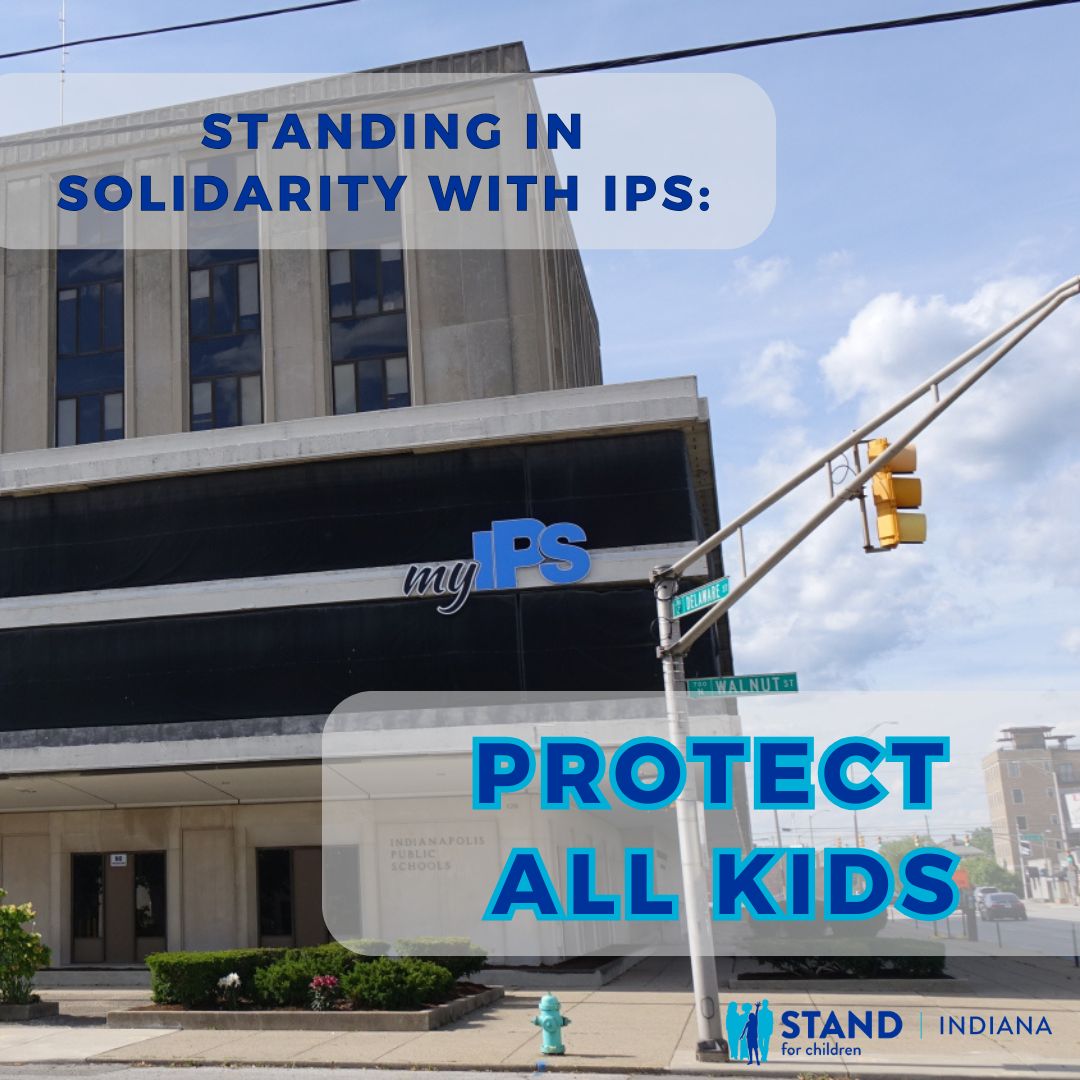
We stand in full support of teachers and leaders in IPS—across all school types—in their everyday work to care for children and keep them safe.  Our schools should be focused on teaching and learning. Any effort to make these buildings targets of immigration action completely undermines this mission. 

Stand in solidarity with IPS by adding your name to their petition: 
https://www.change.org/p/standing-in-solidarity-with-ips-protect-all-kids 

Apoyamos a los maestros y lideres de IPS – en todos los tipos de escuelas – por su trabajo diario en cuidar a los niños y mantenerlos seguros. Nuestras escuelas deben enfocarse en la enseñanza y el aprendizaje. Cualquier intento de convertir estos edificios en objetivos de acciones de inmigración va completamente en contra de esta misión.

Únete en solidaridad con IPS agregando tu nombre a su petición: 
https://www.change.org/p/standing-in-solidarity-with-ips-protect-all-kids 

Nou kanpe ak tout fòs nou pou sipòte pwofesè ak lidè nan IPS—nan tout kalite lekòl—nan travay yo chak jou pou pran swen timoun yo epi kenbe yo an sekirite.  Lekòl nou yo ta dwe konsantre sou ansèyman ak aprantisaj. Nenpòt efò pou fè bilding sa yo tounen sib aksyon imigrasyon kraze nèt misyon sa a. 

Kanpe an solidarite ak IPS lè ou ajoute non ou nan petisyon yo: 
https://www.change.org/p/standing-in-solidarity-with-ips-protect-all-kids 

“I’m so scared,” my daughter said to me late last night. I hugged her as the tears flowed and her words described her heightened fear of dying suddenly. She explained her brain was stuck in an endless cycle of thinking about the horrible assassination of Charlie Kirk and the ever-increasing tragedies of school shootings. My wife and I did our best to address her fears. Eventually she gave us a final hug before going back to bed, tears dried and nerves calmed.  

This morning, it was me who awoke with gripping fear and sadness. (As far as I could tell from my daughter rocking out to songs from “K-Pop Demon Hunters” on the car ride to school, she was thankfully in better headspace today.)  

Now it was me who was shedding tears as I drove home after school drop off. While I had the answers to help a scared kiddo in a moment of panic, I didn’t have the answers for what must be done to meet this tense and terrible moment in our society.  

The fact is people (children and adults) are being gunned down — in schools, in neighborhoods, and at political events. It’s now become commonplace to celebrate the mistreatment of our fellow human beings who think or look different than us. All the while, some politicians in power set the bar for success at destroying (or “owning”) those of the opposite party, while making no attempt to seek solutions.  

Thankfully (and tragically) we’ve been here before as a nation. Maybe not exactly here, but there’s no question the string of politically-motivated murders and surge in violence during 1960s and 70s sent this country spiraling down a dark hole that was unprecedented in 20th Century America. 

There’s one speech in particular that I found today that offers the kind of hope I want my daughter to experience when she struggles with fear: Robert F. Kennedy’s remarks on the “Mindless Menace of Violence.”  Kennedy gave this speech the after Dr. Martin Luther King was assassinated.  

I could summarize Kennedy or give some bulleted points to think about, but that would not do his words justice. And frankly, every single word rings true in this moment nearly 60 years later.  

Like any leader of an advocacy organization, I can’t raise a problem without calling for action. But my ask of you is a simple one: listen or read this speech. And do it soon. Internalize every word. And if you feel compelled – share it with friends and family. And if you want to do more and live the words of RFK, then reach out to someone you disagree with and share this speech with them.  

School choice is a powerful promise—but for many families, it’s a promise that falls short. Without reliable transportation, even the best school options are out of reach. In Indianapolis, parents are raising their voices to demand solutions that make school choice real for everyone. 


Here are six powerful stories from advocates who know firsthand how transportation—or the lack of it—can shape a child’s future. 

🎤 Cristal Salgado: “I had to pull my son from a school that was working.” 

Watch this video from March 2025. In it, Cristal calls for collaboration between IPS and charter schools to ensure families like hers aren’t left behind. As a single mom of two, Cristal found a charter school that helped her son thrive. But without transportation, the daily commute became overwhelming. After a year of trying to make it work, she had to withdraw him.  

🎤 Ada Lemus: “Without transportation, my son could lose everything he’s gained.” 

In this testimony from March 2025, Ada explains how her son is finally making progress with the help of an IEP and a supportive school. But that progress is fragile. Without a bus, she fears he’ll lose access to the environment that’s helping him succeed. Ada urges leaders to prioritize transportation so students can stay where they’re thriving. 

🎤 Sashah Fletcher: “We need to make it easier for families to choose what’s best.” 

Sashah testified at an IPS board meeting, sharing how transportation challenges limit real school choice. She believes families shouldn’t have to choose between a great school and a manageable commute—and that access should never depend on a parent’s ability to drive across town. 

🎤 Vilma Hernandez: “Fairness means access—for everyone.” 

Vilma spoke directly to IPS leaders, advocating for inclusive access to all public schools, including charters. She emphasized that transportation is a matter of fairness and that no family should be excluded from opportunity because of where they live or how they get around. 

🎤 Dontia Dyson: “If my son didn’t have a bus, I couldn’t get him to school.” 

Dontia is a single father of four, including an autistic son. He’s currently without a driver’s license due to insurance issues, and he knows firsthand how critical school transportation is. Without it, his children wouldn’t be able to attend schools that meet their needs. He’s calling for solutions that reflect the realities families face every day. 

🎤 Bryana Perdomo: “Transportation shouldn’t be the reason a child misses out.” 

Bryana is a student who understands the impact of transportation barriers from a young person’s perspective. She shared how difficult it can be for students to access the schools that are best for them when transportation isn’t available. Her message is clear: students deserve better. 


✅ The Bottom Line 

These stories make one thing clear: transportation is not just a convenience—it’s a necessity. If we want school choice to work for all families, we must invest in solutions that ensure every child can get to the school that’s right for them. 

Because every child deserves access to opportunity—no matter their ZIP code. 


About This Series: Understanding the Indianapolis Local Education Alliance (ILEA) 

In 2025, Indiana lawmakers passed House Bill 1515, establishing the Indianapolis Local Education Alliance (ILEA)—a task force comprised of local leaders led by the mayor of Indianapolis with the goal of generating ideas to ensure IPS traditional schools and the charter sector are collaborating to improve student outcomes. The ILEA is not about choosing one type of school over another. It’s about building a cohesive system of schools—district, charter, and innovation—that work together to deliver better outcomes for all students. 

This blog series explores the key policy areas that our advocates believe are essential to creating a high-performing, student-centered education system. Each post will dive into a specific topic—ranging from school accountability and funding to transportation—highlighting how these elements can support a system that prioritizes better results for students. 

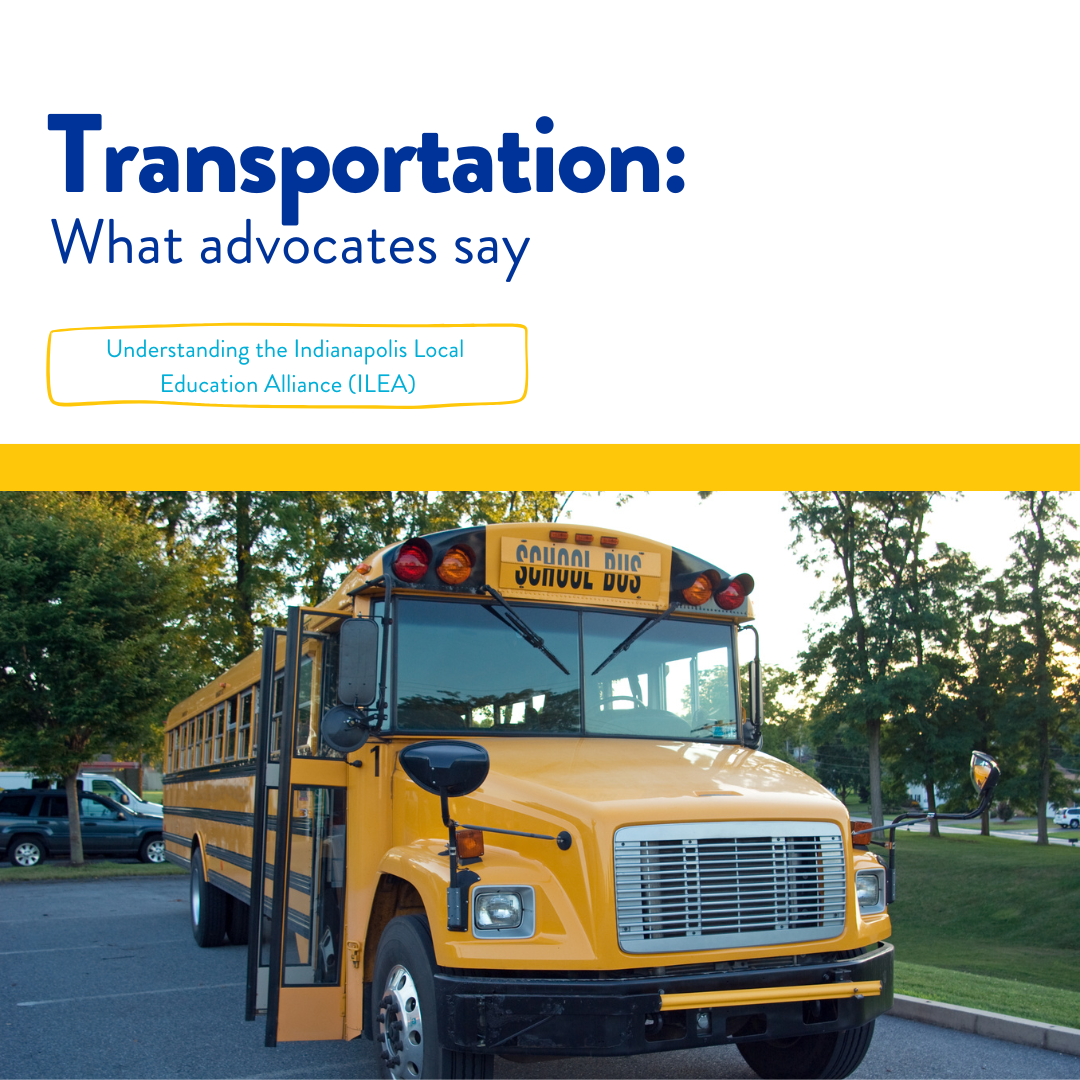
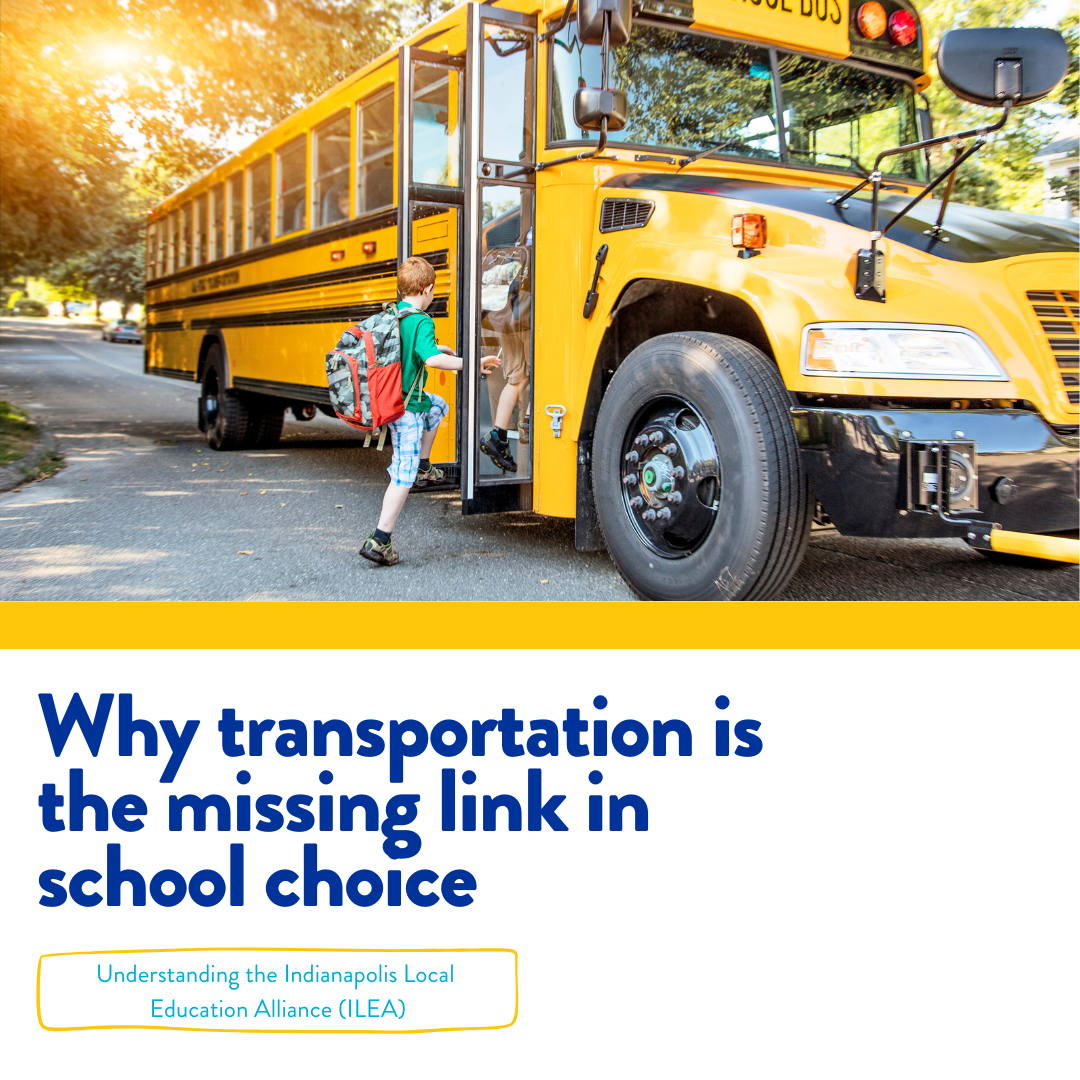
In Indiana we often talk about the value of school choice, but for many families that choice is limited by one major barrier: transportation. 

At Stand Indiana, we’ve heard from countless parents and advocates who support expanding access to high-quality schools, including charter schools. But too often, families are unable to attend those schools simply because they can’t get there. 

🚌 Transportation: A Barrier to Real Choice 

Many charter schools in Indianapolis don’t offer transportation, leaving families—especially those without reliable access to a car—without a real choice. This is especially troubling when some of the city’s highest-performing schools are charters. 

If we truly believe in school choice, we must ensure that every family has the means to access it. 

🗣️ Advocates Are Speaking Up 

Stand Indiana advocates have taken this message to both the IPS Board of Commissioners and the Indiana General Assembly: 

These are just some of the voices calling for a system that works for all families—not just those with the means to drive across town. 

💰 Funding should no longer be a barrier 

Historically, one of the biggest barriers to charter transportation has been funding. But that’s changing. 

Thanks to recent legislation, charter schools will begin receiving an equal share of local property tax dollars starting in 2028. That means the financial playing field is leveling—and transportation should no longer be out of reach.  

📚 Learn More 

✅ The Bottom Line 

Transportation is more than a logistical issue—it’s a matter of fairness and access. If we want to make school choice real for all families, we must ensure that getting to a great school isn’t the hardest part. 

Because every child deserves access to a school that works—no matter where they live. 


About This Series: Understanding the Indianapolis Local Education Alliance (ILEA) 

In 2025, Indiana lawmakers passed House Bill 1515, establishing the Indianapolis Local Education Alliance (ILEA)—a task force comprised of local leaders led by the mayor of Indianapolis with the goal of generating ideas to ensure IPS traditional schools and the charter sector are collaborating to improve student outcomes. The ILEA is not about choosing one type of school over another. It’s about building a cohesive system of schools—district, charter, and innovation—that work together to deliver better outcomes for all students. 

This blog series explores the key policy areas that our advocates believe are essential to creating a high-performing, student-centered education system. Each post will dive into a specific topic—ranging from school accountability and funding to transportation—highlighting how these elements can support a system that prioritizes better results for students. 

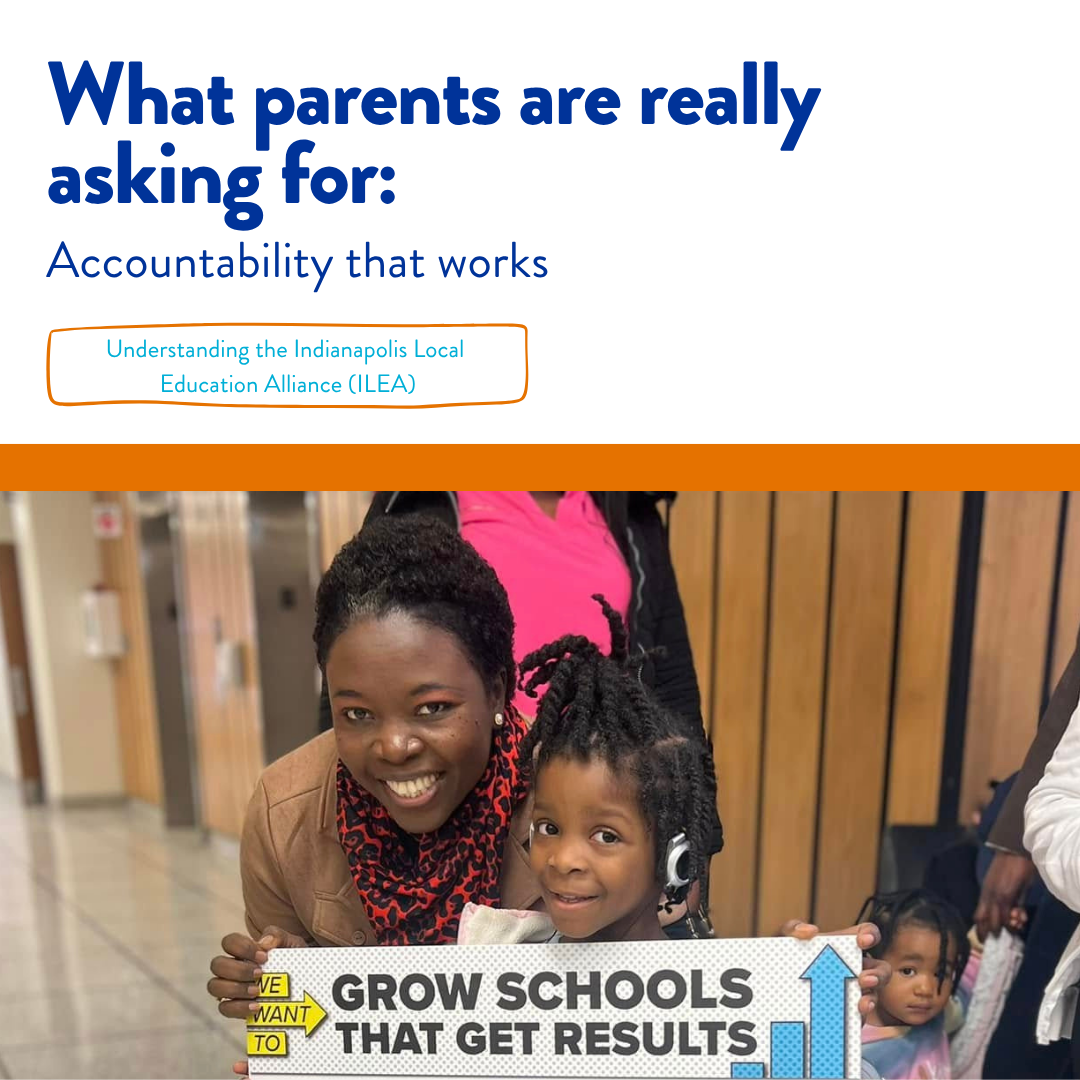
When parents speak up about their children’s education, often they’re not asking for miracles—they’re asking for accountability. They want schools that work, leaders who listen, and systems that deliver real results for all kids, especially those who have been historically underserved. 

At Stand Indiana, we’ve heard from countless families who are calling for change. Their stories are powerful, personal, and united by a common theme: every child deserves a school that helps them succeed. 


🗣️ “I want IPS schools that close the gap.” 

In this video, Greg Henson, a parent advocate, delivers a heartfelt message to Indianapolis Public Schools (IPS) leaders during a May 2024 Action Session. His call is clear: grow school models that are proven to close the opportunity gap. This video is a powerful reminder that accountability isn’t abstract—it’s deeply personal for families who want to see their children succeed. 

📈 “For years, parents like me have asked leaders to use data to drive decisions”  

In her powerful testimony, parent advocate LaToya Hale Tahirou speaks directly to IPS leaders, urging them to take bold, data-driven action to improve outcomes for all students—especially underserved children. 

Her message is clear: accountability means more than just measuring performance—it means acting on it.  

📚 “I’m asking IPS for proven schools.” 

In this story, Shawanda Tyson, a parent and advocate, calls for a shift in focus—from maintaining the status quo to scaling up schools that are already showing strong results. She wants leaders to use data to guide decisions and to invest in what is working. 


🔍 What Parents Are Saying 

Across all these stories, the message is consistent: 

  • Measure what matters. Use data to understand what’s working—and what’s not. 
  • Act on that data. Don’t just collect it. Use it to make bold, student-centered decisions. 
  • Be transparent. Families deserve to know how schools are performing and what’s being done to improve them. 
  • Prioritize students. Especially those who have been underserved for too long. 

💡 The Bottom Line 

School accountability isn’t about blame—it’s about building a better future for our kids. Parents aren’t asking for perfection. They’re asking for progress. And they’re right to expect it. 

Because every child deserves a school that works. 


About This Series: Understanding the Indianapolis Local Education Alliance (ILEA) 

In 2025, Indiana lawmakers passed House Bill 1515, establishing the Indianapolis Local Education Alliance (ILEA)—a task force comprised of local leaders led by the mayor of Indianapolis with the goal of generating ideas to ensure IPS traditional schools and the charter sector are collaborating to improve student outcomes. The ILEA is not about choosing one type of school over another. It’s about building a cohesive system of schools—district, charter, and innovation—that work together to deliver better outcomes for all students. 

This blog series explores the key policy areas that our advocates believe are essential to creating a high-performing, student-centered education system. Each post will dive into a specific topic—ranging from school accountability and funding to transportation—highlighting how these elements can support a system that prioritizes better results for students. 

When it comes to improving public education, data-driven decisions matter—and Denver Public Schools (DPS) offers a powerful case study. 

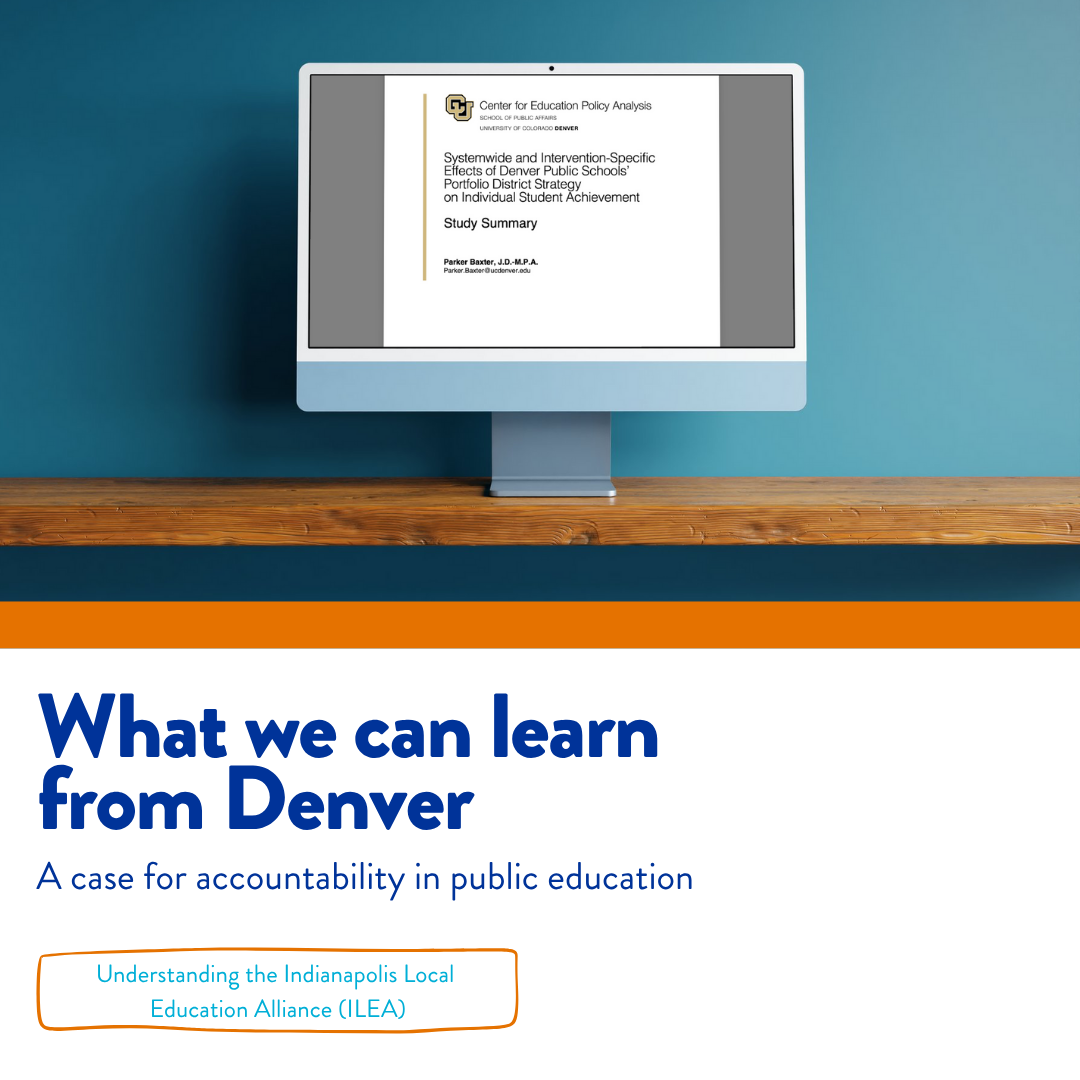
A 2024 report from the University of Colorado Denver examined nearly two decades of school reforms in DPS, focusing on how the district used accountability systems to guide school improvement. The findings are clear: when districts act on data—expanding what works and phasing out what doesn’t—student outcomes improve. 

📈 Key Takeaways from the Study: 

  • Closing low-performing schools and replacing them with higher-quality options led to better academic outcomes for students. 
  • Students displaced by school closures often ended up in higher-performing schools, especially when the district prioritized equity in its placement process. 
  • The district’s focus on accountability and continuous improvement helped drive long-term gains, particularly for students of color and those from low-income backgrounds. 

🧭 Why It Matters 

This study reinforces what education advocates have long believed: accountability isn’t about punishment—it’s about progress. When school systems are willing to make tough decisions based on student outcomes, they can create more equitable opportunities for all learners. 

As Indianapolis and other cities consider how to improve public education, Denver’s experience offers a roadmap: use data, act boldly, and always center students. 

📖 Read the full study summary here: https://publicaffairs.ucdenver.edu/docs/librariesprovider36/default-document-library/denver-study-summary-september-2024.pdf?sfvrsn=60236bb4_1 


About This Series: Understanding the Indianapolis Local Education Alliance (ILEA) 

In 2025, Indiana lawmakers passed House Bill 1515, establishing the Indianapolis Local Education Alliance (ILEA)—a task force comprised of local leaders led by the mayor of Indianapolis with the goal of generating ideas to ensure IPS traditional schools and the charter sector are collaborating to improve student outcomes. The ILEA is not about choosing one type of school over another. It’s about building a cohesive system of schools—district, charter, and innovation—that work together to deliver better outcomes for all students. 

This blog series explores the key policy areas that our advocates believe are essential to creating a high-performing, student-centered education system. Each post will dive into a specific topic—ranging from school accountability and funding to transportation—highlighting how these elements can support a system that prioritizes better results for students. 

When we talk about improving public education, one word often rises to the top:  accountability. But what does that really mean—and why does it matter so much? 

At  Stand Indiana, we believe accountability isn’t about consequences or blame. It’s about  ensuring every student has access to a high-quality public education. That means identifying what’s working, fixing what’s not, and making decisions based on real data and student outcomes. 


📊 What Accountability Looks Like 

Accountability in education means having a clear, consistent system to measure school performance and take action when schools consistently underperform. It’s about: 

  • Scaling up schools and programs that are proven to work, especially for underserved students.  
  • Phasing out or redesigning schools that continue to struggle, year after year. 
  • Using data—not politics—to guide decisions  that impact students’ futures. 

🧭 Why It Matters in Indianapolis 

Here in Indianapolis, more than 46,000 students are served across all public school types. Every one of those students deserves a school that helps them thrive. 

That’s why Stand Indiana has long advocated for a plan to  grow school models that are data-proven to improve outcomes for underserved students—and to roll back those that aren’t working, regardless of whether they’re traditional or charter. 

Accountability means asking hard questions—and demanding better answers. 


🗣️ What Advocates Are Saying 

Our community has spoken up again and again: 

  • “I want IPS schools that close the gap.” 
  • “Our children deserve an equitable education.” 
  • “I’m asking IPS for proven schools.” 

Last year, Stand Indiana and our partners delivered a petition to IPS calling for a  detailed plan to grow great schools. The board responded with resolution to reopen the innovation school application process—unfortunately not a proactive plan to partner with high-performing schools


📚 What the Research Shows 

A University of Colorado study on Denver Public Schools shows what is possible when districts make data-driven decisions grounded in an accountable system: student outcomes improve when quality is scaled, and low-performing schools are closed or restructured. 

We’ve also compiled our own data on the  best-performing schools for children of color  in Indianapolis.  


The Bottom Line 

Accountability isn’t a buzzword—it’s a  lifeline  for students who have been underserved for far too long. If we want to build a truly fair education system, we must start with a  shared definition of success  and a  clear plan to get there

Because every child deserves a school that works. 


About This Series: Understanding the Indianapolis Local Education Alliance (ILEA) 

In 2025, Indiana lawmakers passed House Bill 1515, establishing the Indianapolis Local Education Alliance (ILEA)—a task force comprised of local leaders led by the mayor of Indianapolis with the goal of generating ideas to ensure IPS traditional schools and the charter sector are collaborating to improve student outcomes. The ILEA is not about choosing one type of school over another. It’s about building a cohesive system of schools—district, charter, and innovation—that work together to deliver better outcomes for all students. 

This blog series explores the key policy areas that our advocates believe are essential to creating a high-performing, student-centered education system. Each post will dive into a specific topic—ranging from school accountability and funding to transportation—highlighting how these elements can support a system that prioritizes better results for students.