Welcome to Capitol Week In Review, our newsletter keeping you informed about policy concerning educational equity and criminal justice reform.  You will also hear from us about opportunities to engage in advocacy on topics important to you.

Get this newsletter in your inbox every week:


We’re excited to share a celebratory update on one of our key criminal justice reform policies.

HB 25-1081, Reporting Statistics on Restitution, was passed by the Senate and is on its way to the Governor’s desk!  This bill requires enhanced data collection on restitution demographics, prioritizing transparency and accountability. It seeks to address systemic inequities by revealing who owes restitution, who receives payment, and any potential barriers in the process. 

HB25-1274 Healthy School Meals for All Program, refers two ballot issues to the voters in November to allow the state retain a portion of TABOR refunds and to increase taxes by $95 million annually by increasing state taxable income to support the healthy school meals for all program. It is scheduled to be heard in the House Education Committee on March 6th at 1:30pm. 

SB25-047 Enforcement of Federal Immigration Law, aims to reinstate provisions from the repealed SB06-090, enhancing cooperation between local government and federal immigration authorities, bringing back the “show me your papers” policy. This bill was introduced in the Senate State, Veterans, & Military Committee on February 25th and failed to pass. 

HB25-1147 Fairness & Transparency in Municipal Court, aligns municipal courts with state legal standards by ensuring sentencing parity, improving access to indigent defense, and enhancing transparency in court proceedings, passed the House Judiciary Committee with a 6-5 vote. 

We are thrilled to announce the passage of House Bill 25-1081, a significant step toward enhancing transparency and accountability in Colorado’s judicial system. This legislation mandates that, beginning with the Judicial Department’s 2026 “SMART Act” hearing, the state court administrator will report detailed statistics on restitution payments received and owed over the previous five fiscal years.  This initiative aims to provide a clearer picture of restitution dynamics, revealing who owes restitution, who receives payment, and any potential barriers in the process.

The bill, championed by Representatives Matthew Martinez and Matt Soper, along with Senator Mike Weissman, reflects a bipartisan commitment to justice and transparency. Its successful passage underscores the collaborative efforts of our legislators to address critical issues within our legal framework. We are grateful to the sponsors and supporters of HB25-1081 for their dedication to improving our state’s judicial processes. This law represents a meaningful advancement in our ongoing efforts to uphold justice and support victims’ rights in Colorado.


Colorado students deserve the skills to thrive after high school, but many graduate without essential financial literacy to navigate adulthood. House Bill 25-1192 seeks to change that by requiring all students to complete a financial literacy course and submit the FAFSA or CASFA form to access potential financial aid opportunities.

The House Education Committee is considering this bill, and they need to hear from YOU. Urge legislators to support HB25-1192  and help empower our students with the knowledge they need to build a financially secure future.


Welcome to Capitol Week In Review, our newsletter keeping you informed about policy concerning educational equity and criminal justice reform.  You will also hear from us about opportunities to engage in advocacy on topics important to you.

Get this newsletter in your inbox everyweek:


We’re excited to share that we have added two criminal justice reform policies to our priorities. Make sure to read “Our Take” to learn more about one of these policies and our stance on it. 

HB 25-1214, Appropriate Use of Prison Beds,  reforms sentencing and parole by requiring courts to review key information before sentencing and notifying them when individuals near parole eligibility are sentenced. It expands treatment options to certified recovery residences, removes payment requirements for mandated treatment after positive drug or alcohol tests, and presumes parole for low-risk inmates with mandated monthly status reports. A public defender liaison will also address outstanding warrants for eligible inmates. This bill was introduced in the House. 

HB 25-1146, Juvenile Detention Bed Cap, proposes increasing Colorado’s juvenile detention bed cap from 215 to 254 for the 2025-26 fiscal year and, in subsequent years, setting the cap at 125% of the projected average daily juvenile detention population. The bill also mandates annual appropriations to fund these beds. We are in opposition and is scheduled to be heard in the Health and Human Services Committee on March 4th.

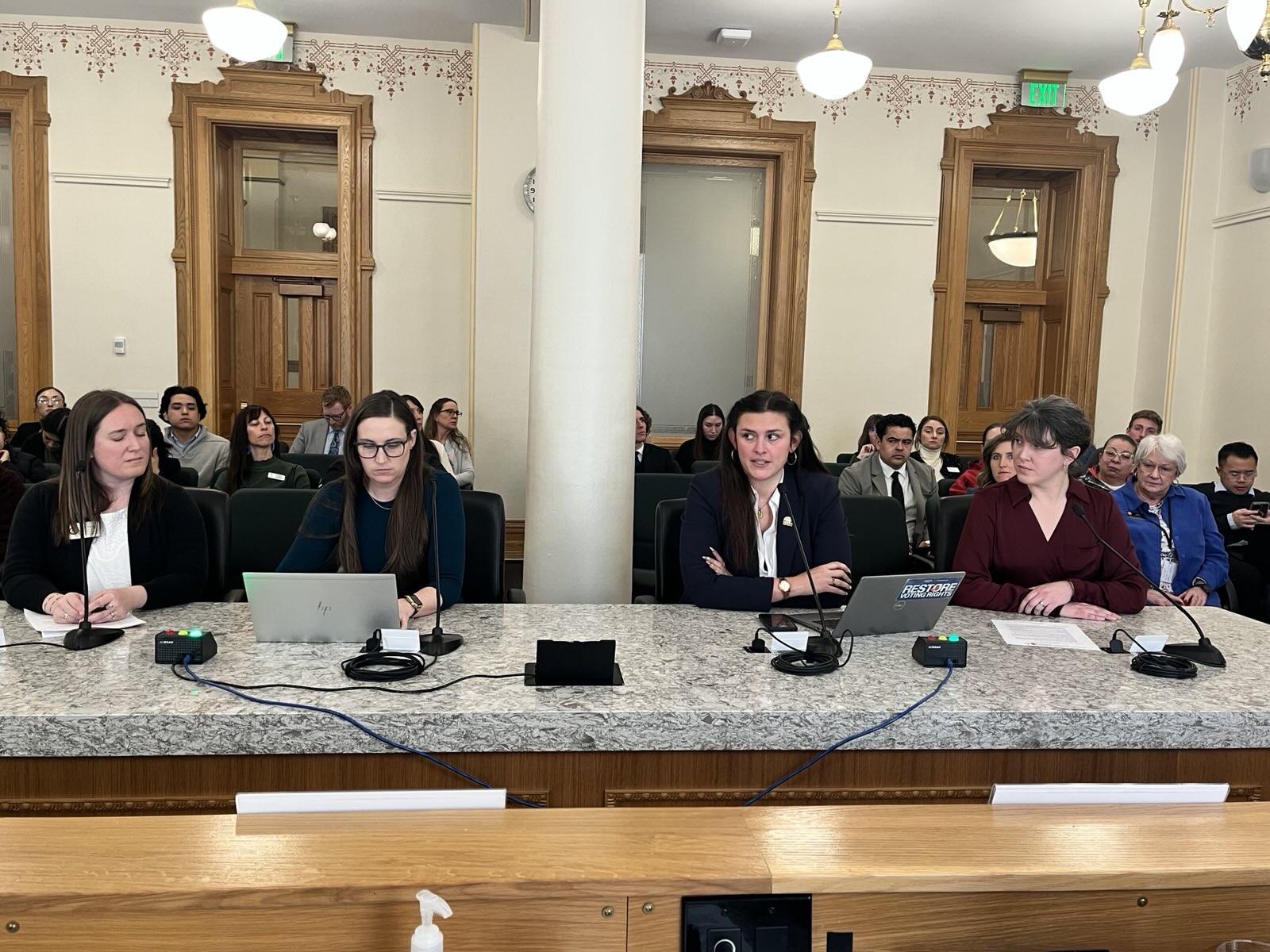
SB25-001, Colorado Voting Rights Act establishes the Colorado Voting Rights Act (CVRA) and updates election-related statutes in four key areas: (1) Election and voting provisions for Indian tribes. (2) Enhanced voting services for individuals with disabilities. (3) Improved language access in election processes. (4) Strengthened election-related data collection practices. It passed with a vote of 3-2 out of the Senate Committee on State, Veterans, and Military Affairs. 

HB25-1167, Alternative Education Campuses, enhances support for Colorado’s Alternative Education Campuses (AECs) by prioritizing them for state grants, allowing high-risk students (21 and under) in enrollment counts, requiring reports on AEC trends, and protecting their designation from single-year enrollment drops. This bill is scheduled to be heard in the House Education Committee on March 5th upon adjournment. 

HB25-1192, Financial Literacy Graduation Requirement, mandates that Colorado high school students successfully complete a financial literacy course in the 11th or 12th grade as a condition for graduation. Additionally, the bill requires students to submit either the Free Application for Federal Student Aid (FAFSA) or the Colorado Application for State Financial Aid (CASFA). The bill includes an opt-out provision for families who choose not to complete these applications. This bill is scheduled to be heard in the House Education Committee on February 27th at 1:30p. 

HB25-1135, Communication Devices in Schools, requires all public and charter schools in Colorado to establish policies on student use of communication devices during school hours by July 1, 2026. These policies must specify any restrictions and exceptions for device use throughout the school day. The bill passed the House Education Committee with a vote of 12-1 and passed second reading in the House.

Stand firmly opposes HB25-1146 as it reinforces the school-to-prison pipeline rather than investing in mental health care, rehabilitation, and community-based solutions that keep youth out of the justice system.

HB 25-1146 proposes increasing the juvenile detention bed cap, despite evidence that the real issue isn’t space- it’s a lack of services. Youth are being held past their release dates due to underfunded treatment facilities, lack of foster placements, and transportation gaps, not a shortage of detention beds.

Each bed costs $174,000 per year, diverting funds from education and community-based programs that prevent incarceration. Tying future bed cap increases to projections creates an unpredictable financial burden with no clear funding plan.

HB 25-1146 is not the solution—real support is. Colorado’s youth deserve better than more cells. It’s time to invest in their future, not in unnecessary detention.


The House Health and Human Services committee is hearing HB25-1146, on Tuesday March 4th. 

Tell the House Health and Human Services Committee to vote NO on HB 25-1146! Detention should be a last resort, not a default solution. Colorado must invest in rehabilitation, education, and community support, ensuring that our youth have the resources to grow, heal, and build a brighter future.


The House Education Committee voted to pass HB25-1135, Communication Devices in Schools, 12-1 this week. The bill requires all public and charter schools in Colorado to establish policies on student use of communication devices during school hours by July 1, 2026. These policies must specify any restrictions and exceptions for device use throughout the school day.

Educators shared their experiences during the hearing and outlined support for HB25-1135.

“As an educator, I have witnessed firsthand the detrimental effects of unrestricted cell phone use in the classroom. The unrestricted use of communication devices in schools significantly disrupts the learning environment and negatively impacts students’ academic performance, social interactions, and overall well-being. I recall a particular incident where social media drama from a weekend spilled over into the school week, leading to a physical altercation between students,” Gene Fashaw, Colorado Educator.

“As a dedicated educator with 25 years of experience, I strongly urge this committee to consider the critical importance of balanced technology policies in our schools. While we embrace technology’s role in education, we’re witnessing firsthand how unrestricted device use is disrupting our learning environments. Daily, we face challenges with social media-driven conflicts, cyberbullying, and digital distractions that significantly impact student wellbeing and academic success,” Alex Magana, Colorado Educator.

“Based on my experience as a School Social Worker at a school that has successfully implemented this policy, I can share that this change has positively impacted our students both academically and socially, creating a more focused and supportive learning environment. Since adopting the cell phone ban, we have seen improvements in academic performance. Students are more attentive and engaged without the distractions of notifications and social media. It has also enhanced classroom engagement and reduced instances of bullying, particularly cyberbullying. Students interact more face-to-face, fostering stronger relationships and a sense of community,” Pamela Kaspar, Colorado Educator and Stand Advocacy Fellow.

The legislation will now be considered by the House of Representatives.

Policymakers are considering legislation to help set our students up for financial success, and we need your help! 

HB25-1192, Financial Literacy Graduation Requirement, is bipartisan legislation that will require Colorado high school students to complete a personal finance course and either the Free Application for Federal Student Aid (FAFSA) or the Colorado Application for State Financial Aid (CASFA) to access federal and state financial assistance.

The House Education Committee is hearing this bill next week. Ask them to empower our students with the knowledge they need for a secure future 

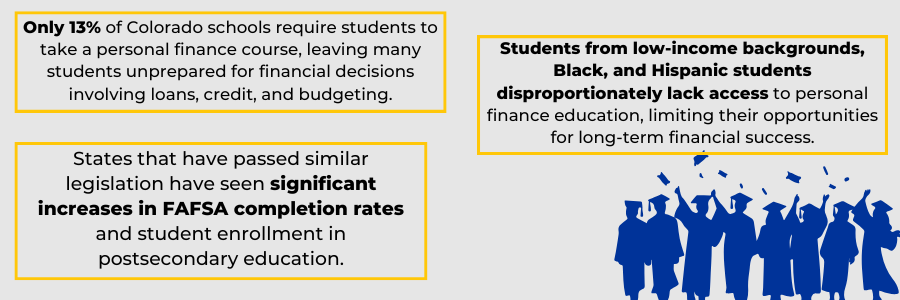
Students from low-income backgrounds, Black, and Hispanic students are disproportionately affected by the lack of financial education, contributing to generational poverty and limiting opportunities for long-term success.

States with similar legislation have seen FAFSA completion rates rise significantly, leading to increased postsecondary enrollment and greater access to financial aid.

Ask the House Education Committee to support HB25-1192!  

Welcome to Capitol Week In Review, our newsletter keeping you informed about policy concerning educational equity and criminal justice reform.  You will also hear from us about opportunities to engage in advocacy on topics important to you.


As we close out the first month of this year’s session, here are a few updates on some of our criminal justice reform policy priorities– including a newly introduced bill!

HB 25-1081, Reporting Statistics on Restitution, passed the House Judiciary Committee with a vote of 7-4 and passed second reading in the House.  As you may recall, this bill requires enhanced data collection on restitution demographics, prioritizing transparency and accountability. It seeks to address systemic inequities by revealing who owes restitution, who receives payment, and any potential barriers in the process. HB 25-1116, DOC Search Court Records Before Offender Release, which would ensure the Department of Corrections regularly checks for outstanding warrants on inmates and notifies them, courts, and public defenders. It encourages timely resolution, including virtual court appearances, to prevent legal issues from delaying reentry, and was just introduced in the House. 

HB25-1135, Communication Devices in Schools, requires all public and charter schools in Colorado to establish policies on student use of communication devices during school hours by July 1, 2026. These policies must specify any restrictions and exceptions for device use throughout the school day. The bill was introduced in the House and is scheduled to be heard in the House Education Committee on February 12. 

HB25-1153, Statewide Government Language Access Assessment, requires a statewide language access assessment across Colorado’s principal departments to evaluate and improve services for non-English speakers. The assessment will review language access needs, existing resources, and expenditures. A final report with recommendations is due by December 31, 2026. It was introduced in the House. 

HB25-1049, Communications Rights for Persons in Custody, ensures individuals in custody can make and receive private, unrecorded legal telephone calls at no cost or use private, unrecorded audiovisual conferencing. Under current law, individuals in custody have the right to consult with an attorney. It passed the House Judiciary Committee unanimously out of House Judiciary Committee.

SB25-001, Colorado Voting Rights Act, was introduced in the Senate and establishes the Colorado Voting Rights Act (CVRA) and updates election-related statutes in four key areas: (1) Election and voting provisions for Indian tribes. (2) Enhanced voting services for individuals with disabilities. (3) Improved language access in election processes. (4) Strengthened election-related data collection practices.

We are thrilled that the House Judiciary Committee recently passed HB 25-1026, Repeal Co-payment for Department of Corrections (DOC) Inmate Health Care.  This legislation stops the Department of Corrections from charging medical fees to incarcerated individuals seeking healthcare, separate from what is billed to insurance and already provided by the state.  

Current law requires the DOC to assess a copayment for medical, dental, mental health, and optometric care services. Copays and fees charged for seeking medical care while incarcerated in Colorado, range from $3 to $5. While that amount does not sound excessive, we must consider the average wages paid to inmates incarcerated in Colorado of 69 cents to $1.81 per day. To contrast, this amounts to a $900 co-pay for the average Coloradan earning minimum wage.  

Studies show these fees deter people from seeking necessary care. A 2018 study in the Journal for Evidence-Based Practice in Correctional Health found that 70% of incarcerated individuals avoided medical care due to copays. Similarly, a 2024 American Medical Association study found that in states where copays exceeded a week’s pay, individuals with chronic health conditions were half as likely to seek medical treatment. Delayed care leads to worsening health outcomes, increasing long-term costs for the state. HB 25-1026 would eliminate these fees for three years, allowing time to assess the impact of this policy while ensuring access to essential healthcare for incarcerated individuals.


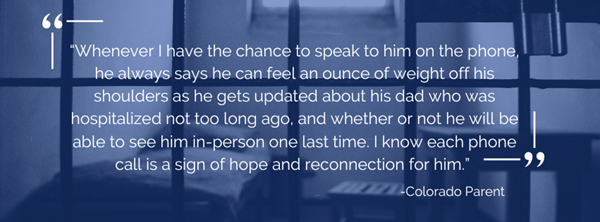
HB23-1133, passed in 2023, ensures free communication in Colorado’s prisons to keep families connected. The law phases in funding over three years, cutting call costs by 25% in year one, 35% in year two, and making all calls free by July 1, 2025. However, the Joint Budget Committee is now considering cutting funding to only cover 50% of costs this year, jeopardizing full implementation. We’ve been raising awareness about this because it’s incredibly impactful for families across Colorado. 

Delays in implementing this policy risk undermining efforts to reduce recidivism and support families. Let’s work together to protect this critical progress!

Contact members of the Joint Budget Committee and ask them to prioritize the funding needed to bring free prison phone calls to families this year, as outlined in HB23-1133.  If you want to learn more about other advocacy opportunities in the Criminal Justice Reform space, register to attend our community information session happening February 13th from 5:30-7:00p, here !


Welcome to Capitol Week In Review, our newsletter keeping you informed about policy concerning educational equity and criminal justice reform.  You will also hear from us about opportunities to engage in advocacy on topics important to you.


HB 25-1026, Repeal Co-payment for Department of Corrections (DOC) Inmate Health Care, which stops the DOC from charging medical fees to incarcerated individuals seeking healthcare, separate from what is billed to insurance and already provided by the state, passed the House Judiciary Committee with a vote of 8-3!
HB 25-1081, Reporting Statistics on Restitution, is scheduled to be heard this Tuesday, January 28th in the House Judiciary Committee. The bill requires enhanced data collection on restitution demographics, prioritizing transparency and accountability. It seeks to address systemic inequities by revealing who owes restitution, who receives payment, and any potential barriers in the process. 

SB25-001, Colorado Voting Rights Act, was introduced in the Senate and establishes the Colorado Voting Rights Act (CVRA) and updates election-related statutes in four key areas: (1) Election and voting provisions for Indian tribes. (2) Enhanced voting services for individuals with disabilities. (3) Improved language access in election processes. (4) Strengthened election-related data collection practices.

SB25-004, Regulating Child Care Center Fees, limits the amount licensed child care centers can charge for various deposits and fees to no more than $25. It is scheduled to be heard in the Business, Labor, & Technology Committee on February 4th.

HB25-1013, Department of Corrections Visitation Rights, was introduced in the House and establishes social visitation as a right for individuals confined in correctional facilities. 

HB25-1049, Communications Rights for Persons in Custody, ensures individuals in custody can make and receive private, unrecorded legal telephone calls at no cost or use private, unrecorded audiovisual conferencing. Under current law, individuals in custody have the right to consult with an attorney. It passed the House Judiciary Committee with a 9-1 vote and now moves to the House Appropriations Committee.  

Colorado is celebrating increases in high school graduation rates, with 84.2% of students graduating in 2024, the state’s highest rate in more than a decade. At the same time, dropout rates declined to 1.9%. Colorado Education Commissioner, Susana Córdova, said, “While we are seeing promising progress, we are continuing to see our students of color and our students with the highest needs graduating below our statewide rates.” 

In a Colorado Public Radio story, Englewood Public Schools Superintendent Joanna Polzin attributed growth in their graduation rates to several strategies, including their focus on ninth grade success and their partnership with the Colorado Center for High School Success (CHSS). 

This year, one of our top priorities is to protect funding for the Ninth Grade Success Grant Program allowing more Colorado schools to implement the proven 9th grade success approach that changes the trajectory for high school students across Colorado by reducing absenteeism and dropouts and increasing on-time graduation. 


HB23-1133, passed in 2023, ensures free communication in Colorado’s prisons to keep families connected. The law phases in funding over three years, cutting call costs by 25% in year one, 35% in year two, and making all calls free by July 1, 2025. However, the Joint Budget Committee is now considering cutting funding to only cover 50% of costs this year, jeopardizing full implementation. Delays in implementing this policy risk undermining efforts to reduce recidivism and support families. Let’s work together to protect this critical progress! Contact members of the Joint Budget Committee, and ask them to prioritize funding needed to bring free prison phone calls to families this year, as outlined in HB23-1133.


Colorado is celebrating increases in high school graduation rates, with 84.2% of students graduating in 2024, the state’s highest rate in more than a decade. At the same time, dropout rates declined to 1.9%. Colorado Education Commissioner, Susana Córdova, said, “While we are seeing promising progress, we are continuing to see our students of color and our students with the highest needs graduating below our statewide rates.” 

According to the Colorado Department of Education, while Colorado’s overall four-year graduation rate improved, gaps persist across race/ethnicity and specific student groups: 

  • Four-year graduation rates for most students of color, students experiencing homelessness, students from migrant families, students with disabilities, multilingual learners, students in foster care, male students and students who are economically disadvantaged lag behind the statewide graduation rate of 84.2%.
  • Four-year graduation rate increases for American Indian/Alaskan Native (+1.9%), Hispanic (+1.2%), and multiracial (+1.5%) students increased above the statewide increase of 1.1%.
  • Students experiencing homelessness (+3.6%) and students in foster care (+4.2%) showed the most improvement in the four-year rate, although graduation rates for those student groups are much lower.

One strategy, backed by decades of research, to improve results for all students is implementing a ninth-grade success approach. Improving ninth grade on track rates, improves graduation rates, increases attendance, decreases drop-out rates, and has many other benefits for students and schools.

In a Colorado Public Radio story, Englewood Public Schools Superintendent, Joanna Polzin attributed the growth in their graduation rates to several strategies, including their focus on ninth grade on-track and their partnership with the Colorado Center for High School Success (CHSS). 

Ninth grade on-track work includes implementing targeted interventions, transition supports, school-based teaching teams, certain instructional approaches, and more. Schools doing this work must invest financially and increase staff collaboration.

This year, one of our top priorities is to protect funding for The Ninth Grade Success Grant Program allowing more Colorado schools to implement the proven 9th grade success approach that changes the trajectory for high school students across Colorado, by reducing absenteeism and dropouts and increasing on-time graduation. 

For more reading:

Colorado Public Radio, More Colorado high school students are graduating, and fewer are dropping out

Chalkbeat Colorado, Colorado’s graduation rate rose, and its dropout rate fell in 2024

Facing a bleak budget environment, the Joint Budget Committee is considering cutting funding for the implementation of free prison phone calls to 50% of the cost this year, leaving Colorado families facing challenges staying connected. 

HB23-1133, Cost of Phone Calls for Persons in Custody, made prison communication free across Colorado in state and private facilities with funding phased in over three years. The bill cut call costs by 25% in the first year, 35% in the second year, and is supposed to make all calls free starting July 1, 2025. Slowing the implementation of HB23-1133 will have a negative impact on Colorado’s efforts to reduce recidivism and support families. 

Contact members of the Joint Budget Committee, and ask them to prioritize funding needed to bring free prison phone calls to families this year, as outlined in HB23-1133. 

15 years ago, Stand for Children launched in Colorado, focused on improving educational outcomes for children, particularly those most often overlooked and underserved. For the last decade and a half, we have championed efforts to improve early literacy, advance equitable school funding, develop community leaders and parent advocates, strengthen early childhood education, increase the number of students graduating on time, ready for college or career, and more.

Now, 15 years after our work here began, we are asking you to join us in our mission to build a stronger Colorado by creating equitable opportunities for Coloradans, especially those historically furthest from privilege.

On this Giving Tuesday, we would be honored if you would help fund our future with a $15 donation.

Stand Colorado advances solutions that increase opportunities for families, historically furthest from privilege, through meaningful partnerships with families, educators, schools, and policymakers. One of the ways we uphold this work is through our annual Advocacy Fellowship.   

Stand for Children Colorado Advocacy Fellows are community leaders advocating for policy solutions towards a stronger Colorado.  With the support of Stand staff, advocacy fellows will deep dive into issues affecting Colorado communities today, co-create solutions, share knowledge back to their communities, work to break down barriers to power and access decision makers, and, in the process, build long-lasting relationships and invaluable skills. 

We are excited to introduce the 2024–2025 Fellows! 


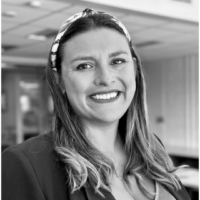
Leah, is a proud Coloradan by heart. Her knack for encountering quirky suitors—like the man who took her to buy a gun rack on a first date—earned her a monthly dating column in a women’s magazine, launching her freelance writing career. Since then, her work has graced the pages of publications like “Marie Claire,” “INSIDER,” “Colorado Life Magazine,” and “Fodor’s Travel”.

Beyond her writing, Leah serves as a communications and marketing consultant for arts and culture organizations and nonprofits. Passionate about her Northeast Denver community, Leah is thrilled to be a Stand Fellow, eager to sharpen her community organizing skills and learn how to navigate legislation to better advocate for her neighbors.

Leah’s favorite children’s book, The Missing Piece Meets the Big O by Shel Silverstein, reflects her belief in self-discovery and fulfillment. She cherishes Colorado’s diverse landscapes, from majestic mountains to sweeping plains, deep canyons, and high deserts, which continually inspire her love for the state she calls home.