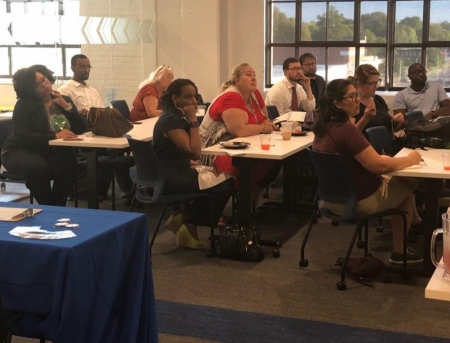
Trauma-informed schools provide benefit to students and families as they embrace restorative practices and social-emotional learning. These schools are trained to understand how traumatic stress affects neurological development and learning, and view misbehaviors as skill deficits. As a result, their responses are rooted in compassionate capacity building, rather than exclusionary discipline intended to maintain compliance. Lastly, these schools strive to have the resources needed to meet students’ social-emotional needs, including sufficient access to high-quality mental health providers. In short, these schools are models of institutions where you would want to send your child, regardless of their relationship with adverse childhood experiences.

Sadly, few schools in Memphis are certifiably trauma-informed. Yet, there is a growing local movement to change that. Shelby County Schools, as well as various charters, are working to educate school staff about the effect of ACEs and toxic stress. Some schools are already moving to the next step, using their new understandings to transform how they support students, particularly when it comes to discipline and building social-emotional skills.

The ACE Awareness Foundation (ACEAF) is working to support and strengthen these efforts. Part of that work included partnering with Pyramid Peak Foundation and Stand for Children to bring Michelle Kinder to Memphis on January 8 for “Better Together: Understanding the Relationship Between Trauma & Youth Justice.

Frank Jemison is the Director of Education Outreach at the ACE Awareness Foundation. Frank worked in Memphis schools for seven years and now leads local trainings and outreach efforts for ACEAF. He is a Stand member and Momentum Memphis task force contributor.
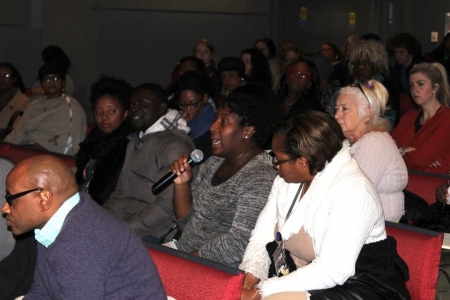
For many people, the concept of a charter school is still new and unfamiliar, but these schools share a lot of commonalities with traditional public schools. We hosted “The Great Debate: Exploring the Role of Charter Schools in Memphis” on Tuesday, November 13 in an effort to create space for learning, transparency, and open dialogue. With a packed room and panel of four education leaders, the discussion taught us many things.

First, we all learned that charter schools are, in fact, public schools and are subject to the same academic standards, performance and accountability measures, laws, and teacher certifications as traditional schools.  School charters are reviewed for renewal every five years, and schools that do not meet expectations or do not serve their students well can be shut down.  Another similarity is that, like traditional schools, enrollment in charter schools is zoned by address, although parents can choose to enroll their children in a different charter school, if desired.

Charter schools likewise share many of the same challenges that traditional schools face, primarily the struggle for adequate funding and the general shortage of talented teachers.  In addition, all schools must deal with the social and economic realities of the communities that they serve and must find ways to address the related issues and needs of their students. 

In general terms, charter schools and traditional schools are more alike than different. Yet, charter schools are a growing phenomenon. 112 public charter schools serve students across Tennessee; 78 of those are in Memphis. What function do charter schools serve that traditional schools do not?

Here’s what we learned about charter schools in Memphis during “The Great Debate.”

It’s been a year since, inspired by Dr. King’s legacy, we launched our Momentum Memphis campaign to mobilize our community for effective advocacy on behalf of our youth. As we reflect on this first anniversary, we find much to celebrate. 4,300 people have taken the pledge, and dedicated teams of parents, teachers, community leaders, and ordinary people have worked diligently to advance each of the four platforms. Our combined efforts have resulted in:

  • Introducing Discipline Reform Project’s EQUITY framework to education leaders and advocates throughout Memphis to create a common understanding of discipline reform and streamline efforts
  • A new community survey created by the Breaking the School to Prison Pipeline Task Force to identify personal success factors that can be effectively incorporated into school and youth programs
  • Joined partner organizations to voice community support for maintaining Department of Justice (DOJ) oversight of the Shelby County Juvenile Court

These are impressive gains, and our community momentum is still growing. Join us on November 8 and help accelerate our efforts toward brighter futures for all children.

Graduation success is one of the four platform areas that we focus on in our Momentum Memphis campaign. Research conducted by the University of Chicago revealed that student success in the first year of high school is a critical indicator for graduation. Studies showed that ninth graders who had high absentee rates or failed one or more core courses were more likely to drop out even if they had started high school with high grades and test scores.

In contrast, students who successfully completed the first year of high school were almost four times more likely to graduate. These research findings prompted Chicago Public Schools to partner with the University of Chicago’s Network for College Success to create a Freshman Success program that encourages the use of data to help school teams evaluate students’ progress throughout the year and refine interventions to better meet their needs. The results have been phenomenal, with on-track graduation rates for participating schools consistently surpassing the district average for the past four years.

Encouraged by the success in Chicago, we at Stand for Children Tennessee worked with Network for College Success to implement the Freshman On Track program in Memphis at Mitchell High School and Martin Luther King Jr. College Preparatory High School during the 2017-2018 academic year. Using best practices gleaned from the Chicago program, our team of teachers, administrators, and counselors was able to achieve academic gains at both schools and a reduction in chronic absenteeism at Mitchell. 

For the 2018-2019 academic year, we are building on this idea and using the NCS capacity-building model to create a local Freshman Success Network aimed at dramatically improving graduation rates at 14 schools: 

  • Douglass High School
  • Freedom Preparatory Academy
  • Hamilton High School
  • Manassas High School
  • Martin Luther King Jr. College Preparatory High School
  • Melrose High School
  • Memphis Rise Academy
  • Mitchell High School
  • Power Center Academy High School
  • Raleigh-Egypt High School          
  • Sheffield High School
  • Soulsville Charter School
  • Trezevant High School
  • Westwood High School

This is an exciting collaboration – the first such local network to include both public traditional and charter schools. Shelby County Schools even committed $65,000 to support the Freshmen Success plans at its participating schools.

Over the course of the year, Dr. Nina Reed, Stand Memphis’ Freshman Success Coach, and Habib Bangura, Stand for Children’s National Freshman Success Director, will help each school integrate the strategies and tools provided by NCS. Stand will also host a Freshman Success Institute on September 27-28, which will provide each school team with an opportunity to hear from experts, learn best practices, and connect with educators in other schools.

By coordinating an ongoing, mutual flow of ideas, resources, feedback, and support throughout the network, we hope to see improvement in ninth-grade achievement for the year and, ultimately, higher graduation rates and post-secondary success for students. 

Want to know more about our Freshman Success Network? Join us on October 25 at 6 p.m. for the next discussion in our Memphis Education Equity Learning Series. 

Stand has been working closely with Shelby County Schools on projects that further our four Momentum Memphis platform goals.

This spring, we brought Emily Durso, a career and technical education expert, and NAF, a national network that helps schools create high-quality career academies, to town to talk with school administrators about developing effective Career & Technical Education (CTE) programs.

We also launched the Memphis-Shelby County Discipline Reform Alignment Initiative to coordinate efforts to implement and support discipline reform, restorative practices, and preventive measures for Shelby County Schools and the greater community. Cami Anderson, founder of the Discipline Revolution Project (DRP) and former Superintendent of Newark Public Schools, made a week-long trip to Memphis and met more than 200 educators, administrators, parents, youth advocates, and stakeholders. During her visit, Cami shared ideas developed through DRP and showed us how their EQUITY Framework could be used by SCS staff, school staff, and other stakeholders to develop a culture and environment that supports students and families with new approaches to breaking the school-to-prison pipeline.

During the 2017-2018 school year, we worked with the University of Chicago’s Network for College Success to implement the Freshman On Track program in Mitchell High School and MLK Prep High School. The program is based on research findings that a network of schools committed to ensuring that freshmen are on track to graduate will have substantial impact on graduation rates and the graduation success of students. Both pilot schools are moving forward with continuing coaching and support from Stand and NCS, and we have plans to expand into up to 10 additional schools over the coming school year.

We’re pleased with the progress that has been made so far, but we are still just getting started. Check out what we’re working on now.

In 2015, Shelby County Schools adopted Destination 2025, a bold 10-year strategic plan to improve the quality of public education in the district and create a more knowledgeable, productive workforce that will ultimately benefit our entire community.

Since then, the district’s graduation rate has improved steadily, and 13 schools have been ranked among Tennessee’s top 5 percent for performance and progress. Even with these and other accomplishments, the unique challenges facing our students – more than 36 percent live in households with an annual income of less than $10,000 – require a greater financial investment if the district is to achieve its long-term goals.

Help our students get the resources they deserve by signing the petition.

The SCS budget for fiscal year 2018-2019 reflects a $66 million investment in the future success of our community’s children. It is an ambitious proposal to expand or establish educational programs and resources in six key areas and includes funding for a redesigned College, Career and Technical Education (CTE) program, student internships, early learning programs, summer learning academies, and much more.

The county’s largest district is requesting $12.7 million in additional funds from the Shelby County Commission for the 2018-2019 year. On a larger scope, an additional $16.3 million will have to be invested to fund the municipal districts.

We have an opportunity to let the Shelby County Commission know that funding students first is one of our community’s highest priorities. Sign the petition supporting the additional investments, contact your representatives, and add your support for a total commitment to our city’s youth.

Our work is on the right track, but far from over.

Read about the progress we’ve made so far.

I made this speech at the Lorraine Motel on the 50th anniversary of the assination of Dr. Martin Luther King, Jr.

“Thanks to the National Civil Rights Museum for partnering with organizations like ours, and so many others, to create a space over the last year to ask the challenging question, Where Do We Go From Here?

As has been the case with many Memphians, and I’m sure others, my heart has been conflicted this week. We honor the sacrifice of Dr. Martin Luther King Jr, the sanitation workers, and all those who fought to make change to bring equality in civil rights, economic justice, political freedom, and the simple recognition of our humanity – most recently expressed as Black Lives Matter.

At the same time, we’ve heard many times this week, and I’m sure you will hear again many times today, the facts for Memphis 50 years after King’s assassination – the high poverty rate, the higher child poverty rate, one of the highest rates of opportunity youth, economic, residential and school segregation, a juvenile court that needs federal oversight just to ensure that Black youth are treated equitably, and, just yesterday, police overreaction to non-violent protesters resulting in the arrest of several activists.

With these issues facing us, we have city leadership that instead of reacting with the fierce urgency of now responds with the glacial speed of soon. The City of Memphis, which divested from supporting education several years ago, gave us hope with a commitment to support universal pre-k. Their commitment translated to taking four years to ramp up to just a $6 million investment (only a portion of the amount needed for universal pre-k). One city council member proposes taking three years for a slight increase in the city’s summer youth jobs program. Meanwhile, the amount we spend on policing continues to expand.

Even with these harsh realities, we have hope that King’s prophesy can come true…something can happen in Memphis.

In reflecting on the way that we could honor the legacy of Dr. King, at Stand for Children, we launched Momentum Memphis, an effort to create a city-wide movement for youth opportunity and success.

Education achievement for African Americans is one of the few places where we have seen advancement over the last 50 years, but we still have more to achieve. We believe that engaging, informing, and equipping parents, educators, and community members to be advocates for building a community that values our children will help to build a community that values them as adults.

We have connected with thousands of our fellow Memphians around our four platform areas:

Graduation Success for College and Career – because walking across the stage isn’t enough. We need to ensure that our students are ready and prepared for post-graduation success. Connecting pathways to high-wage, high-growth career opportunities can help with the economic advancement missing in our communities.

Community Investment for All Youth – what happens in schools is only part of the solution. We must support our youth after school and in the summer. We have to build a community that can effectively respond to the trauma that too many of our young people are forced to deal with.

Facilities and Funding Our Students Deserve – our students and educators suffer in buildings with leaking roofs and air-conditioning or heating systems that don’t work. We must invest in learning spaces that let our students know that we value them and that support preparing them for a global economy.

Breaking the School to Prison Pipeline – a connection has been developed that links the institutions of schools and prisons. We must develop advocacy and solutions that address both sides of that pipeline. We have partnered with criminal justice reform organizations to coordinate our efforts so that no child is treated as disposable.

We work every day to advocate solutions in each of these areas, and believe this is a critical part of achieving Dr. King’s dream of addressing poverty and economic disparity.

You can learn more and join our fight at MomentumMemphis.com.

Thank you and have a wonderful day of honoring the sacrifice and continuing the struggle.”

In the realm of education advocacy, school discipline reform is a concept that comes up again and again. There is a general consensus that current punitive disciplinary measures are flawed and often contribute to long-lasting negative outcomes for the students on whom they are applied. On the other hand, it is acknowledged that schools still need ways to address student misbehavior. So, how do we support teachers and school administrators in the necessity of handling discipline issues while also ensuring that individual students are held accountable for their actions in ways that don’t hinder their academic and personal potential?

The answer is found in changing the underlying approach to discipline. 

Exclusionary policies and practices are those that have negative consequences for the student such as suspensions, expulsions, and corporal punishment, or even loss of recess time or requiring students to stand in a corner or face the wall. These punitive practices are rooted in two beliefs: that the possibility of incurring negative consequences acts as a deterrent and that harsh consequences are an effective way to prevent escalation of misbehavior. There is, however, no conclusive evidence to show that this approach to discipline contributes to an improved school environment. On the contrary, research indicates that punitive disciplinary methods have a negative impact on student achievement outcomes and contribute to lower academic performance, lower graduation rates, and higher drop-out rates. 

There must be a paradigm shift in school discipline — away from exclusionary policies based on punishment and compliance and toward restorative justice polices that nurture students and promote learning.

Join us in the movement to rethink school discipline.

Read the next post in this series: From Punishment to Prevention

In the realm of education advocacy, school discipline reform is a concept that comes up again and again. There is a general consensus that current punitive disciplinary measures are flawed and often contribute to long-lasting negative outcomes for the students on whom they are applied. On the other hand, it is acknowledged that schools still need ways to address student misbehavior. So, how do we support teachers and school administrators in the necessity of handling discipline issues while also ensuring that individual students are held accountable for their actions in ways that don’t hinder their academic and personal potential?

The answer is found in changing the underlying approach to discipline. 

Exclusionary policies and practices are those that have negative consequences for the student such as suspensions, expulsions, and corporal punishment, or even loss of recess time or requiring students to stand in a corner or face the wall. These punitive practices are rooted in two beliefs: that the possibility of incurring negative consequences acts as a deterrent and that harsh consequences are an effective way to prevent escalation of misbehavior. There is, however, no conclusive evidence to show that this approach to discipline contributes to an improved school environment. On the contrary, research indicates that punitive disciplinary methods have a negative impact on student achievement outcomes and contribute to lower academic performance, lower graduation rates, and higher drop-out rates. 

There must be a paradigm shift in school discipline — away from exclusionary policies based on punishment and compliance and toward restorative justice polices that nurture students and promote learning.

Join us in the movement to rethink school discipline.

Read the next post in this series: From Punishment to Prevention

Read the first post in this series: Restorative Policies for Student Success

Exclusionary school discipline methods are applied at a much greater rate to racial minorities and students with disabilities. In Tennessee, black students are five times more likely to be suspended as white students. Disparities in disciplinary actions prompted White Station High School student Janiya Douglas to launch a poster campaign last year to raise awareness about the issue.

According to Douglas, awareness of the disparities contributes to social hierarchies within the school and negatively affects interactions between white students and black students across both traditional and optional academic programs. “Among the white optional students the discipline disparities enforce their privilege; they know they can do things like leave the campus and not get punished for it.”

Exclusionary discipline practices not only negatively affect the individual students on whom they are applied and the overall classroom and school environments; they also have negative reverberations on the broader community. Students who have been suspended even once are three times more likely to be incarcerated later in life. It’s time to rethink this approach.

Restorative justice disciplinary policies and practices are proactive efforts to address the root causes of student misbehavior. They attempt to create the types of teacher-student relationships and school environments that help to prevent conflicts and discipline issues from occurring in the first place. This approach to school discipline is focused on creating and maintaining a supportive learning environment and helping students develop healthy habits and mindsets and become accountable for their actions. Rather than punishing bad behavior, restorative practices result from a priority placed on rewarding good behavior. In contrast with exclusionary discipline methods, restorative methods represent an investment of time, resources, and training for results that are more beneficial to individual student achievement and that have more positive impacts on schools and their surrounding communities.

Join us in the movement to rethink school discipline.