If you came to the Shelby County Education Committee Meeting on January 8th, you were there waiting for over two hours to hear the results and lessons learned from the Reimagining 901 Input Community Sessions that were held in various schools across Memphis.

I want to thank those of you who came out and waited with us to hear the committee report, and I also want to ask for your support again in attending tomorrow’s education committee meeting at 11:00 am. You can meet us at the Shelby County Commission Building located at 160 N. Main Street. Tell the security officer that you are attending the education committee meeting and they will direct you where to go.

Your attendance at the Education Committee Meeting is vital to our children getting the 21st-century school facilities they need and deserve! If you can’t make it to the meeting, be sure to take our SCS Facilities Survey and tell us the current state of your child’s school facilities. If you are a Shelby County Schools teacher, please take the SCS Educator Facilities Survey and let us know the working conditions of your school. 

 See you there! 

2019:  A Solid Foundation for Change

With 2019 drawing to an end, we want to take a moment to thank all of you – our staff, volunteers, and partners – for the long hours that you all put in this year to stand on behalf of our community’s young people.  Your commitment, dedication, and nonstop diligence have resulted in remarkable progress toward a more equitable, student-centered education landscape throughout Memphis and Shelby County.

The list of accomplishments and benchmarks that we have achieved this year is impressively robust. Here are just a few highlights of what we have accomplished together.

Will you support our work to develop more education advocates and improve student achievement in Memphis and Shelby County? Donate today!

Laying the Groundwork for High School Success

This year, we welcomed 8 new high schools into the Memphis Freshmen Success Network for a total of 20 schools impacting almost 3,000 ninth graders.  Our second annual Memphis Freshmen Success Institute provided an opportunity for teams from all schools to learn, meet each other, exchange ideas, and get fired up about programs and initiatives that they can apply in the new school year to keep ninth-graders on track (making them 3 times more likely to graduate.)

After a successful year for schools in the network that yielded an overall 16 percentage point increase in ninth-graders who are on track to graduate in the 2018-2019 school year, the Memphis FSN became the model for a new program aimed at improving graduation rates in Washington State! We look forward to growing the impact of this network, sharing ideas and strategies across our schools and national networks in 2020.

This year, we also saw the launch of the first NAF Academies in Tennessee serving new cohorts of ninth graders at Kingsbury and Hamilton High Schools. These students are beginning a four-year journey on high-quality career pathways in IT and Health Sciences, and it all began with our introduction of NAF to Shelby County Schools.

We need your support to continue this direct program advocacy for more evidence-based solutions to the challenges facing our schools in serving the needs of all students!

Collaboration for Greater Momentum

With our partners at MICAH and 90ONE, our Momentum Memphis Task Forces have made great strides in boosting community engagement and leveling the playing field for every child in the Greater Memphis community.  Together, our combined network sent more than 3,500 messages to elected officials, rallied, attended and gave testimony at every Shelby County Schools and County Commission budget meeting related to education, and spoke at numerous school board meetings.  

The advocacy work that we did during the budget season helped achieve $2.2 million of additional funding to SCS for the ’19-’20 school year, $2.5 million in additional pre-K funding (thereby saving 300 seats,) and $40 million in capital funds for school maintenance and facilities. 

We’re ready to engage more education advocates and develop more leaders, with your support!

Persistence for High-Quality Schools and Accountability

After four years of discussions and meetings, the Shelby County Schools Board passed the first local comprehensive charter school policy to guide the district’s relationship with the charter schools it oversees, focusing on building partnership and accountability. Stand began advocating for this change in 2015 and continued advocacy through recommendations (developed by SCS officials, charter school leaders, and engaged community members), policy development, and final passage of the policy. This effort shows how important it can be to have consistent, focused advocacy to bring about policy changes.

We are proud of these successes and the many others that we don’t have space to list. We are especially proud of the committed, passionate advocates that we have had the opportunity to work with these past 365 days! 2019 has provided us with a solid foundation; we aim to build on that foundation to attain even greater gains in the new year. 

Standing strong for the children of our community depends on your continued support. As you think about your year-end giving, consider making a donation to help keep us moving forward. We look forward to standing with you in 2020.

Give your valuable insight on what is needed for equitable school facilities at our Momentum Memphis SCS Facilities Feast today at Crosstown Concorse in the Church Health Center Community Room from 6:00 – 7:30pm. 

Your attendance at the meeting is vital to our children receiving the 21st-century school facilities that they deserve! Our children can’t wait any longer!  Join us and TAKE ACTION by voicing your concerns about the current state of our children’s’ educational future!

Dinner and childcare will be provided for your convenience. Don’t miss your chance to let your voice be heard! And be sure to take the SCS Facilities survey and tell us about the condition of your child’s school – even if you can’t make it today. 

If you still need a reason to attend, check out our Outreach Coordinator, Paul Garner’s op-ed on the importance of investing in our children’s educational future by providing quality facilities in Shelby County Schools.

 Jot down your concerns in a notebook and be sure to bring them with you to the meeting. We want to hear your input!

See you soon! 

We want to give a big THANK YOU to all of the community leaders and parents that attended our Momentum Memphis SCS Facilities Feast! Special thanks to Dr. Alicia Haushalter from the Shelby County Health Department for providing useful information on lead poisoning, as well as Dr. John Barker and Dr. Angela Whitelaw, for speaking about Shelby County Schools Reimaging 901 initiative. 

Head over to our FacebookTwitter, and Instagram pages to check out photos and videos from the event! Remember to take the SCS Facilities Survey to let us know about the current condition of your child’s school facilities. 

As you gear up for the upcoming holidays, don’t forget to save the date for the Momentum Memphis SCS Facilities Feast on December 17th from 6:00 – 7:30 pm at Crosstown Concourse in the Church Health Center Community Room.

The current condition of many Shelby County Schools is unacceptable, which means that our children are using unsanitary bathrooms, drinking from lead-contaminated water, and sitting in classrooms without heat. Your attendance at our Facilities Feast is an opportunity to voice your opinion while enjoying a meal with other concerned community members.

If you can’t attend the Facilities Feast, please mark January 13th on your calendar for our joint Momentum Memphis Educational Task Force meeting at MCUTS from 6:00 – 8:00 pm. Come out and learn how you can get involved with our efforts to make educational equity a reality for ALL students.

Until then, take our SCS Facilities Survey to let us know about the current condition of your child’s school. Your participation in this survey is extremely valuable! Be the change agent in your child’s educational future and complete the survey today. 

See you on December 17th! 

Shelby County Schools (SCS) is developing a first-time-ever comprehensive facilities plan to present to the community and the Shelby County Commission. Momentum Memphis, which is a project of Stand for Children, has partnered with Memphis Interfaith Coalition for Action and Hope (MICAH) and 90ONE Memphis to create an SCS Facilities Survey to gather critical input about school facilities from parents, educators, and students in Memphis and Shelby County.

The current state of many SCS facilities is unacceptable, and our children should not have to use unsanitary bathrooms, attend class in blighted school buildings, or drink water from lead infected faucets.

Our children deserve a 21st century building that is equip with state of the art school equipment with the appropriate facilities. TAKE ACTION by taking our survey and attending the upcoming facility-based meetings listed on the flyer. Don’t miss this chance to stand up and tell SCS that your child deserves better!

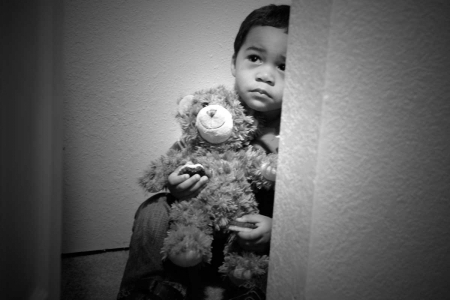
Nothing in teacher training prepared me for how trauma would creep into my classroom.

During my first year teaching, Martin spent most afternoons with me, cracking jokes as he helped grade homework. Then in April, this bubbly, boisterous boy found me in our library. He stared from the doorway, silent and solemn. After a lingering pause, he said: “My father……shot himself last night.” My family has been touched by suicide and I still felt helplessly unprepared for this moment. I hugged him with care and told him that I loved him and was here for him.

Once a consistent and high-achieving student, Martin became disruptive and absent-minded. He missed assignments, started arguments with teachers, and wanted to fight peers over anything.

Martin’s trauma was abrupt, as were its consequences. But other students face unique traumas, and the impacts are not always so apparent. While some kids escalate emotionally, argue, and fight, others retreat inside themselves and withdraw. Exposure to trauma changes how a child responds to stress: the brain is rewired, with hormones and chemicals holding the brain at the edge of flight-or-fight. Seemingly small words, actions, or stressors can push a student over the edge.

Adverse Childhood Experiences (ACEs) are traumatic childhood events that alter physiology and affect normal brain development, especially of structures involved in decision-making and emotional regulation. An “ACE score” is determined by simply assessing exposure during the first 18 years of life to particular traumas including physical, emotional, or sexual abuse; physical or emotional neglect; parental mental illness or suicide; parental separation or divorce; domestic violence; parental substance/alcohol abuse; and incarceration within the household.

As a person experiences more ACEs, their risk for adverse outcomes later in life increases. Research by the CDC suggests that higher ACE scores are significantly correlated with lower educational attainment, increased risk for chronic disease, mental illness and cancer, increased incarceration, increased suicidality, and decreased longevity.

Put more simply, unresolved or unaddressed childhood trauma plagues an individual into adulthood.

And though childhood trauma is remarkably commonplace — 52% of adults in Shelby County have an ACE score of one or more, 21% have two or three ACEs, and 12% have four or more—schools within Shelby County often lack the resources, data, and personnel to respond effectively to it.

I knew none of this when Martin told me of his father’s suicide. Though I found small ways to support his healing in the classroom, I lacked adequate training to fully support him in the aftermath of his father’s death. And while my school social workers were amazing in how they supported me and Martin, with large caseloads to handle, they were already spread thin. Many school social workers in Memphis are shared between multiple schools, as Shelby County Schools has only about 60 to serve over 200 schools. Many students only have a social worker in their building once per week.

SCS recently passed a resolution to become a “trauma-informed” district and will require all personnel to undergo trauma awareness training. While these are important first steps, they are not enough. Schools need significant investment in staff and resources to move beyond being trauma-informed to being truly trauma-responsive. We must better equip schools for the reality of trauma in our classrooms and communities because the unmitigated costs of not doing so are too high.

A coalition of parents, teachers, students, and community organizations—Stand for Children, MICAH, and 9-0-ONE (Organizing Network for Equity)—has been advocating to the school board for specific investments to address trauma based on research and input from experienced professionals in the field. We need teachers with access to and training in social-emotional learning curricula and other systems to create trauma-responsive supportive classrooms. We need more school social workers and behavior specialists so that every student has highly trained adults in their building to support them through traumatic experiences. We need more Family Engagement Specialists who can connect parents and caregivers to community resources so that families can understand and mitigate the impact of childhood trauma on our kids, thereby helping to reduce disciplinary incidents and increase school attendance. We need trauma-responsive pilot schools to collect data and serve as models to expand best throughout Memphis.

Join our coalition at the school board meetings on May 21 (4pm) and May 28 to show your support and ensure that the SCS budget for the upcoming year creates trauma-responsive pilot schools, funds additional support staff such as Family Engagement Specialists, and includes other investments in wraparound services.

Without proper supports, students with trauma can fall through the cracks, leaving their greatness unrealized. But when schools have the tools and staff to respond, students like Martin develop resilience, self-awareness, and coping strategies, bringing them back in control of their emotions and back into the classroom.

Every child facing trauma deserves a community of love AND professional support so that they can survive, heal, grow, learn, and thrive.

Dylan Moore is a teacher and department chair at a public charter school in Southwest Memphis, and a community advocate with Stand for Children and 9-O-ONE (Organizing Network for Equity). Originally from Washington, he has lived and taught in Memphis since 2017.

For over a year, Stand for Children, MICAH, and 9-0-One have been working both separately and together to define occasions for improving educational opportunities for students in Shelby County. We have talked with Shelby County Schools (SCS) administrators, SCS Board Members, County Commissioners, the County Mayor, parents, students, and other community stakeholders and have outlined a list of requests and recommendations that are in alignment with the goals, priorities, and plans of both the district and our county officials, as well as many of the hopes and dreams for young people that we have heard across the community. Where research exists, we have focused on proven, evidence-based approaches to develop opportunities for increasing support and success for all students.

When we found that our organizations had set similar focus areas, we decided to join as a collaborative to share our research, experience, knowledge, skills, and solutions. We knew that the power of a unified community voice for our young people was a model that needed to be seen and heard.

As SCS enters its budget process and considers the investments that the district wants to make in 2019-2020, we recently presented SCS Board Members with our proposals for setting priorities and making investments for SCS students. While some of these requests may not require more funding, we must be bold in what we want for our young people and cannot shy away from asking for what is needed. Even if these requests mean that the SCS budget must increase, we look forward to pushing with SCS leaders and board members for the funding from Shelby County to ensure that SCS and its partners are able to deliver these impactful investments with fidelity.

Click here to download a PDF of our full presentation to the SCS School Board.

Supporting Schools to Help Students Succeed

The requests included in this section have some of the strongest backing based on the clear researched evidence and best practices that have been gathered on these topics.

Graduation Success for College and Career

Every student should be given the support necessary to graduate from high school and, upon graduation, students should be prepared for success in either college or their chosen career path.

In order to meet SCS’ Destination 2025 goal of a 90% graduation rate, we must ensure that every high school is focused on making sure 9th graders are on track by 2021.

  • Commit to all high schools having an intentional, evidence-based 9th grade-on-track program by 2021. Research indicates this should include at least bi-weekly 9th grade team meetings, focused student data monitoring, targeted academic interventions, one-on-one coaching support, freshman seminar/advisory class, participation in peer improvement network, and summer bridge program for 8th graders.
  • For 2019-2020, support expansion of the Freshman Success Network with 5 additional SCS traditional high schools (9 current schools) for a total of 14 traditional high schools in 2019-2020.

$65,000 per school with current allocation and summer bridge pilot (6 schools, 50 students each).

Estimated Cost: $1.3 million

High-quality career pathways should be available equitably to all students.

  • Programs should include rigorous curriculum and instruction towards industry certification, structured learning communities, work-based learning, an industry advisory board to ensure industry connection to all components, and school-based staff to ensure high-quality programs and assist students in post-graduation planning.
  • Funding to support expansion of NAF Academies with at least 6 more Academies.

Estimated Cost: $125,000 plus staffing costs (1 person for Academies oversight per school)

We can significantly impact literacy in grades K-2 by using research-based best practices to provide the supports needed to ensure that as few 2nd grade students as possible are retained under the new policy.

  • Create a more comprehensive early literacy pilot program with expansion of EL Foundations to 16 additional schools (from current 8); provide literacy coaches for each of the 24 elementary schools in the pilot; increase access to high-quality, culturally relevant books in pilot classrooms.

Est. $2.8 million (curriculum & materials, PD, coaches, and books)

  • Additional benefit could come from commitment to 18 students per class for K-2.

Facilities & Funding Our Students Deserve

All students need facilities and classrooms that meet 21st century standards.

  • By August 2019, SCS should develop a comprehensive footprint analysis for Shelby County Schools (including charter schools and ASD) that emphasizes access to academic opportunities and social-emotional learning. SCS can allocate the funding needed to create this analysis in the 2019-20 SCS Budget.
  • By December 2019, SCS should develop a 7- to 10-year comprehensive facilities investment plan that is equitable for students and neighborhoods, focused on 21st century learning needs, and aligns resources to serve students and families well. SCS can allocate the funding needed to create the facilities investment plan in the 2019-20 SCS Budget.

Breaking the School to Prison Pipeline

Students who are suspended from school lose valuable learning time, and can be set on a path that impacts the rest of their lives. 

SCS has recently committed to become a trauma-informed and responsive district that understands that we must begin to better address the social and emotional needs of all students and do our best to prevent and address Adverse Childhood Experiences (ACEs).

  • Trauma responsive schools – SCS should create a 10-school pilot that includes additional staff and both proactive (SEL curriculum) and reactive (restorative practices) programs, training, and support.

Estimated Cost: $2 million

SCS has recognized the use of exclusionary practices (out-of-school suspensions and expulsions) as a serious challenge and should continue to make progress in reducing these.

  • Ensure that all elementary schools have designated staff for supportive, trauma-responsive in-school suspension or similar alternatives to out-of-school suspensions (e.g., reset rooms).
  • All schools should have a trauma-responsive trained Family Engagement Specialist who supports students and families with connections to interventions and supports in-school and outside of school. Adding 30 each year, this could be accomplished within 3 years. Clear metrics should be set around decreasing chronic absenteeism, suspensions, and expulsions.
    • 30 additional Family Engagement Specialists for 2019-2020 school year.

Estimated Cost: $1.8 million

There is a great need for additional counselors, social workers, and/or behavioral specialists in schools, but there may be a lack of certified candidates available for the scale needed by SCS.

  • Support staff that schools fund through their SBB, Title I, or other school-based funding source should come from a pool of candidates and fall under the oversight (with appropriate training and support) of the primary SCS office for that role.
    • This will help to maintain consistency in abilities and expectations for all schools with the same role in that school.
    • For example, all Family Engagement Specialists should be overseen by FACE and all Behavioral Specialists should be overseen by Student Support Services.

Community Investment for All Youth

In the schools, we see community investment through making our schools more equitable and ensuring that we are meeting the needs of all of our students and families.

Memphis has a growing population of non-English speaking community members. We should work as a community to welcome our neighbors and ensure they have equitable access to needed information.

  • Ensure an option for students to have their report cards and all official documents (prioritizing IEPs and 504s) translated and printed in Spanish with plans to expand to all students’ families’ preferred language.  Provide resources in the budget to ensure the implementation for the 2019-2020 school year.

SCS can help to stem the tide of Opportunity Youth by providing supports and programs that recognize and address the challenges faced by justice-involved youth.

  • SCS should commit to continue funding for Project STAND at Carver High School to replace expiring federal funding and to explore expanding the program to more schools with high concentrations of justice-involved youth.

Estimated Cost: $450,000

City of Memphis

  • Increase MPLOY summer job opportunities from current 1,750 to 5,000 by 2022.

City of Memphis & Shelby County

When it comes to the relationship between school facilities and academic achievement, study after study seems to confirm what we already know: that the quality and condition of the physical space has an effect on students’ motivation and performance. Simply put, it is difficult to concentrate on learning while immersed in an environment that is too hot or too cold, has poor air quality that triggers asthma and other respiratory issues, is too cramped or noisy, is prone to rodent or insect infestations, or that is set up with outdated, ill-functioning equipment. If we are serious about ensuring that every child has a chance to succeed in school, then adequate funding for physical facilities should be an important part of the community conversation.

Shelby County Schools currently has building stock of which almost 80 percent is at least 40 years old, with many facilities still furnished with their original equipment. In 2014, a commissioned report found $476 million in deferred maintenance across the district, and that total has since climbed to more than $500 million. Historically, there have been deep disparities in the quality of the facilities that students in Shelby County attend. Many of those disparities still exist today, which makes facilities maintenance another factor in attaining educational equity – particularly when school closures or consolidations are often methods of addressing deferred maintenance.

Every student deserves a school environment that is safe, comfortable, and conducive to learning – one that is fully equipped to facilitate the teaching modes and technology needs of the twenty-first century. This year, SCS will spend a record-setting $90.2 million on construction and maintenance projects, but that is still a drop in the bucket. To truly remedy historic inequities and have a lasting positive effect on student attendance and achievement, the district needs a comprehensive and equitable facilities maintenance plan, along with the funds to implement it.

Let’s make it happen. Sign our petition today and add your support for modern, high-quality school facilities that enhance learning for all of our community’s children.

Since 2015, the ACE Awareness Foundation has been working to educate the Greater Memphis community about Adverse Childhood Experiences (ACEs), as well as supporting policies and practices that can prevent and mitigate the effects of toxic stress.

This work is incredibly important because ACEs are unbelievably common. Over half of the Memphis population has experienced at least one ACE, with 12% of Memphians reporting they’ve experienced four or more. These experiences are not the only source of toxic stress in our community; racism, bullying, and community violence can all produce the same corrosive stress response.

This toxic stress has a serious effect on our children’s brain development, impeding both their learning and their social-emotional growth. But there is good news. Children can heal from the damaging effects of toxic stress if they have safe, stable, and nurturing environments; supportive relationships with adults; opportunities to build executive function skills; and specialized interventions.

The ACE Awareness Foundation believes that these conditions should exist in every one of our schools. These trauma-informed schools could be a first line of defense against the widespread effects of traumatic stress and help mitigate the negative impact of adverse childhood experiences.

Frank Jemison is the Director of Education Outreach at the ACE Awareness Foundation. Frank worked in Memphis schools for seven years and now leads local trainings and outreach efforts for ACEAF. He is a Stand member and Momentum Memphis task force contributor.