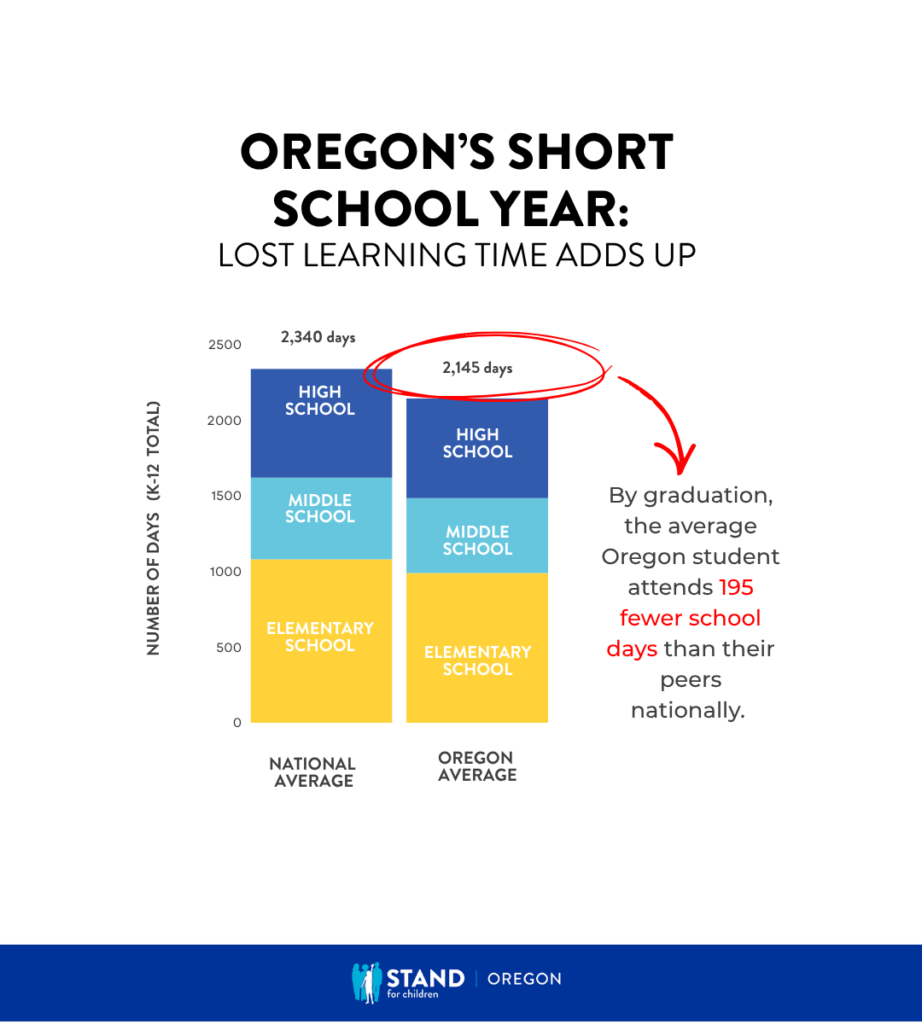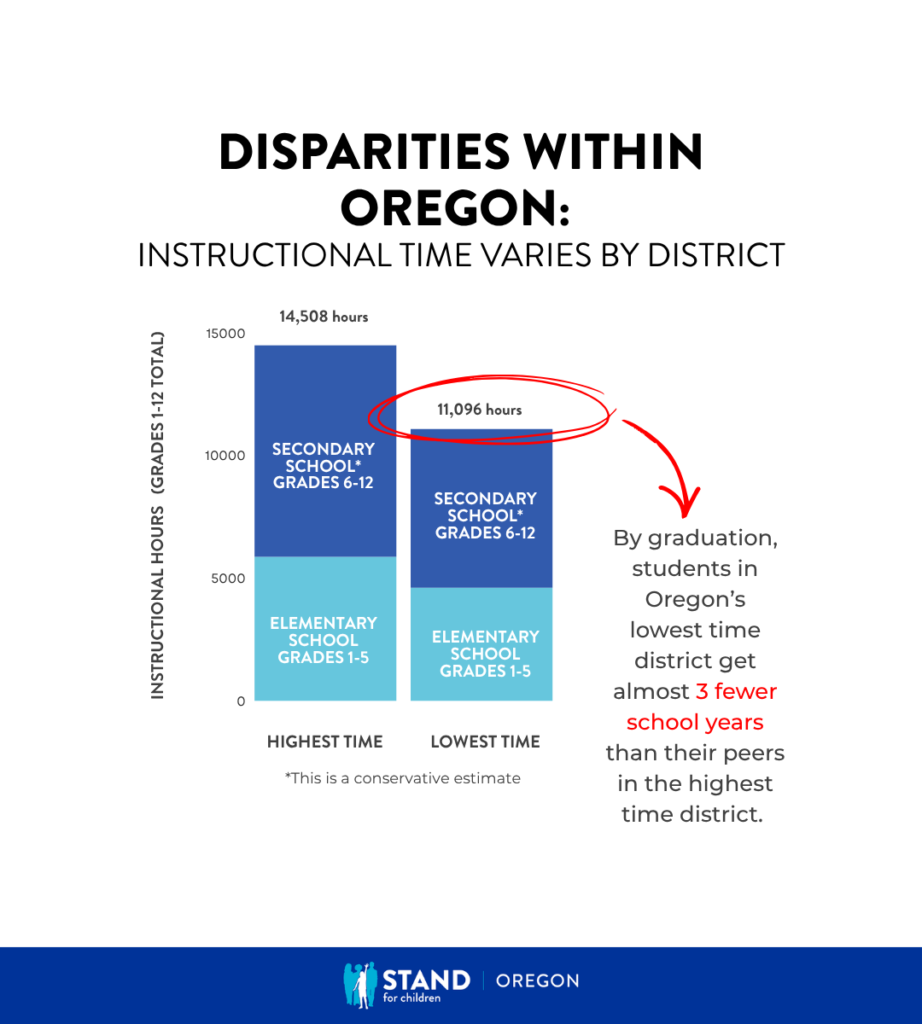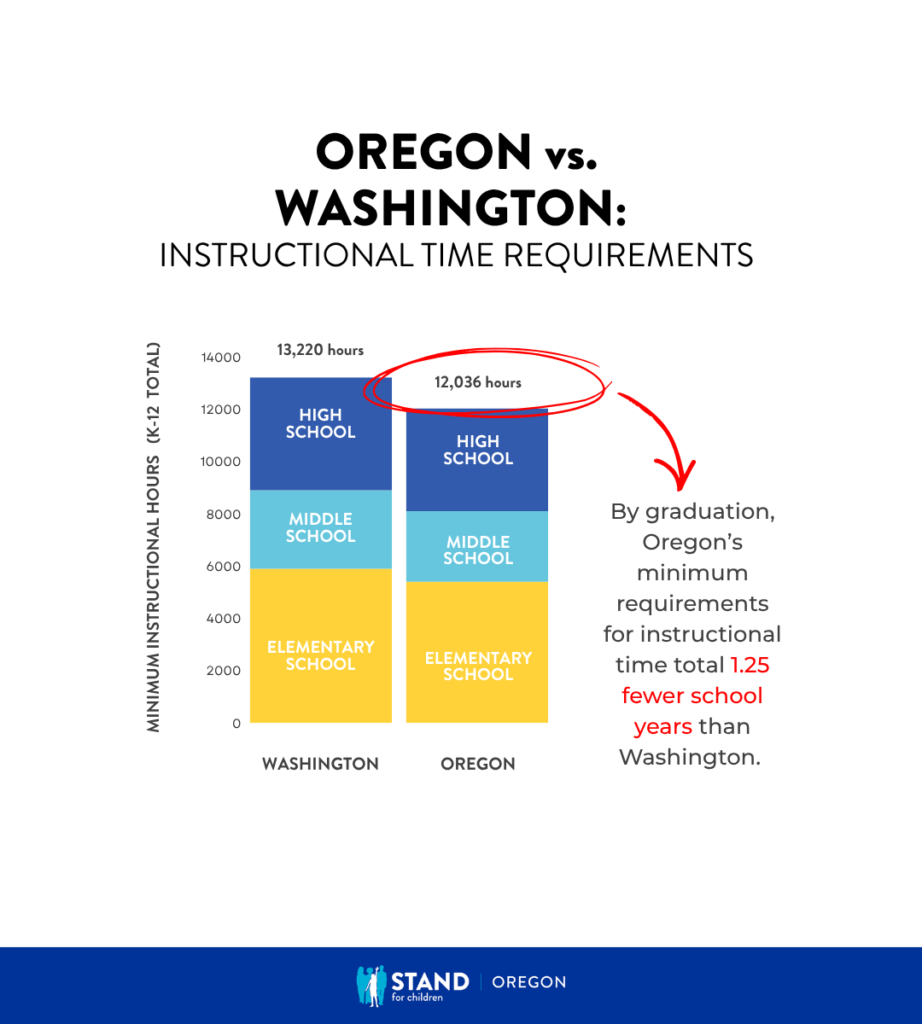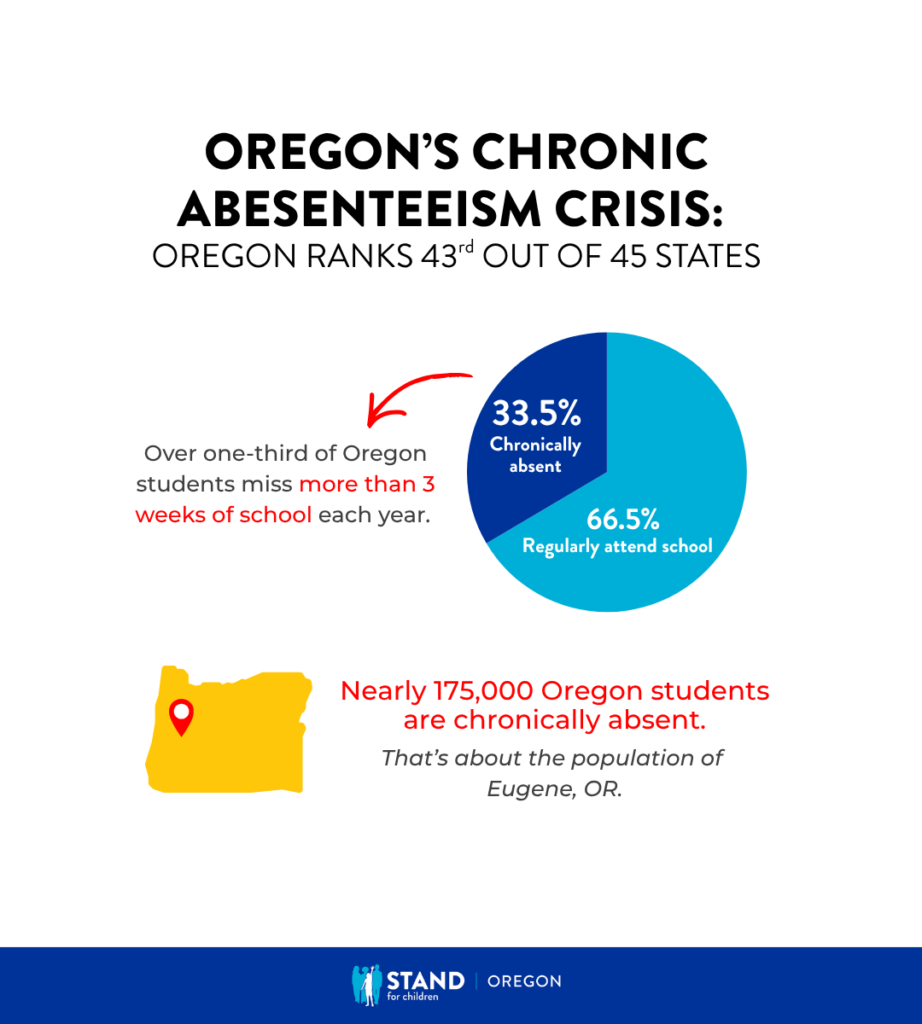

Oregon faces a systemic time and attendance crisis, with one of the shortest school years in the nation layered on top of persistently high rates of chronic absenteeism. These lost hours of student-contact time accumulate into significant learning gaps, especially for students who already face barriers to opportunity. You can find student contact time by Oregon district here.
Recent findings from ECOnorthwest underscore why this issue demands urgent attention now, as Oregon grapples with widening inequities and the need for stronger, data‑driven solutions.
STUDENT CONTACT TIME vs. instructional time
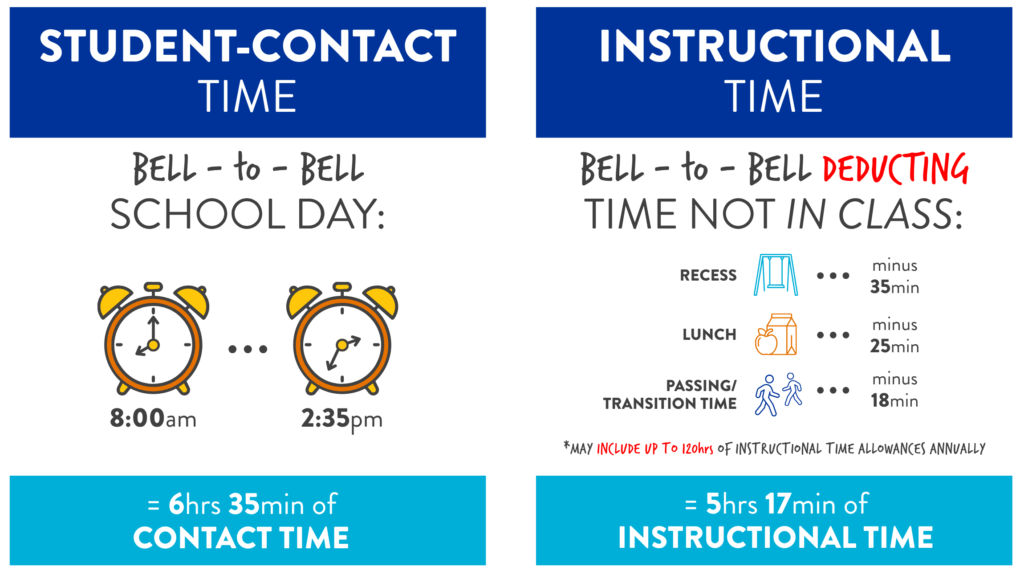
To understand how much time Oregon students spend in school, it’s important to distinguish between student contact time and instructional time — two terms that sound similar but measure different things.
Student-contact time refers to the total hours students are at school, bell-to-bell, including recess, lunch, passing time, and instruction.
Instructional time, on the other hand, accounts for the hours that kids are receiving instruction. Oregon’s rules, however, allow certain activities to “count” toward that total, known as instructional time allowances, which include:
- Up to 60 hours of recess (K-3)
- Up to 30 hours for staff professional development
- Up to 30 hours for parent teacher conferences
To find out how many instructional hours your child receives, and whether or not your district counts instructional time allowances towards that total, contact your local school district.
instructional time minimums in oregon
Now that you know how student-contact and instructional time is measured, you can better interpret Oregon’s minimum instructional time requirements.
80% of students at each school must receive the following minimum hours of instructional time annually:
- K-8: 900 hours
- 9-11: 990 hours
- 12: 966 hours
Oregon does not set a minimum number of instructional days.
how does oregon stack up?
When it comes to instructional time around the nation, only a handful of states have lower minimums than Oregon. Most states monitor the number of instructional days, with 38 states and the District of Columbia setting an annual minimum.
There are also higher standards for instructional time allowances across the U.S. Most of the 14 states with instructional time allowances top out at 5 days. The only state with comparable allowances has a significantly higher floor —requiring 180 days of school.
facts and figures