




Oregon students spend significantly less time in school than their peers nationwide — in fact, the average Oregon student is in school a year less by the time they graduate. And the disparities between districts within our state can amount to three years.
DISTRICT LOOKUP TOOL
Search for your school district below to compare student contact days and hours with state and national averages.
about this data
This dataset reflects a point-in-time analysis based on the most recent publicly available district calendars and bell schedules reviewed between June 2025 and April 2026. Districts may have updated their schedules after the time of review, and such changes may not be reflected here.
Hours Per Day are measured using a bell-to-bell methodology, which includes all time students are physically present at school, including instruction, lunch, recess, and passing time. This measure reflects student contact time, not instructional time, and those terms should not be interpreted interchangeably. Learn more about the difference between “student contact time” and “instructional time” here.
Total Annual Contact Hours include Deductions to Contact Time for half days, early release, and late start schedules when applicable.
Because middle school grade configurations vary across Oregon, this tool reports student contact hours for elementary and high school only to support more consistent comparisons across districts.
The weighted Oregon contact time averages displayed above reflect the experience of the typical student, while the unweighted district averages produce slightly lower estimates.
STUDENT CONTACT TIME ACROSS OREGON
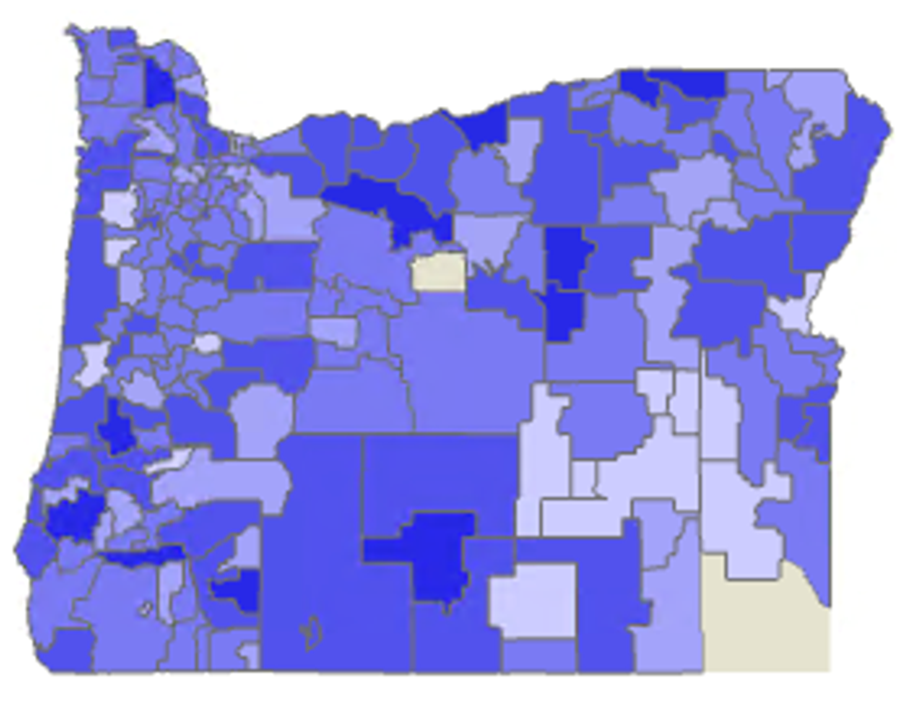
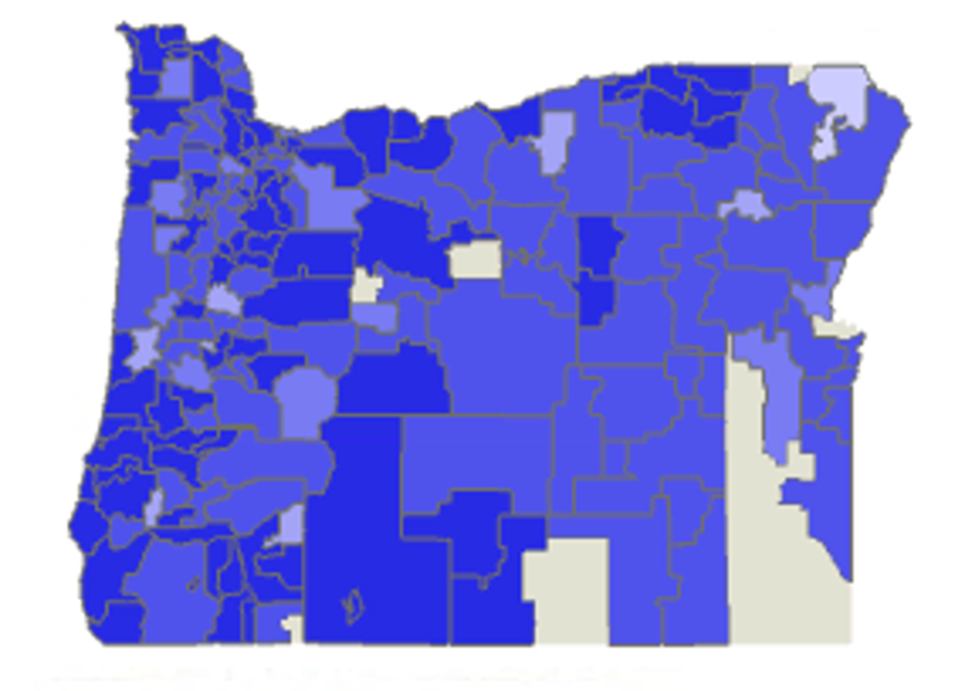
These heat maps show the variation in contact time across Oregon.
Elementary School
High School
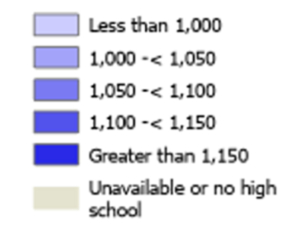
Number of Hours Key
research on student outcomes
Stand for Children Oregon partnered with research firm ECOnorthwest to study how Oregon’s short school year and high rates of chronic absenteeism impact student outcomes.
The study models how longer school years and lower absenteeism rates could improve reading and math proficiency for Oregon students.
more resources
Oregon House Committee on Education Informational Hearing
Oregon Administrative Rule on Instructional Time
Education Commission of the States Instructional Time Policies 2023
Additional context
While care was taken to compile and standardize this information, this tool is intended for general informational purposes only and should not be relied upon as a definitive or comprehensive measure of district scheduling or instructional practices.
District schedules and structures vary, and differences shown may reflect local policies, program models, reporting practices, or grade configurations. To learn more about the standardized data collection process, review the methodology here.


