



Beyond Acceptance
“We are trying in 2026 to move past awareness and acceptance to taking action. It’s not enough to say that we accept them. We have to take that additional step further to inclusive schools, promoting fully inclusive special education.”
Every person experiences the world around us differently. This may appear self-evident— I love the color pink; my sister prefers blue. My neighbor swears my music is too loud, but I can hardly hear it. Yet, our society maintains ridged boundaries around how we “should” or “should not” think about or react to our daily experiences at risk of committing faux pas and facing social rejection.
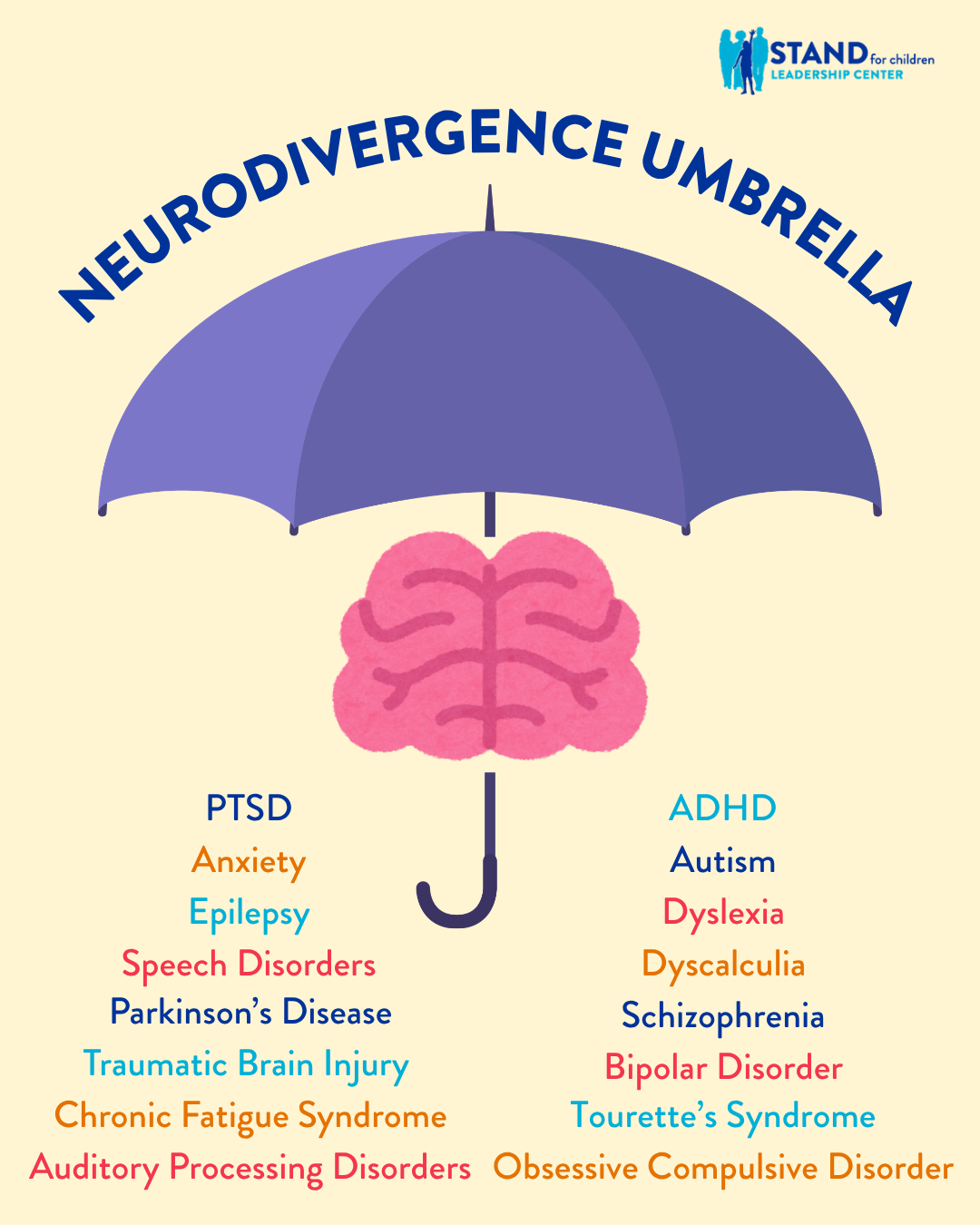
The term neurodiversity was coined to highlight the biological reality that the countless different ways our brains process information cannot be contained within the boundaries of social norms. And the Neurodiversity Movement was built with the intention to challenge those norms and make society a safe, affirming space for those who are neurodivergent— or those with particular ways of experiencing and processing information that has been named and which often falls outside of social norms or “neurotypical” ways of thinking. This includes Autism, ADHD, Dyslexia, Speech Disorders, Tourette’s Syndrome, OCD, and many more conditions— most of which are not visible to others.
School is often the place where children first become aware of the many social boundaries and norms. For neurodivergent children, school can be a space of isolation and othering. To get a clearer understanding of the current education landscape as it relates to neurodivergent students (and parents), I sat down with Amy Waggoner, a passionate disability justice advocate, founding member of the Portland Public Schools Special Education PTSA, and mother of a daughter with autism.
“My whole life, I’ve have been sensitive to justice and fairness,” says Amy. “I’ve since learned that that’s because I’m neurodivergent and have autism and ADHD [which may cause you] to have a very sensitive meter when it comes to that sort of thing. So, I was always predisposed to activism, but it really got focused in this area when my daughter was diagnosed with autism and a speech disorder.”
Difficulty navigating the school system and huge differences in resources from school to school is a common experience for parents of neurodivergent students. Many parents report feeling isolated, like they have no support from schools and wider community when it comes to ensuring their child gets the same level of education, and social integration, as any other child. This is despite the fact that more than 1 in 6 children in the U.S. is neurodivergent*. While neurodivergence is fairly common, most parents (and students) are unable to find community with each other at their local schools due to a severe lack of district and school-wide advocacy.
“She’s been in public school since kindergarten. Having to advocate for her and navigate the school system, I realized that there was a gap of organized advocacy, especially at the district level,” recalled Amy. “The quality of education that neurodivergent kids receive varies from school to school. And so, because of that, I got involved with a special education Advisory Council for the district about a year and a half ago and then recently just became a founding member of the PPS Special Education PTSA.”
That feeling of isolation is even more apparent for the neurodivergent children themselves. Around 15% of public school students** have an IEP (individualized education program) with about 1/3 of those students being neurodivergent. That means about 13% of neurodivergent students are receiving no support through the school. While all neurodivergent students may not require academic support due to their neurotype, they could greatly benefit from community with other students with similar ways of processing information. This is one way schools could facilitate a less isolating school experience for students who may not require additional academic support, and for those with IEPs who are in general education classes.
For those students who are in special education classes or “focus classrooms” for students with higher needs, their experience can still be incredibly isolating. They are usually kept away from general education students for most of or for the entire day. In small classes of just a couple of students, it can be difficult for students to make friends with their neighbors and peers. Segregating disabled and neurodivergent students for the entire day reinforces those harmful social norms and makes it easier for general education students to ignore the existence of neurodiversity, further isolating those neurodivergent students without IEPs.
This isolation and lack of advocacy can be especially severe for girls and racial and ethnic minorities who are significantly less likely to be diagnosed with a neurodivergent condition and instead are often viewed as disruptive, anti-social, or aggressive and punished rather than supported. Black students are 19% less likely to be diagnosed with autism*** than their white peers. That number skyrockets to 65% for Latino students. Black and Latino students are also disproportionately disciplined by school staff for disruptive behavior.
For girls, they are often conditioned well before entering school to hide or “mask” behaviors associated with various neurodivergent neurotypes, which are often seen as “unladylike”. Girls who violate these norms, especially Black, Indigenous, and Latina girls are more often treated as “deviant” or “problem children” rather than provided with support that would lead to a diagnosis. Less than 20% of girls with autism receive a diagnosis before they turn 18, meaning they will receive no support with their autism from schools****.
From Amy’s experience with her daughter’s school, “The population of focused classrooms or kids on IEPs in general, it skews higher minority representation than the average population in PPS. That’s probably true elsewhere too. So, when we talk about impact to students in those classrooms, we are disproportionately impacting groups of students who are already underserved.
With the exception of one year of my daughter’s time in school, she’s been the only girl in her class. So, she’s in a class full of boys. Luckily, we have some engaged teachers now who recognize that. She needs female attention and female connections, and so they’re partnering her with girls in 4th and 5th grade to spend recess with her, to sit with her at lunch, things like that to develop those connections.
It’s true that the things that we think we will see with neurodivergence, whatever the condition is, they are more pronounced in boys because of society’s expectations of how boys and girls act.
It was just so clear with her because she didn’t have language development in a typical way and she had stimming behaviors. People will say like, oh, boys are so hyperactive and rambunctious and stuff like that. That’s how she was. She didn’t fit the stereotypical girl mold or what we expect from her. So, I think that’s why she was able to get diagnosed early.
In schools today, and not just girls, various groups, if they aren’t high enough needs, then they aren’t recognized as having needs. And so, when they act out, when they don’t get the grades you expect them to, when they do whatever behavior is not desired, it is seen as a character flaw and something that they can individually control as opposed to something that they were born with. It’s just the way their brain works, and we need to make accommodations so that they’re able to meet the curriculum and come to school and be successful, just like every other kid.
You have kids who somewhat thrive, you know, or get by in Gen. Ed.. You have kids that we’ve clearly identified need special education services. And then there’s this gap in the middle, which is where I would have found myself back then. I was undiagnosed until I was 39.
I see this in schools all the time where they [girls] have some needs, but they’re so socially conditioned to behave a certain way that they aren’t vocal about those needs. Their parents may not see those needs. And then that just compounds year over year, over year, over year.
It can lead to mental health issues where you’re diagnosed with one thing only to come to find out later that that’s actually just a symptom of how your brain works, you know, which is what happened to me. I was diagnosed with anxiety and depression until I realized that those things were just symptoms of my brain working in a society that wasn’t built for me, right? That I hadn’t actually identified. It can lead to, you know, not finishing college, failing at jobs. It can lead to really drastic outcomes as an adult when these things aren’t identified and they just compound year over year in school.”
Solving the problem of gender and racial disparities in support, and isolation of neurodivergent students and families from their school communities, is one that will require dedication from the medical system, legal system, and education system working together. But that doesn’t mean there aren’t things we can do now in our own communities to make them better places for children (and adults!) with disabilities or who are neurodivergent.
I asked Amy for some advice for parents, students, and community members looking to make a difference.
“I mean, just to be quite frank, I didn’t do anything with disability advocacy until I my daughter was diagnosed. And so even though I considered myself a caring, advocating person. I just didn’t know.
And so, I think part of it is wherever your space is. Like now the disability community is my space. It is bread and butter, my everyday, right? But wherever your space is, if you consider that your workplace, your friend group, the bar you go to go watch football on the weekends, whatever you consider your space, taking action in that space.
For instance, the workplace. Advocating for open accommodations, advocating for not just sexual harassment training and other standard trainings, but also foundational disability learning.
Around 3/4 of disabilities are not apparent, which means neurodivergence falls in that umbrella. You can’t tell by looking at someone and so you usually don’t know. You usually don’t know when you’re talking to your co-workers in meetings that they have something else going on because it’s just not apparent. So, working with your manager, with HR, with whoever that group is in your workplace, and this is just an example.
You can take it to other communities to take action in that in that regard, even if you’re not involved with schools. If you enjoy sports, unified sports are so fun. There’s basketball and track and field and things like that. There’s also the Special Olympics. So, if you know, if your community is more of an active community, maybe you can consider how a unified concept might work for that community.
I encourage people to, instead of saying, well, I don’t know any disabled people. First of all, you don’t know that. But second of all, they are everywhere and if you take action for them, like I said earlier, it will benefit everyone. Only 17% of disabilities you are born with. 83% are acquired sometime in your lifetime. So, actually the vast majority of disabilities you’re not born with, you will get later and you should be lucky enough to live enough long enough to be disabled.”
*https://childrensguild.org/understanding-neurodiversity-in-children/#:~:text=Some%20signs%20of%20neurodivergence%20include:%20*%20**Intense,developmental%20disability.%20This%20included%20autism%20and%20attention%2Ddeficit/hyperactivity.
***Aylward BS, Gal-Szabo DE, Taraman S. Racial, Ethnic, and Sociodemographic Disparities in Diagnosis of Children with Autism Spectrum Disorder. J Dev Behav Pediatr. 2021 Oct-Nov 01;42(8):682-689. doi: 10.1097/DBP.0000000000000996. PMID: 34510108; PMCID: PMC8500365. https://www.ncbi.nlm.nih.gov/pmc/articles/PMC8500365/
**** https://childmind.org/article/autistic-girls-overlooked-undiagnosed-autism/
Black students are 19% less likely to be diagnosed with autism than their white peers. That number skyrockets to 65% for Latino students.
Less than 20% of girls with autism receive a diagnosis before they turn 18.
[girls] have some needs, but they’re so socially conditioned to behave a certain way that they aren’t vocal about those needs. Their parents may not see those needs. And then that just compounds year over year, over year, over year.


